

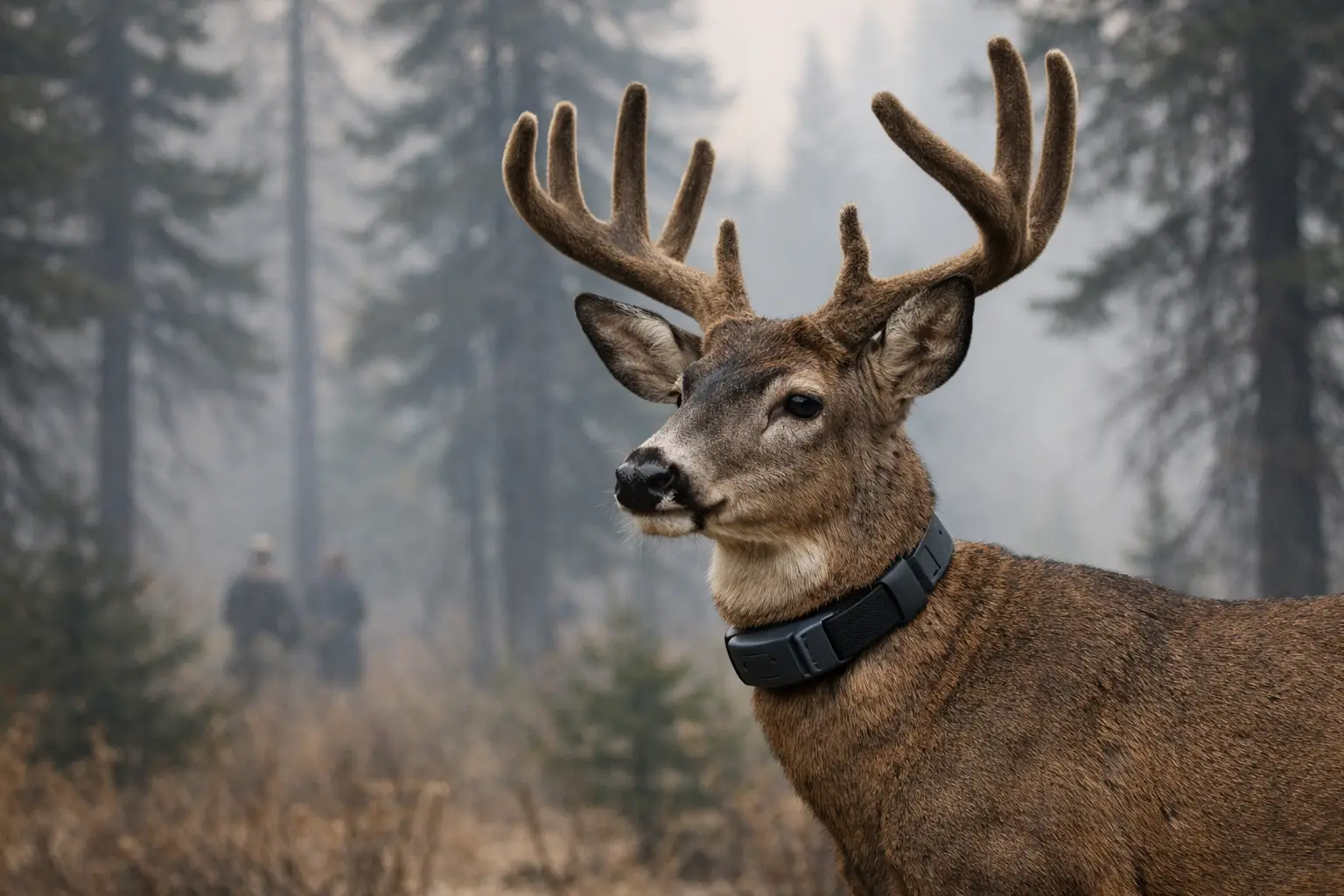
Wildlife cannot retreat when smoke from raging blazes fills the air, and limited evidence exists about how animals cope with prolonged exposure. A newly developed collar sensor is intended to fill that knowledge gap by recording exposure and health-related data from free‑ranging animals in remote landscapes, offering a way to track impacts that cannot be captured from short‑term observations. The effort responds to growing concerns about the increasing frequency and intensity of wildfires and the unknown toll of smoke on ecosystems.
The device is described as a tool for continuous monitoring: it can be affixed to animals that range across burned and unburned terrain to assemble longer-term records of environmental conditions and physiological responses. Such records are valuable because conventional studies often rely on snapshots taken after fires or on captive animals, which do not reflect the varied exposures experienced by wildlife in the field. By gathering data where animals live and move, researchers hope to better quantify links between smoke events and health outcomes relevant to conservation and veterinary care.
Information derived from collar monitoring could influence how managers prioritise resources after fires, including rehabilitation efforts, population surveillance and habitat restoration. For species already stressed by habitat loss and climate change, evidence about smoke-related morbidity or reduced fitness would help shape recovery plans and risk assessments. The technology may also enable comparative studies across species and ecosystems, clarifying which animals are most vulnerable to repeated smoke exposure and why.
Adoption of collar sensors in the field will require attention to practical and ethical considerations. Deploying and maintaining devices on wild animals involves logistical constraints, and data must be interpreted in light of species differences, seasonal behaviours and landscape heterogeneity. Validation of sensor data against clinical or laboratory measures will be necessary to translate measurements into actionable metrics for animal health.
Ultimately, the sensor represents a step toward closing a critical information gap. As smoke from larger and more frequent fires becomes a persistent feature in many regions, better baseline data on how smoke affects free‑ranging animals will be essential for informed conservation planning and for protecting biodiversity in fire‑prone landscapes. Continued field testing and collaboration with wildlife managers will determine how rapidly the technology can move from prototypes into routine monitoring.


