

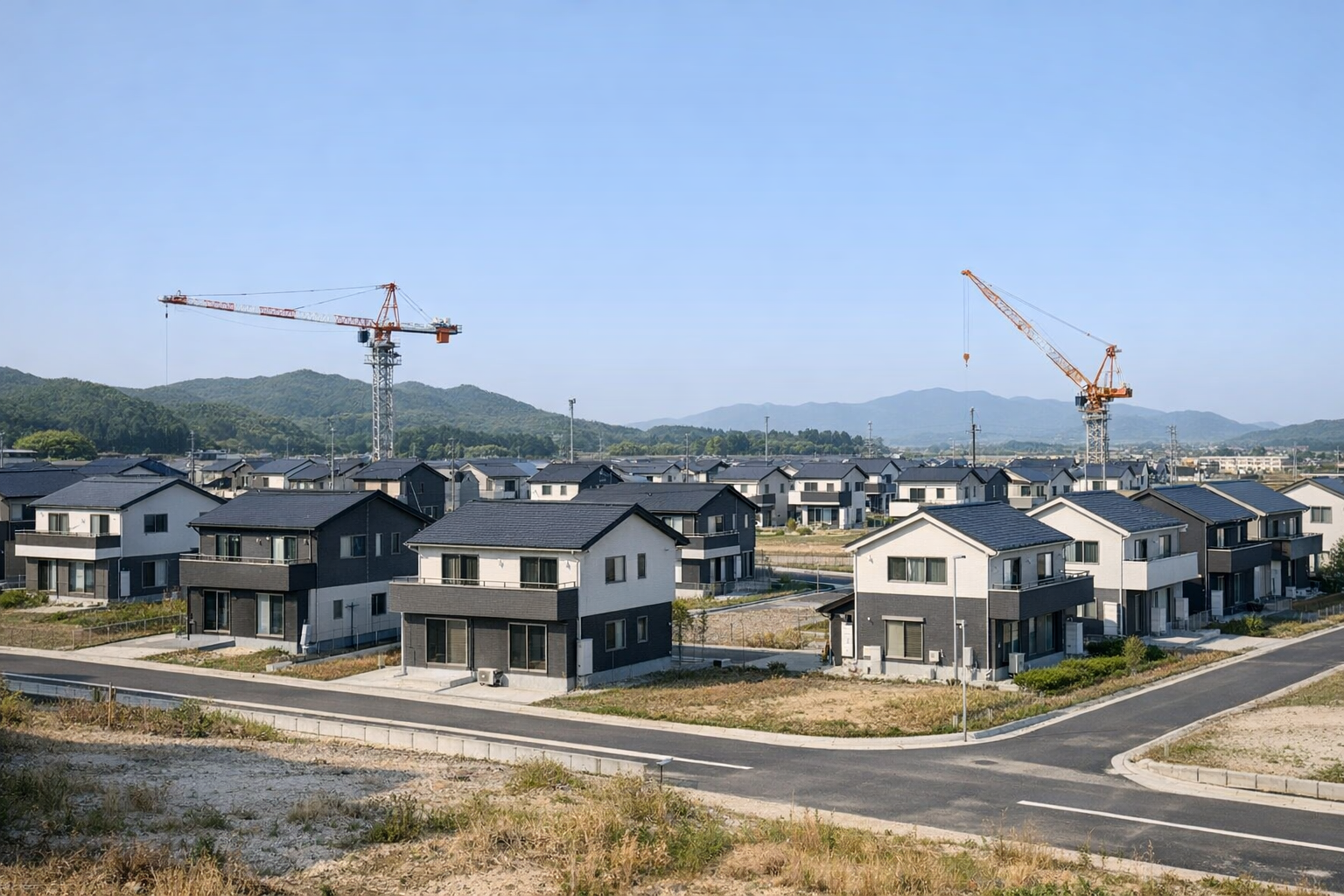
Japan’s population peaked around 2008 and has been declining since, yet building activity has not stopped. That continuing pace of construction — from housing and commercial property to roads and utilities — creates a growing dissonance between the size of the population and the footprint of the built environment. This situation highlights tensions between past investment patterns and present demographic realities.
Japan‘s experience illustrates how infrastructure and real estate markets can lag behind demographic shifts. As the population shrinks and ages, demand patterns change: fewer new households form, and different types of services are required. Meanwhile, the stock of buildings and public works created during earlier growth phases remains in place, with long lifespans and fixed maintenance requirements that do not automatically adjust to fewer users.
The consequences of this mismatch are practical and fiscal. Maintaining underused buildings and dispersed infrastructure can strain municipal budgets and limit resources for other priorities. Environmentally, continuing to add built floor area expands resource consumption and locks in carbon emissions and land use decisions for decades. Socially, communities may face higher per-capita costs for services and transport as population density declines in certain areas.
Addressing the gap between construction and demographic reality requires a mix of planning and asset-management strategies rather than a single policy fix. Options include prioritizing maintenance over new expansion, repurposing or consolidating underused facilities, and adapting zoning and procurement rules to discourage unnecessary building. Better long-term accounting of lifecycle costs and greater alignment of capital investment with realistic population projections can reduce the risk of stranded assets.
Beyond Japan, this pattern offers a cautionary reference for other parts of Asia where growth, urbanization and environmental limits intersect. Aligning future building with the limits of people and planet means rethinking metrics of progress, valuing quality and adaptability of assets, and designing policies that allow built environments to contract or transform as demographics and climate imperatives evolve.


