

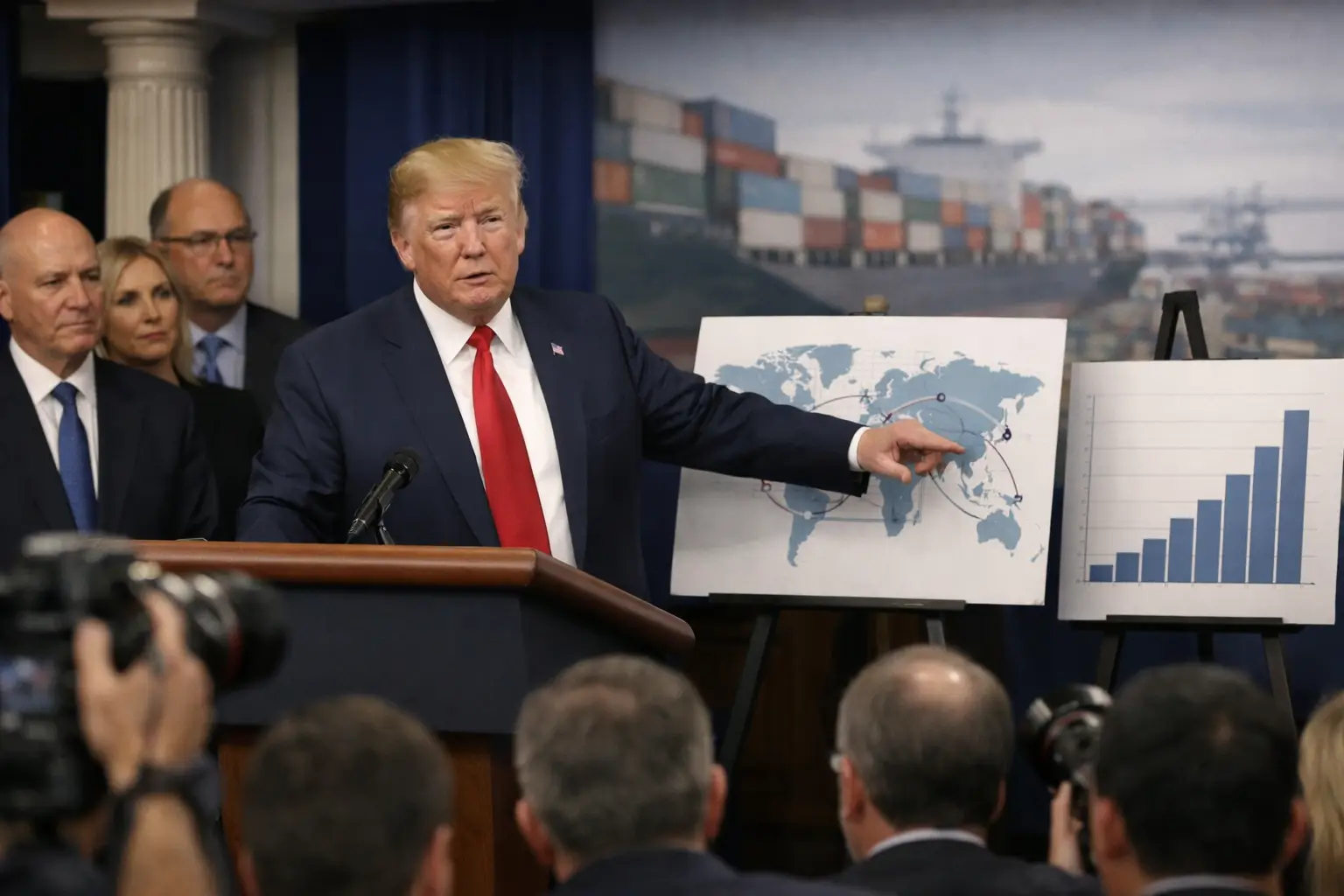
The renewed tariff threat from Donald Trump lands in a world that is less exposed to shock than it was during his first term. The political message remains sharp, but the economic effect is no longer judged only by the headline rate imposed at the border. Since the first round of US tariff pressure, governments and companies have adjusted routes, suppliers and commercial priorities, reducing the element of surprise that once magnified Washington’s leverage.
That change matters because tariffs work not only through cost, but through uncertainty. When the United States first turned trade barriers into a central policy tool, many exporters faced immediate disruption and had limited alternatives. Since then, parts of global trade have been redirected, with businesses seeking ways to keep goods moving while limiting dependence on a single market or customs regime. The result is not immunity, but greater preparation.
The strategic response has also moved beyond logistics. Trading partners are now planning on a longer horizon than one presidential term, treating US policy volatility as a structural risk rather than a temporary political phase. That shift changes the balance of pressure. If firms and governments believe tariff threats may return periodically, they have stronger incentives to build resilience into contracts, sourcing and investment decisions before measures are announced.
For the United States, this creates a more complex policy environment. Tariffs can still raise costs, redirect commerce and influence negotiations, but their impact may be diluted when targeted economies have already adapted. The broader trading system, overseen through institutions such as the World Trade Organization, remains under strain when large economies use import barriers as a political instrument. Yet the capacity of other countries to absorb or bypass the pressure has become a central factor in assessing the threat.
The key difference is expectation. A tariff campaign that once arrived as a disruptive break with established US policy is now part of the risk map for global commerce. That does not make new duties harmless for exporters, consumers or supply chains. It does mean that the response is likely to be faster, more coordinated and less improvised. Trump’s tariffs may still carry political force, but the world they are aimed at has learned how to move around them.


