

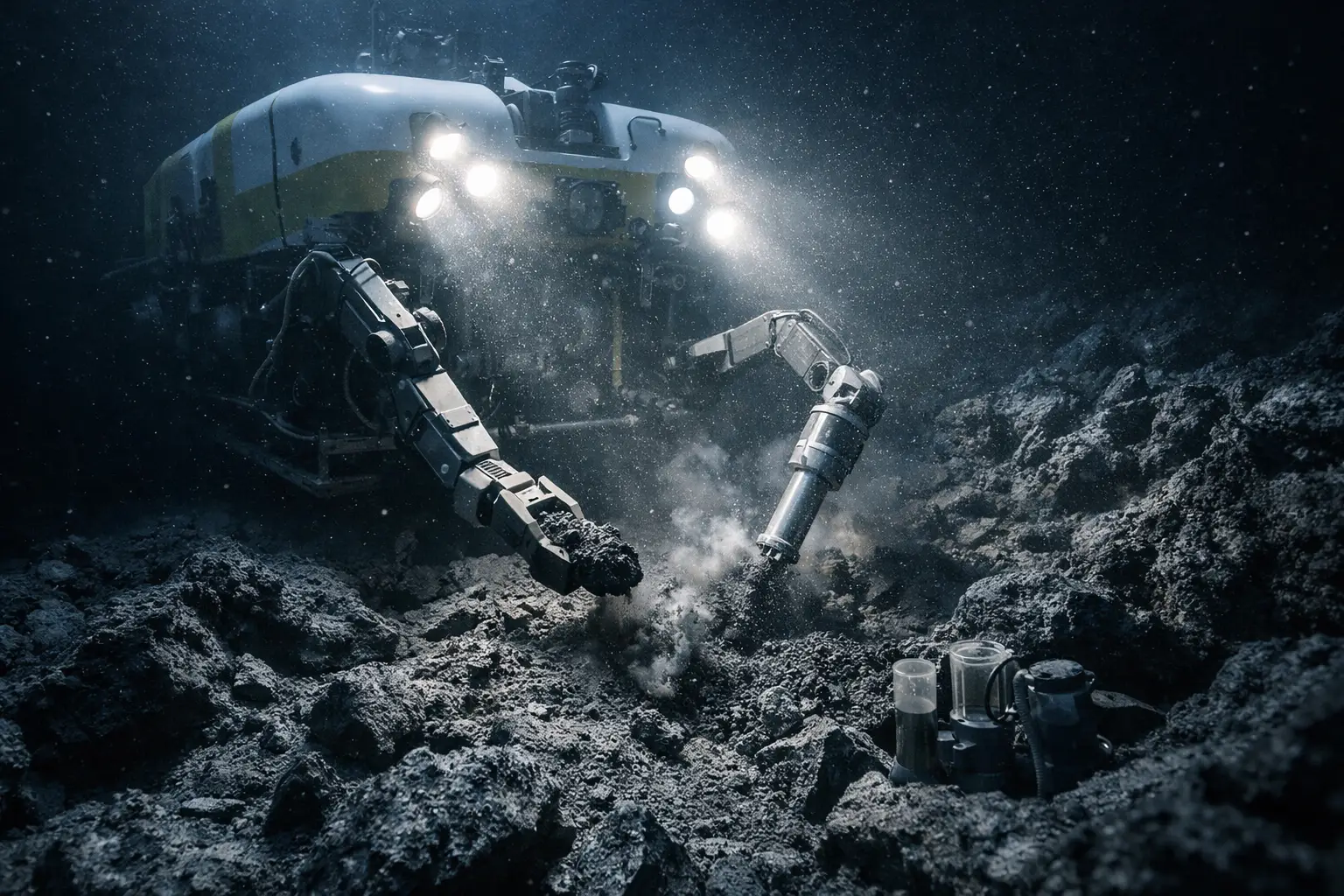
The Mariana Trench, the deepest known valley on Earth’s ocean floor, has yielded new evidence of volcanic activity at depths where geological processes are rarely observed directly. A remotely operated vehicle sent to collect samples around Challenger Deep found signs of what scientists identify as the world’s deepest known underwater explosive volcanic eruptions. The discovery adds a striking new element to the study of a region already central to understanding how the planet’s crust is recycled beneath the Pacific Ocean.
The trench began forming about 52 million years ago, when the Pacific tectonic plate started sliding beneath the Philippine Sea plate. That process, known as subduction, created the immense depression now called the Mariana Trench. Its lowest section, Challenger Deep, descends to nearly 11,000 metres below sea level, or about 36,000 feet. At such depths, the pressure is extreme and direct access is technically difficult, making robotic exploration one of the few practical ways to examine rocks, sediments and chemical traces from the seafloor.
The central question driving the mission is why this part of the ocean floor reaches such exceptional depths. Subduction zones can generate trenches, earthquakes and volcanic systems, but the specific structure and evolution of each trench depend on the plates involved, their movement and the material carried down into Earth’s interior. By sampling the area around the deepest point, researchers can compare physical evidence from the seafloor with models of plate movement. The volcanic material identified near Challenger Deep is therefore more than an isolated geological curiosity: it offers evidence from a place that records the long-term interaction between two major tectonic plates.
Explosive eruptions are usually associated with gas-rich magma and rapid pressure changes, conditions that are difficult to reconcile with the crushing environment of the deepest ocean. Finding evidence for such activity at this depth expands the known range of submarine volcanism and raises important questions about how magma behaves under enormous hydrostatic pressure. The samples may help clarify whether deep volcanic events differ substantially from shallower underwater eruptions in their chemistry, fragmentation and deposits.
The discovery also highlights the growing role of remotely operated vehicles in deep-ocean science. Human access to trenches remains limited, but robotic systems can reach places that are otherwise inaccessible and return material suitable for laboratory analysis. In the case of the Mariana Trench, those samples are helping scientists connect a process that began tens of millions of years ago with active geological evidence on the modern seafloor. The result is a clearer, if still incomplete, picture of how Earth’s deepest marine landscape was shaped.


