

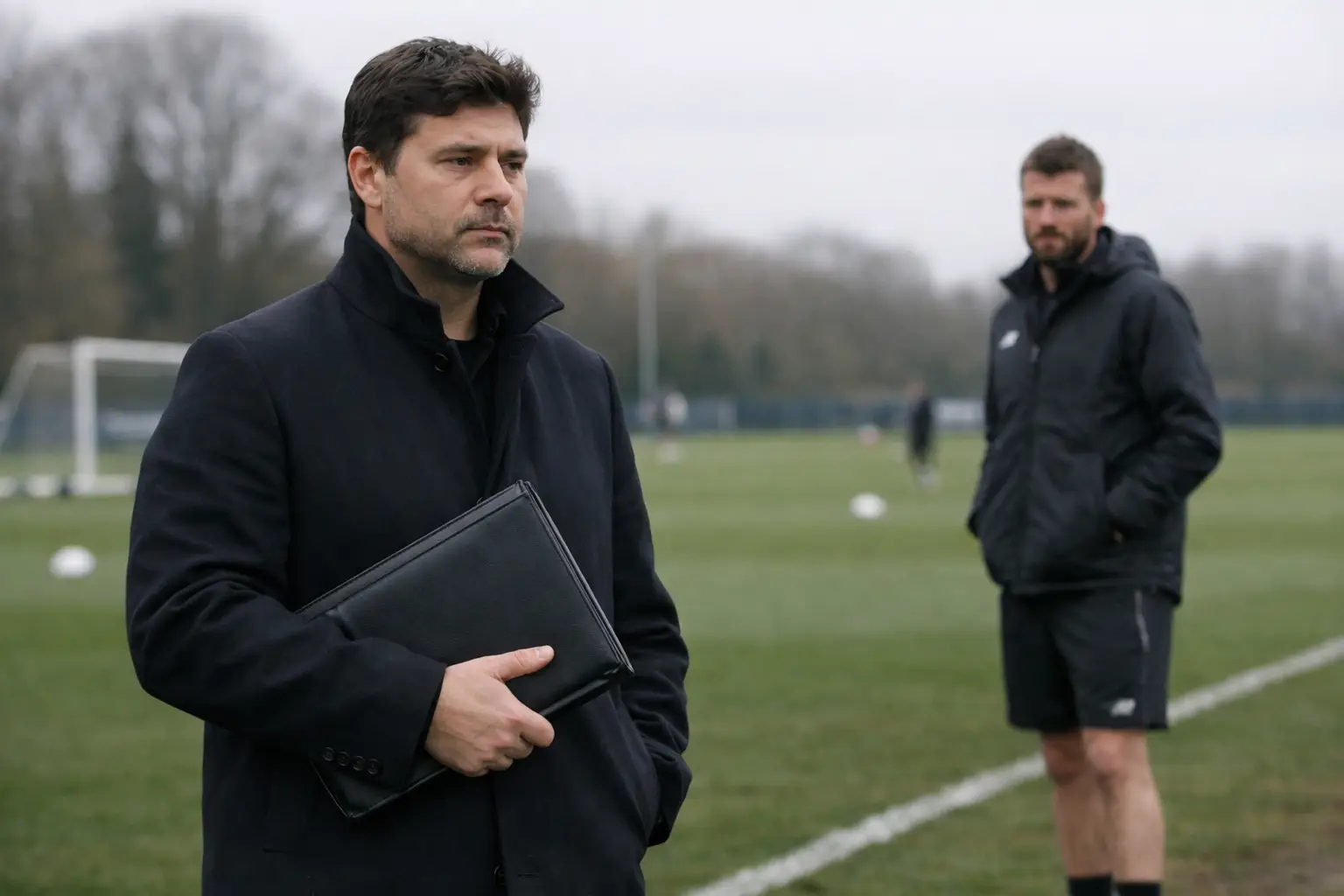
For nearly a decade, the idea of Mauricio Pochettino at Manchester United has hovered over English football as one of its most persistent managerial narratives. What once appeared to be a recurring possibility rather than an immediate plan now carries a sharper edge, with the Argentine again placed at the centre of discussion around the club’s future direction.
Pochettino has long been associated with the kind of football identity United have often sought to restore: energetic, structured, committed to development and capable of giving a team a recognisable shape. His work in the Premier League, particularly across spells with Southampton and Tottenham Hotspur, established him as a coach able to improve players and build competitive sides without relying solely on short-term fixes. Those qualities explain why his name has repeatedly surfaced whenever United have faced uncertainty in the dugout.
The renewed attention around Pochettino also underlines the scale of the decision confronting Manchester United. The club’s managerial choices have carried consequences beyond results, touching recruitment, player development and the wider attempt to define a modern sporting structure. A move for a coach with Premier League experience would not simply be about a high-profile appointment; it would signal how United intend to balance immediate pressure with the need for a coherent project.
In that context, Michael Carrick occupies a difficult and exposed position. A respected figure from his playing years at Old Trafford, he has been asked to operate in circumstances shaped by decisions above him and problems that predate his temporary stewardship. The scrutiny attached to any United role is intense, but an interim assignment offers little protection and few guarantees. Carrick’s association with the club should not reduce him to a placeholder in a story focused on another coach.
The attraction between Pochettino and Manchester United has endured because it combines ambition, familiarity and unfinished possibility. Yet the moment is also a reminder that major clubs rarely make managerial changes in isolation. The next step will affect not only the candidate most often discussed, but also the staff already in place, the players awaiting direction and a fan base looking for something more durable than another reset.


