

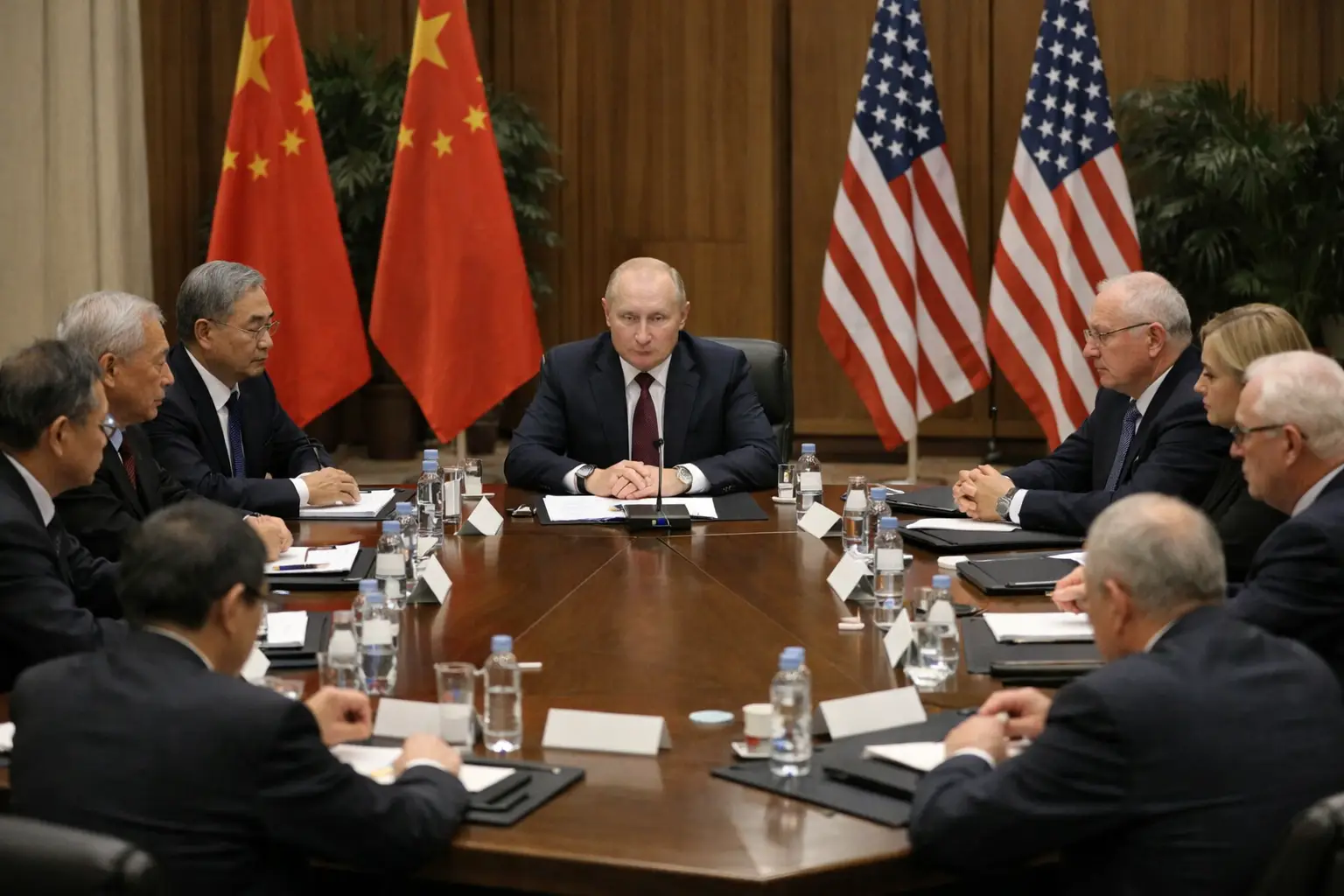
A trilateral invitation has placed Beijing in an uncomfortable position. Vladimir Putin has opened the door to a meeting that would involve China, Russia and the United States, but the format carries more risk than simplicity for Xi Jinping. Declining such a proposal could strain China’s carefully managed relationship with Moscow. Accepting it, however, would mean entering a diplomatic setting whose agenda has been shaped by Russia and the United States rather than by Beijing.
The problem is not the idea of dialogue itself. China routinely presents itself as a responsible global power and supports high-level engagement when it reinforces stability and respect for sovereignty. The difficulty lies in the architecture of the meeting. A three-way format would place Xi Jinping alongside two powers with very different priorities and would reduce Beijing’s room to define the terms of discussion. For a leadership that values strategic autonomy, the symbolism of being drawn into another pair’s diplomatic framework matters.
Moscow has an interest in showing that it remains central to global decision-making despite tensions with Western capitals. The Kremlin also benefits from displaying proximity to Beijing while engaging Washington on major security questions. For the United States, represented institutionally by the White House, a trilateral track could test China’s willingness to take part in direct strategic bargaining. That leaves Beijing facing a choice between visibility and exposure.
China’s public diplomacy has long sought to avoid appearing as a junior partner in its relationship with Russia. The Chinese Ministry of Foreign Affairs regularly frames Beijing’s external policy around independence, multilateralism and opposition to bloc politics. A meeting built around priorities first advanced elsewhere could complicate that message. It would also invite scrutiny of how far China is prepared to go in aligning with Moscow while preserving channels with Washington.
The immediate significance of Putin’s move is therefore not whether a summit takes place, but how it narrows Beijing’s diplomatic space. China cannot dismiss the proposal without considering the cost to its partnership with Russia. It cannot embrace it without weighing the consequences for its image as an autonomous power. In that tension lies the central challenge for Xi Jinping: managing a strategic relationship with Moscow while avoiding a format that could define China’s role before it has set the agenda.


