

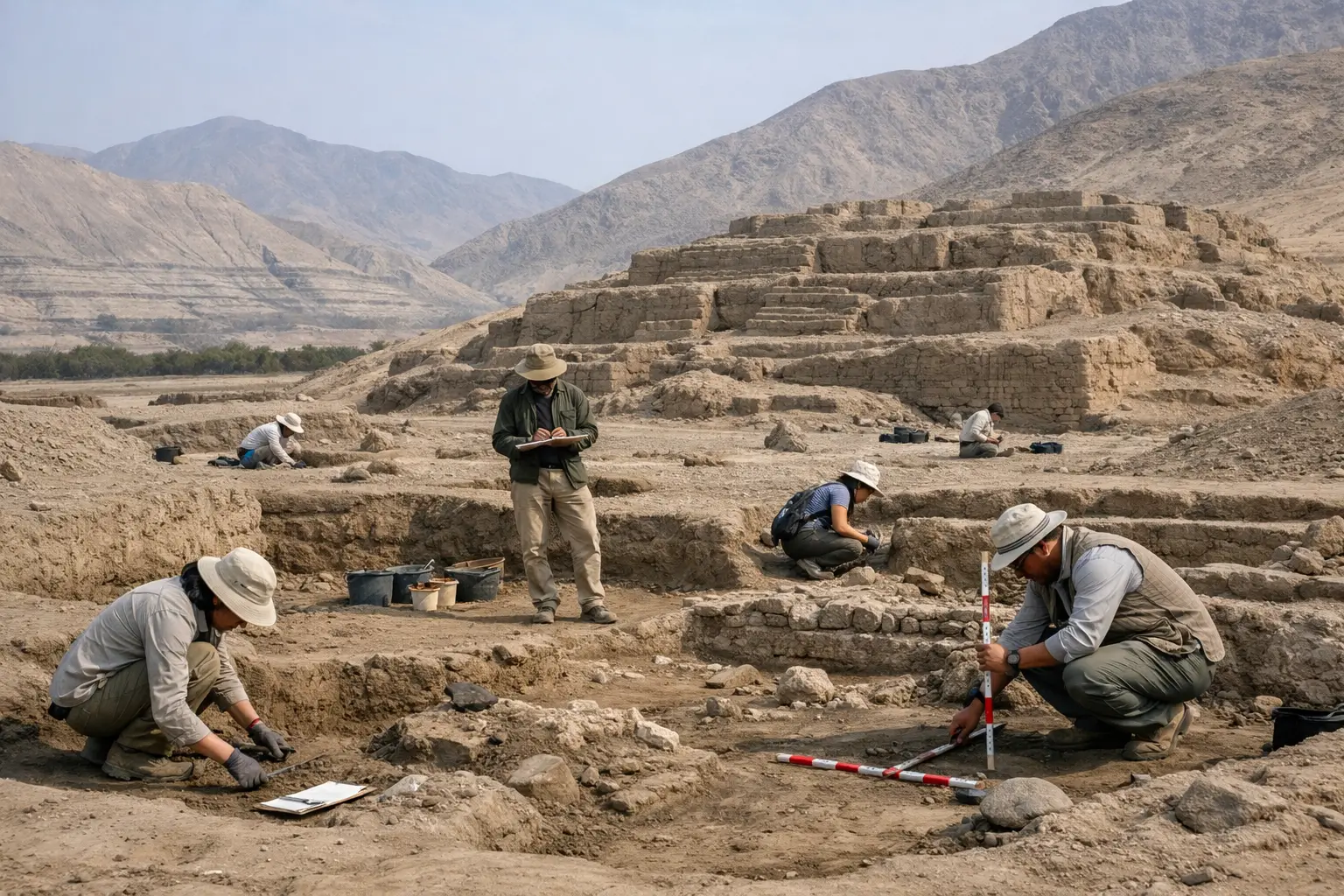
Human sacrifice in ancient societies is often read as evidence of crisis, fear or collapsing order. New archaeological findings from the Lambayeque Valley in northern Peru point to a more complex picture: even in periods marked by severe environmental disruption, interpersonal violence appears to have remained extremely uncommon.
The research focuses on communities living along Peru’s desert coast, a region where catastrophic flooding associated with El Niño has been linked to episodes of mass ritual sacrifice. El Niño, monitored today by institutions such as NOAA, can radically alter rainfall patterns and ocean conditions. For archaeologists, ancient responses to such shocks offer a rare long-term view of how societies cope when the environment changes suddenly.
The presence of ritual killing had raised an important question: did extreme flooding and resource stress trigger a broader surge in violence? The new survey of the Lambayeque Valley suggests otherwise. Evidence examined across the landscape indicates that violence was rare, including during intervals of ecological upheaval. That finding separates formalized sacrificial practices from everyday conflict, cautioning against treating the two as the same social phenomenon.
For the study of archaeology and climate change, the distinction matters. Ancient communities facing floods, scarcity or damaged infrastructure did not necessarily descend into generalized violence. Ritual sacrifice may have been a dramatic response to disaster, but the wider social fabric in the Lambayeque Valley appears to have remained comparatively peaceful. The evidence therefore complicates modern assumptions that environmental stress automatically produces escalating conflict.
The findings add nuance to debates about resilience in past societies. Archaeologists look to earlier climate extremes not to draw direct parallels with the present, but to understand the range of human responses available under pressure. In northern Peru, the record now suggests that even drastic ritual acts can coexist with low levels of interpersonal violence, offering a more restrained and more revealing view of life during environmental crisis.


