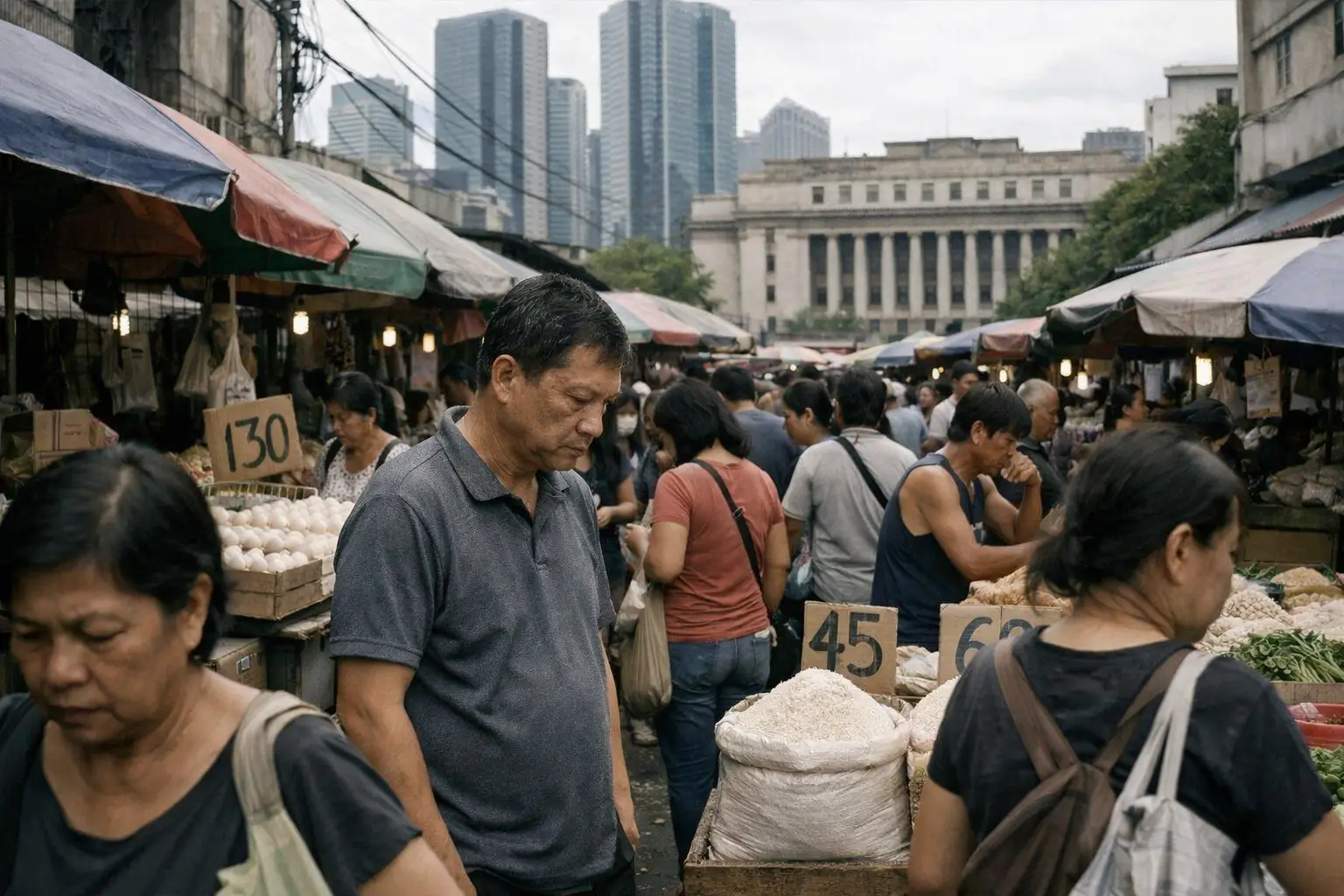
The Philippine economy expanded by 2.1% in the third quarter, marking a further loss of momentum as inflation continued to weigh on activity. The national accounts reading from the Philippine Statistics Authority underscores the pressure facing the Philippines at a time when higher prices have reduced the space for stronger domestic demand.
Inflation has become a central factor behind the slowdown. For households, rising prices tend to erode purchasing power and limit discretionary spending, particularly when wage gains fail to keep pace with living costs. For companies, costlier inputs and cautious consumers can make expansion plans harder to justify. The result is a weaker contribution from the parts of the economy that normally support growth, including consumption and private investment.
The 2.1% figure still represents expansion, but the pace points to a more fragile economic environment than a headline growth number alone might suggest. A slower GDP reading can affect hiring decisions, business confidence and public revenue, especially in an economy where domestic demand plays an important role. It also makes the quality of growth more important: output can continue to rise while many consumers and smaller firms feel limited relief.
For policymakers, the latest reading complicates the balance between supporting activity and restoring price stability. The Bangko Sentral ng Pilipinas and fiscal authorities face the challenge of containing inflation while avoiding measures that could further cool credit, investment and consumption. With growth slowing rather than contracting, the policy focus shifts to preventing price pressures from becoming a more persistent drag on the wider economy.
The third-quarter performance raises the importance of upcoming economic data, particularly indicators linked to household spending, business activity and prices. A recovery in purchasing power would help strengthen demand, while sustained inflation would keep pressure on both consumers and firms. For now, the 2.1% growth rate signals an economy still expanding, but doing so with less momentum and under the weight of elevated costs.