

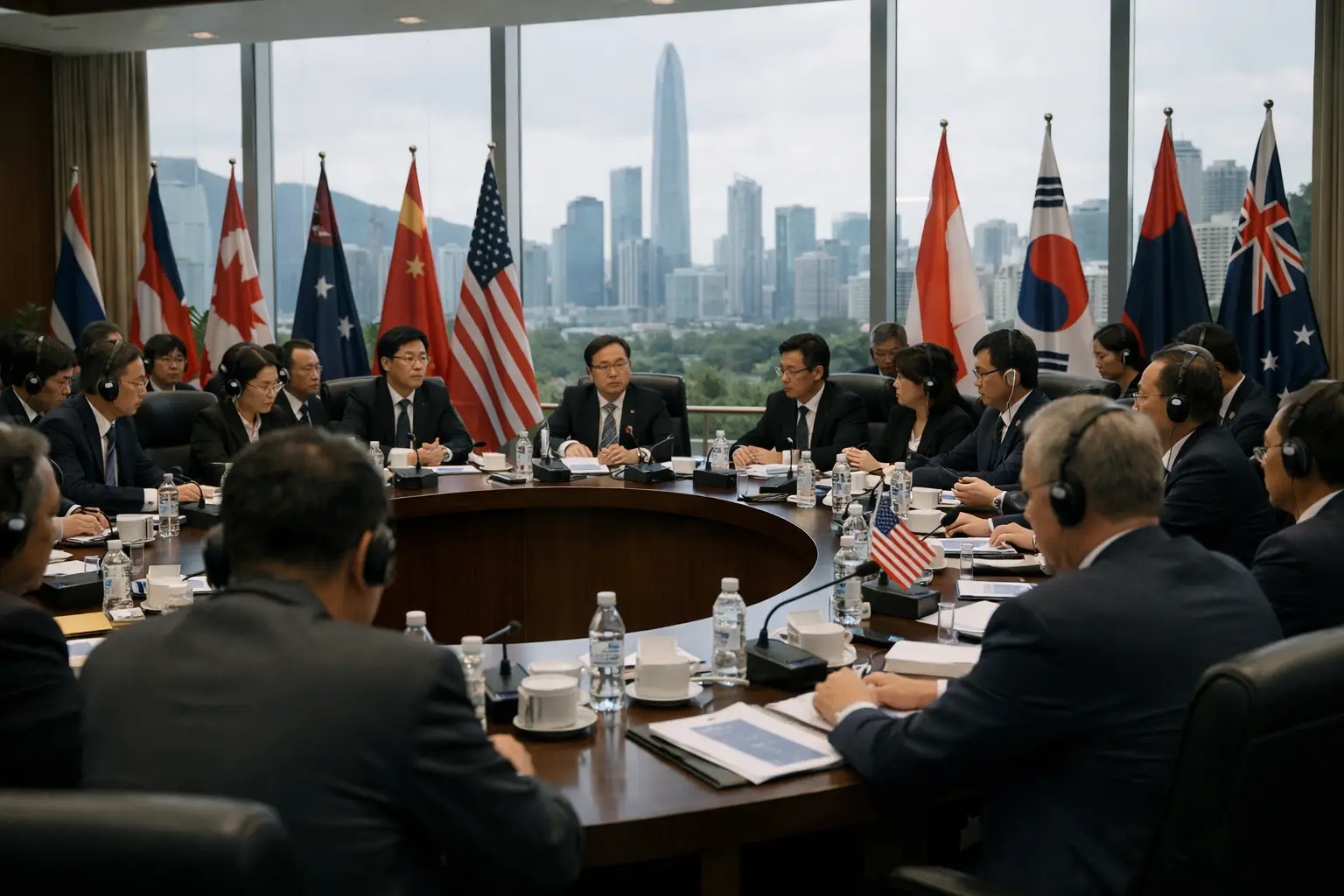
With Shenzhen preparing to take a central place in the agenda of APEC, the forum faces a question that now defines much of the Asia-Pacific economy: how to make diversification more than a defensive response to geopolitical risk. The city’s profile as a manufacturing, technology and logistics hub gives the discussion a practical setting, especially as companies reassess exposure to strategic rivalry between the United States and China.
The pressure to diversify has become a lasting feature of regional business planning. Tariffs, export controls, investment screening and national security concerns have changed the way firms evaluate markets, suppliers and production networks. For many companies, spreading operations across several locations is no longer only a matter of cost efficiency. It is also a way to protect access to customers, reduce disruption and maintain flexibility in an environment where political decisions can quickly affect commercial choices.
Shenzhen is relevant because it represents both the strengths and the vulnerabilities of the current model. Its growth has been closely tied to open trade, cross-border capital, advanced manufacturing and dense supply chains. Those same connections make it an important reference point for debates on resilience. Within APEC, the challenge is to move beyond risk avoidance and focus on value creation: better standards, more predictable customs procedures, digital trade rules, skills development and investment channels that allow smaller firms to participate in regional growth.
The U.S.-China rivalry remains the central constraint. APEC is not a security alliance and does not negotiate binding trade agreements in the way a formal treaty body would. Its influence lies in consensus-building, technical cooperation and the ability to keep economic dialogue open among economies with competing interests. That makes the Shenzhen setting significant. It can provide a platform for practical work on supply chains, innovation and connectivity without requiring members to resolve deeper political disagreements.
For businesses and governments, the next step is to treat diversification as an investment agenda rather than a retreat from integration. A more resilient Asia-Pacific economy will depend on networks that are broader, more transparent and less vulnerable to single points of failure. If the Shenzhen discussions can connect that goal with workable cooperation, APEC will reinforce its role as a forum where economic stability is built through practical coordination, even when strategic tensions remain unresolved.


