

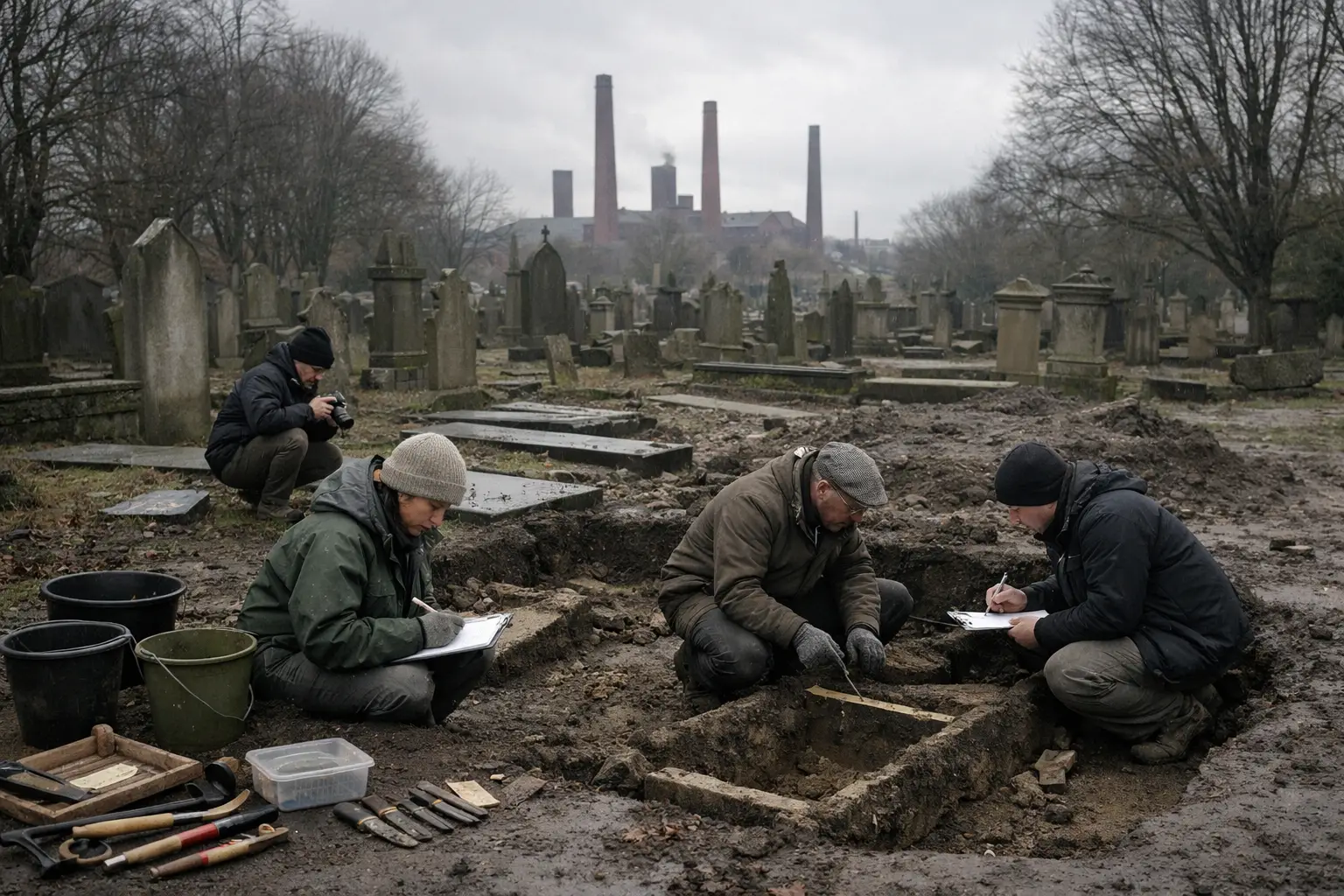
A centuries-old cemetery is helping scientists reassess one of the defining health burdens of England’s Industrial Revolution: rickets among children. The disease, in which a growing skeleton fails to mineralize properly, has long been associated with crowded cities, poverty, pollution and limited sunlight. New attention to burial evidence is widening that frame by placing climate shocks alongside the social and environmental pressures that shaped disease during the transition from an agricultural economy to an industrial one between roughly 1760 and 1840.
The period transformed work, housing and daily life. Expanding industrial towns exposed families to poor air quality, harsh labor conditions and inadequate accommodation, while children in densely built environments often had reduced access to sunlight. Those factors remain central to understanding rickets, a condition linked to disrupted bone development. Medical background from the National Institute of Arthritis and Musculoskeletal and Skin Diseases describes rickets as a disorder affecting bone strength and formation in children, underscoring why skeletal remains can preserve evidence of childhood illness long after written records fall silent.
The significance of cemetery research lies in its ability to connect individual bodies with broader historical conditions. Human remains can show signs of impaired growth and skeletal stress, while the chronology of burials can be compared with known periods of environmental disruption. In this case, the emerging link between climate shocks and Industrial Revolution disease does not replace established explanations such as urbanization, latitude or socioeconomic status. It adds another layer: weather and climate instability may have intensified existing vulnerabilities in communities already strained by industrial expansion.
That perspective matters for both history and public health. Rickets was not simply the product of biology or personal circumstance; it reflected the interaction of environment, labor, housing and access to sunlight. By bringing climate into the analysis, researchers can better explain why disease patterns varied across time and place, even within a country undergoing the same economic transformation. The cemetery evidence therefore turns a local archive of the dead into a broader record of how industrialization, deprivation and environmental stress combined to affect children’s bodies.
The findings also illustrate the value of interdisciplinary research. Archaeology, climate history and medical science together can recover forms of suffering that were often underdocumented in official accounts of industrial progress. For England, the lesson is not only that the Industrial Revolution carried a heavy health cost, but that climate may have been an overlooked force in shaping that cost. The cemetery’s evidence gives scientists a more complete basis for understanding disease in an era that helped define the modern world.


