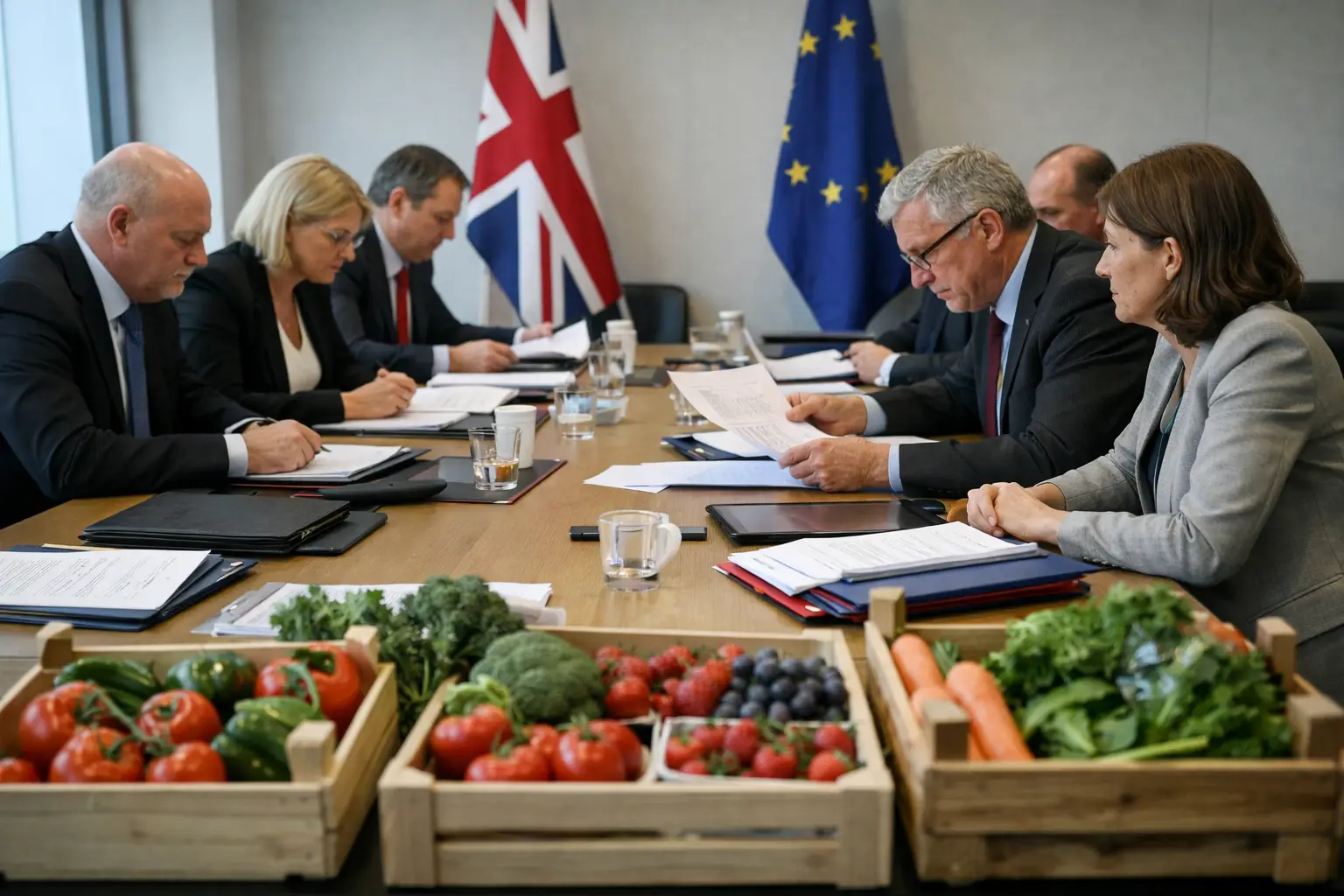
A draft agreement between the United Kingdom and the European Union would remove a significant layer of post-Brexit bureaucracy affecting food exports, creating the most substantial element so far in the wider effort to reset relations between London and Brussels. The understanding has been reached ahead of a planned UK-EU summit later this month, where political leaders are expected to assess the next phase of cooperation after years of tension following the UK’s departure from the bloc.
The deal concerns one of the areas most visibly reshaped by Brexit: trade in food and agricultural products. Since leaving the EU single market and customs union, British exporters have faced additional paperwork, certification requirements and border controls when sending goods to the continent. Those procedures have been particularly burdensome for businesses dealing in fresh, chilled or time-sensitive products, where delays can affect both costs and commercial viability.
For the UK Government, represented institutionally by GOV.UK, easing trade friction with the EU has become a central part of improving economic ties without reopening the question of EU membership. For the European Union, whose institutions include the European Commission, any arrangement on food exports carries wider importance because it touches on sanitary and phytosanitary standards, border management and the integrity of the single market.
The draft agreement does not erase the broader consequences of Brexit, but it signals a more practical phase in UK-EU relations. Food trade has long been one of the most sensitive sectors because it sits at the intersection of consumer protection, farming interests, logistics and regulatory trust. A deal in this area could therefore have a noticeable impact on companies trading across the Channel, particularly small and medium-sized exporters that have fewer resources to manage complex customs and compliance processes.
The upcoming summit will provide the political setting for turning the draft into part of a broader relationship agenda. The result will be watched closely by businesses, devolved administrations and trading partners seeking clarity on how far the United Kingdom and the European Union are prepared to go in reducing the day-to-day barriers created by Brexit. Even without changing the fundamentals of the post-Brexit settlement, a food trade accord would represent a concrete shift from confrontation toward managed cooperation.