

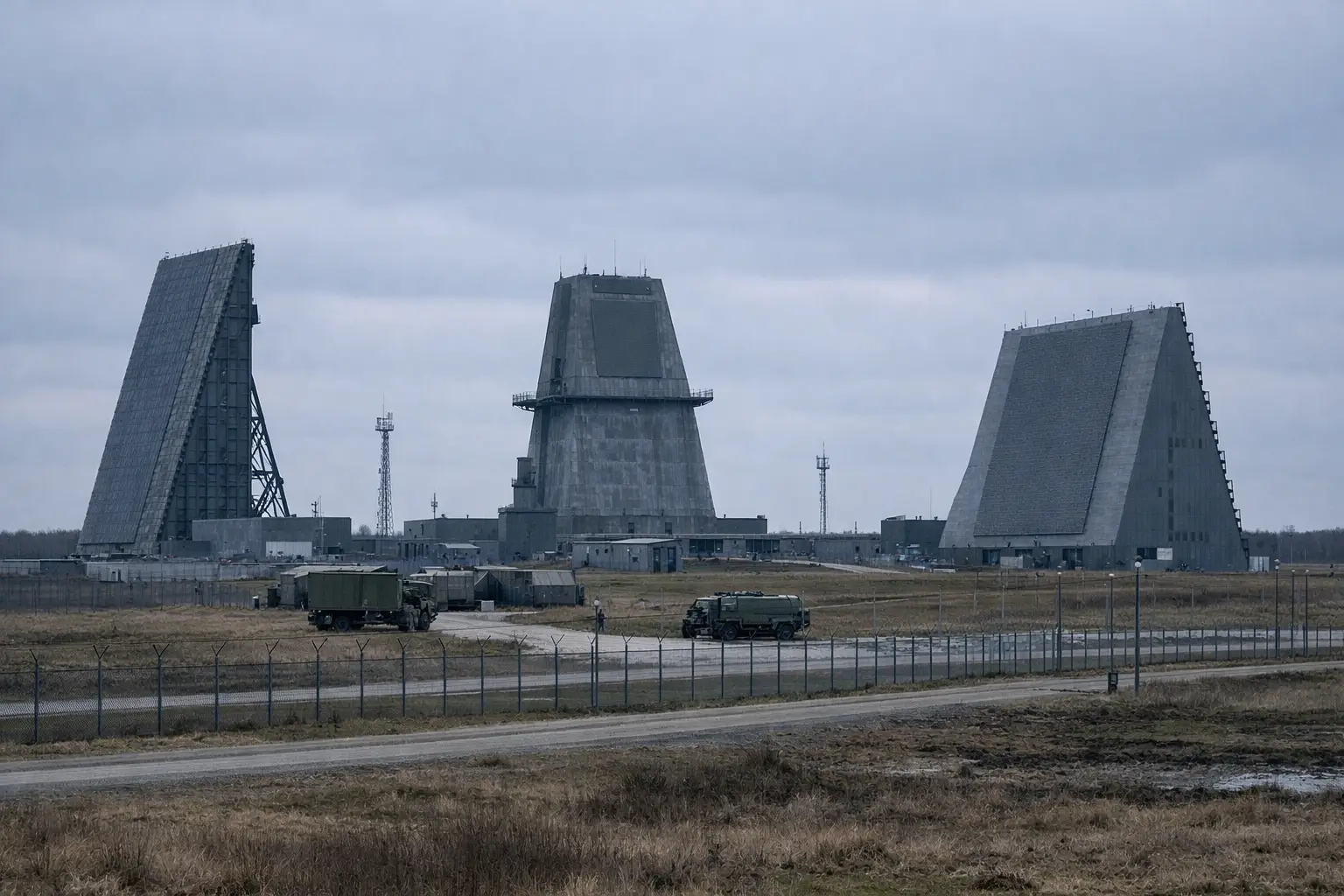
Russia’s new radar complex in Kaliningrad is nearing completion, drawing concern among defense specialists who believe the installation could monitor large parts of Europe. The project, located in a Russian exclave bordered by NATO members, has become another point of tension in an already strained military relationship between Moscow and the Alliance.
Kaliningrad’s geography gives the facility particular strategic weight. The territory sits between Poland and Lithuania, with access to the Baltic Sea, placing it at the center of one of Europe’s most sensitive security zones. A large radar system there would strengthen Moscow’s ability to observe air and possibly missile-related activity across a wide region, depending on the final configuration and operational role assigned to the site.
The concern for the NATO alliance is not limited to the radar’s technical reach. Surveillance infrastructure can influence how militaries interpret movements, exercises and deployments. In a tense environment, expanded monitoring may provide earlier warning, but it can also reinforce mutual suspicion and encourage further countermeasures. Defense experts warn that the Kaliningrad project could therefore add pressure to the military standoff between Russia and NATO rather than reduce uncertainty.
The development comes as European security planning remains shaped by Russia’s posture along NATO’s eastern flank. Kaliningrad has long been viewed as a highly militarized outpost, and any new system capable of extending Russian situational awareness is likely to be examined closely by alliance planners. For countries in Northern and Eastern Europe, the issue is especially relevant because radar coverage can affect airspace monitoring, crisis response and the balance of deterrence in the region.
No operational details have been publicly confirmed by Moscow in connection with the final status of the complex. Even so, the nearing completion of a radar installation described by specialists as unusually large is enough to heighten scrutiny. Its significance lies in the location as much as in the technology: a powerful sensor platform in Kaliningrad would place a major Russian military asset inside the European security theatre, facing NATO territory from one of the continent’s most contested strategic positions.


