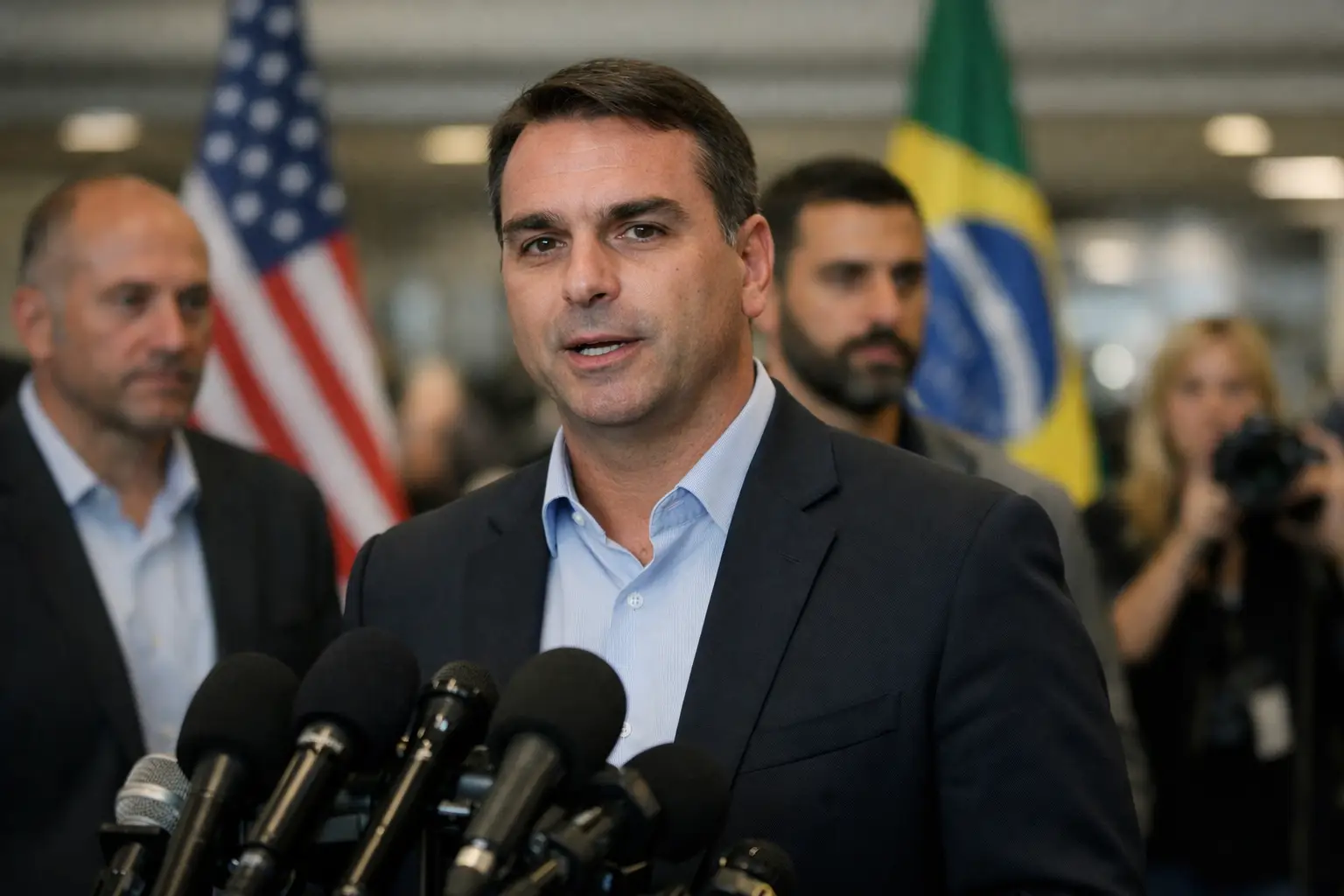
Flavio Bolsonaro arrived in the United States after losing Sunday’s presidential runoff in Brazil, while declaring himself the country’s rightful leader. The move places his claim in direct conflict with the election result and shifts a domestic political rupture onto foreign soil. His family has also fled to the United States, making their departure a central element in a confrontation now extending beyond Brazil’s borders.
The declaration by Flavio Bolsonaro matters because presidential runoffs are designed to deliver a clear institutional outcome when no candidate secures victory earlier in the process. A losing candidate’s refusal to accept that outcome can place pressure on public trust, political parties and constitutional procedures. In this case, the claim to leadership is not accompanied by any verified change in the reported electoral result, which remains the defining fact of the contest.
The presence of the Bolsonaro family in the United States adds a diplomatic dimension, without transferring political authority. Residence abroad does not establish recognition, executive power or control over state institutions. Those questions remain tied to Brazilian politics, the country’s constitutional order and the mechanisms that manage transitions after national elections. The situation also underlines how contested electoral narratives can quickly become international issues when leading political figures leave their country after defeat.
For Brazil, the immediate significance lies in the gap between rhetoric and institutional legitimacy. A self-declared claim to office challenges the normal expectation that candidates accept certified outcomes, even when elections are divisive. For the United States, the family’s arrival creates visibility around a foreign political dispute on American territory, but it does not alter the underlying electoral fact: Flavio Bolsonaro lost the runoff and nevertheless declared himself the rightful leader of his country.