

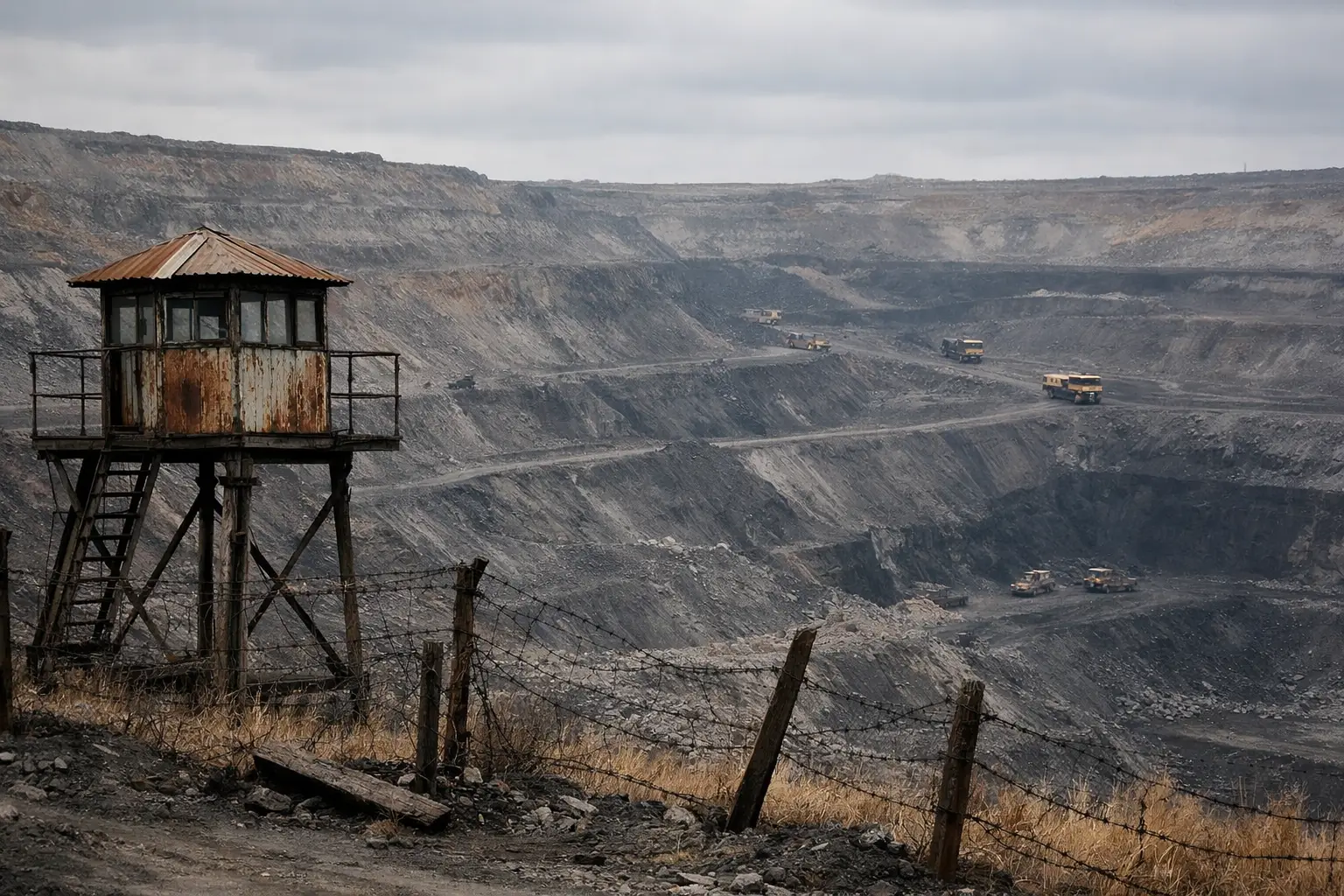
Karaganda sits where expansive seams of coal have driven both growth and hardship. The city and its surrounding region in Kazakhstan host some of the world’s largest coal-mining operations, an industrial footprint that has shaped local economies, settlements and transport networks. At the same time, the same terrain holds a darker chapter: extensive Soviet-era prison camps that once used forced labour across the coalfields and left an imprint on the social fabric of the area.
The visible landscape is dominated by pits, spoil heaps and infrastructure linked to extraction and processing. For communities around Karaganda, coal has been a major source of employment and municipal revenue, tying the local economy closely to fluctuations in demand and energy policy. The environmental consequences of long-term mining—soil disturbance, altered waterways and air quality concerns—are part of ongoing debates about rehabilitation, public health and the future direction of regional development. These discussions intersect with national energy strategies and efforts to balance economic stability with sustainability.
Beyond industrial traces, the region carries historical weight. The memory of the Soviet-era camp system persists in local narratives, cemeteries and sites where remnants of detention infrastructure remain visible. That layer of history informs how residents and authorities approach commemoration, archival research and education about the past. Preserving testimony and sites linked to forced labour raises questions about responsibility, historical truth and the integration of difficult histories into public spaces without sensationalism.
Looking ahead, policymakers, community leaders and former mining workers face intertwined challenges: diversifying an economy long dependent on a single commodity, addressing legacies of environmental degradation, and finding appropriate ways to remember a painful human history. Efforts under consideration range from land reclamation and investment in alternative industries to heritage projects that acknowledge both the industrial achievements and the human cost of the coal era. The geology of the region and the memory embedded in its towns make Karaganda a case study in how landscapes can carry simultaneous meanings as sources of livelihood and reminders of past injustices.


