

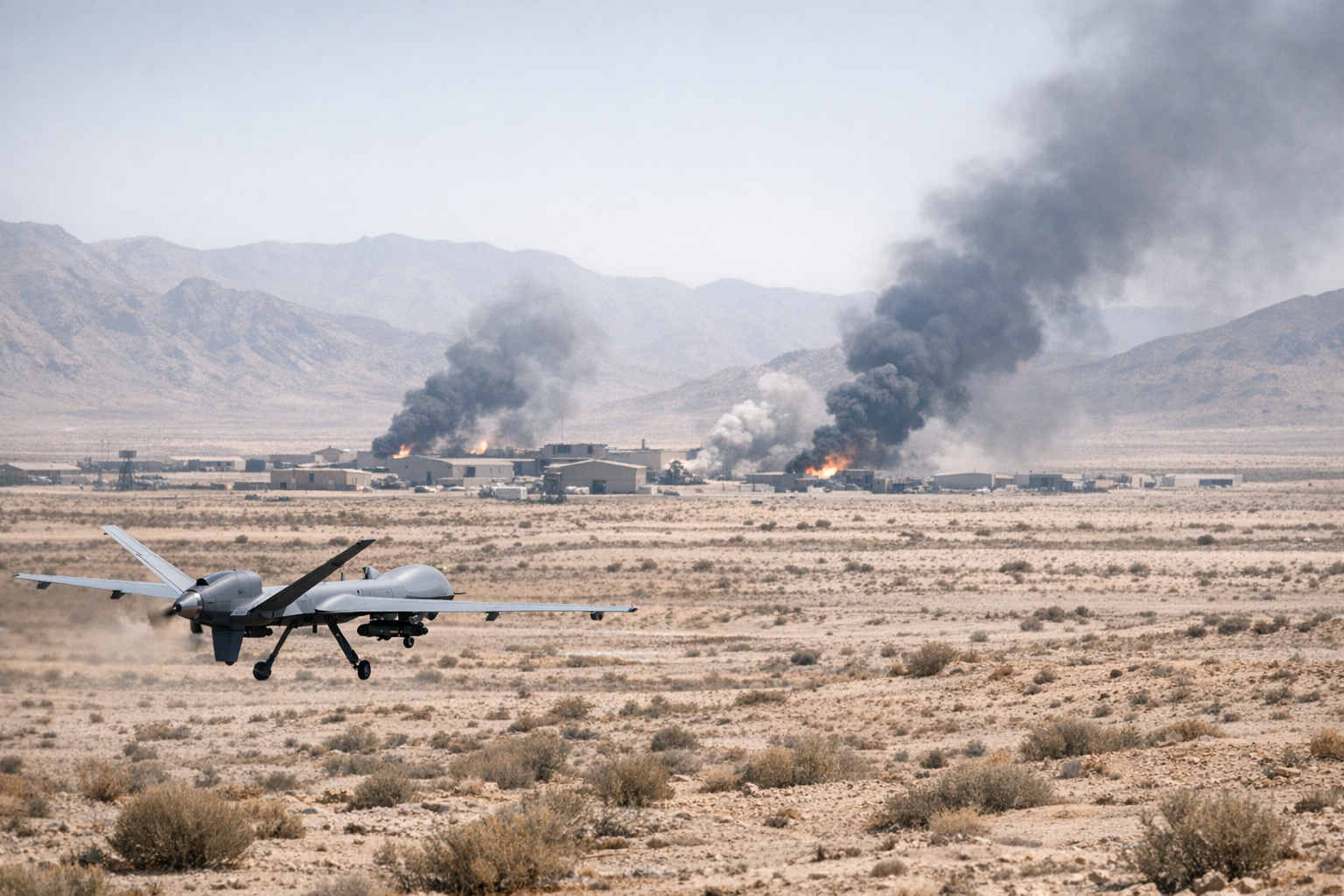
United States has launched fresh attacks on military targets inside Iran, aiming to deny Tehran the ability to rebuild capabilities damaged in earlier exchanges. The strikes, directed at sites described as military infrastructure, represent a clear intensification of direct military pressure and focus on preventing restoration of systems assessed as threats.
The operation was presented as targeting installations that could be used to reconstitute forces and materiel, a strategy intended to impose lasting limits on capacity rather than only offering short-term disruption. The involvement and public statements of the Department of Defense and other national security bodies underscore the centrality of military means in the current phase of the confrontation, alongside diplomatic and economic measures already in place.
However, military experts and policy observers note a structural risk inherent in this approach: if strikes regularly remove capabilities, actors on the receiving end are likely to undertake reconstruction efforts and seek means of retaliation. That dynamic can produce a repeating pattern of rebuilding followed by renewed attacks, with each side adapting tactics and targets. Such cycles raise the likelihood of a drawn-out security contest that extends beyond isolated incidents and imposes sustained demands on military resources and regional stability.
The immediate consequences include heightened tensions across the region and increased uncertainty for efforts to de-escalate through diplomacy. The strikes pose operational and political questions about how long such pressure will be maintained, how reconstruction efforts will be countered over time, and what role international partners and institutions might play in containing wider escalation. Monitoring the evolution of capabilities on the ground and the diplomatic responses that follow will be essential to understanding whether the confrontation remains episodic or becomes a prolonged strategic engagement.


