

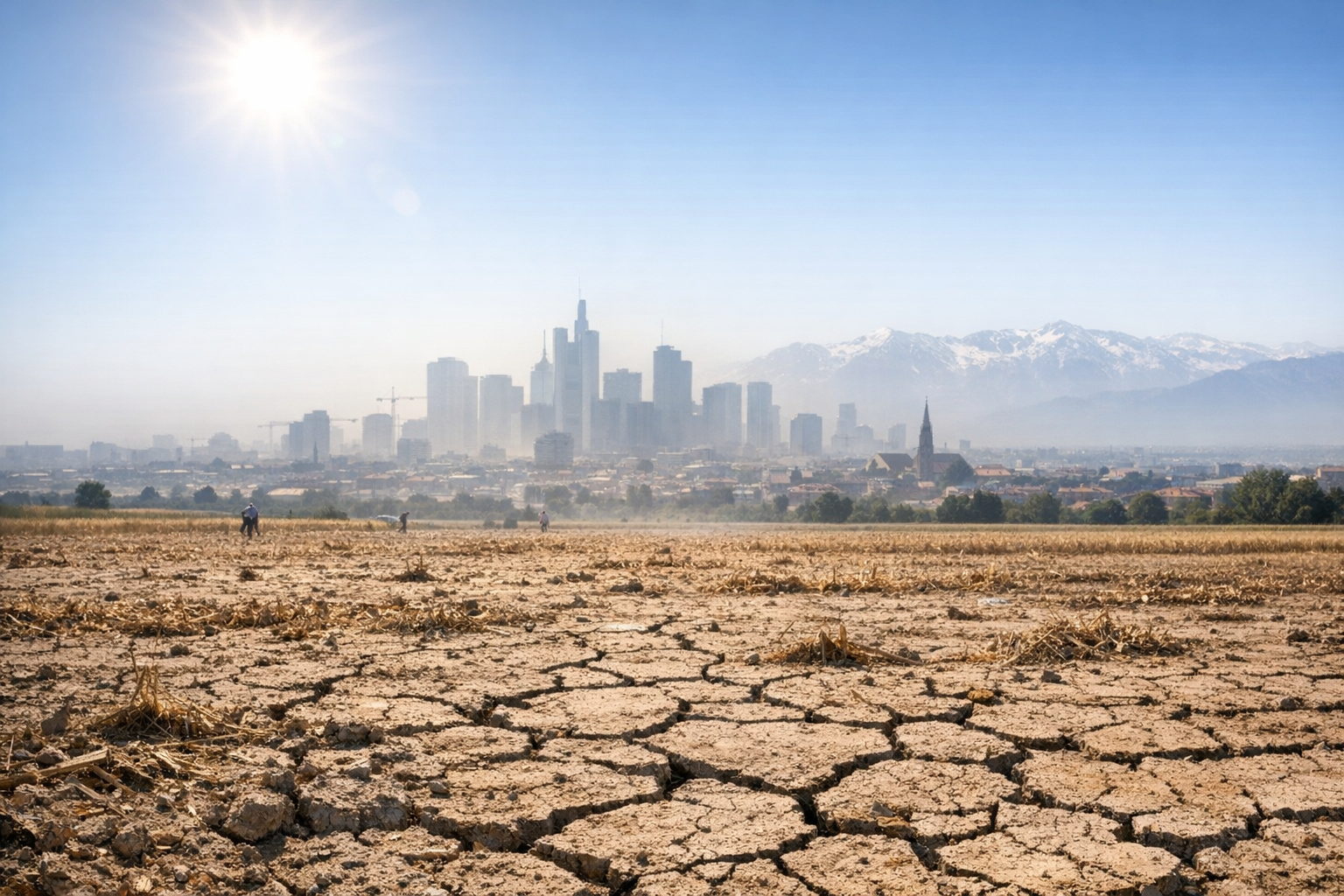
Europe’s 2026 summer has emerged as a defining episode in the continent’s long-term warming trend, with temperatures and impacts that have drawn fresh attention to the pace of climate change across the region. The continent is warming faster than many others, a pattern highlighted by IPCC assessments and environmental monitoring. This season’s extreme heat is the result of several interacting drivers rather than a single cause.
The first driver is the background rise in global temperatures driven by greenhouse gas concentrations, which lifts the baseline and increases the probability of record heat. Second, processes linked to Arctic amplification and changing atmospheric circulation have altered the jet stream, enabling more persistent high-pressure systems over parts of Europe that trap heat. Third, local land-surface feedbacks — notably low soil moisture after prolonged dry spells — intensify daytime warming because parched ground absorbs more heat and reduces evaporative cooling.
Fourth, urbanisation and land-use change amplify temperatures in cities through well-documented urban heat island effects, concentrating heat exposure where population and critical infrastructure are dense. Fifth, the season has featured compound extremes: heatwaves occurring alongside droughts and active wildfire seasons, which together magnify risks for communities, agriculture and ecosystems. These interacting elements explain why singular temperature records are only part of the broader picture.
The consequences are already visible across sectors. Public health systems face increased demand during prolonged heat, electricity networks strain under higher cooling loads, and agricultural yields suffer where soils and water supplies are depleted. Natural systems also show acute stress: river flows fall, alpine snowpacks reduce, and fire seasons lengthen. National and regional authorities are responding with preparedness measures, revised heat-health plans and investments in resilience and early warning, led in part by initiatives at the European Commission level.
This summer’s sequence of extremes underscores the dual challenge for climate change policy: reducing greenhouse gas emissions to limit long-term warming while accelerating adaptation to protect lives, livelihoods and infrastructure now. The patterns observed in 2026 add to a growing record of amplified heat in Europe, reinforcing the need for coordinated scientific monitoring, planning and investment across jurisdictions.


