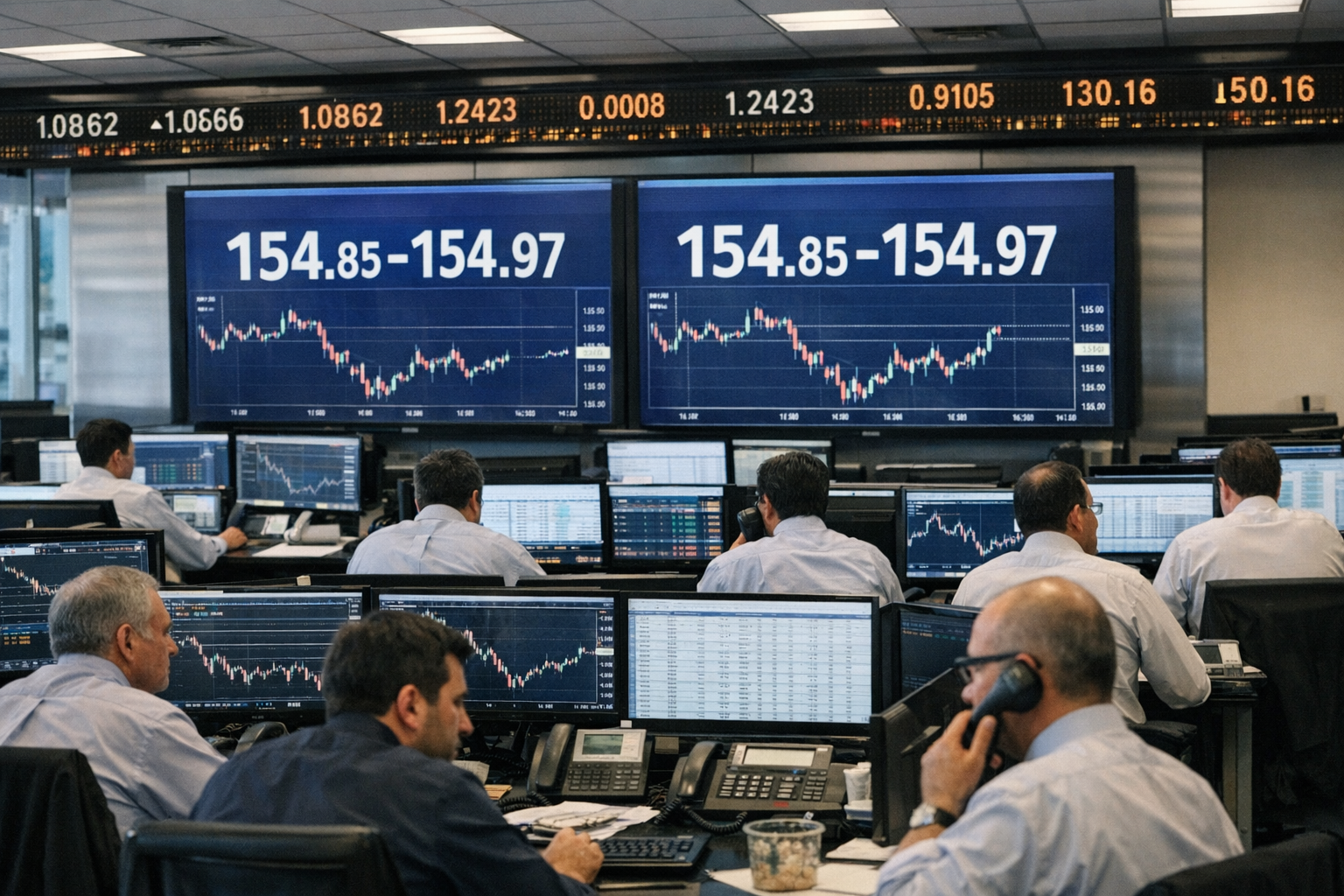
Yen’s move into the 155 range has prompted renewed discussion in financial markets about a possible reversal of the long-standing carry trade that relies on a weak yen as a funding currency. The currency’s appreciation has altered the risk-reward calculus for investors who have borrowed in yen to buy higher-yielding assets abroad, increasing the likelihood that some positions may be reduced or closed. Market volatility has picked up as traders reassess exposure, while liquidity conditions are being watched closely ahead of the next round of macroeconomic updates.
At the center of the dynamic is the role of Japan and its interest-rate environment. The persistence of low rates in Tokyo made the yen a popular funding currency, but even modest appreciation can erode profits on carry positions. Observers note that shifts in global yields, risk sentiment and currency volatilities can all trigger adjustments. The institutional backdrop includes ongoing scrutiny of central-bank settings; in this context the Bank of Japan remains a reference point for investors assessing the durability of yen movements.
For exporters and multinational firms, a stronger yen carries practical implications for earnings translated back into local currency and for hedging strategies. Financial markets beyond foreign exchange are sensitive to a potential unwind: equity indices, especially in sectors exposed to external demand, and fixed-income markets can react if large funding flows reverse. Portfolio managers are monitoring volatility metrics and funding conditions to gauge the scale of any rebalancing required, while derivative markets are pricing in greater uncertainty around cross-currency moves.
Looking ahead, the key question for market participants is whether the current appreciation will persist and prompt a sustained carry-trade reversal or remain a temporary repricing. The outcome will hinge on developments in global monetary policy, risk appetite and economic data flow. Investors and policymakers alike will be tracking these signals closely, since a meaningful unwinding could transmit through exchange rates into trade competitiveness and broader financial conditions in a variety of jurisdictions and asset classes. Markets will remain attentive as positions are reassessed.