

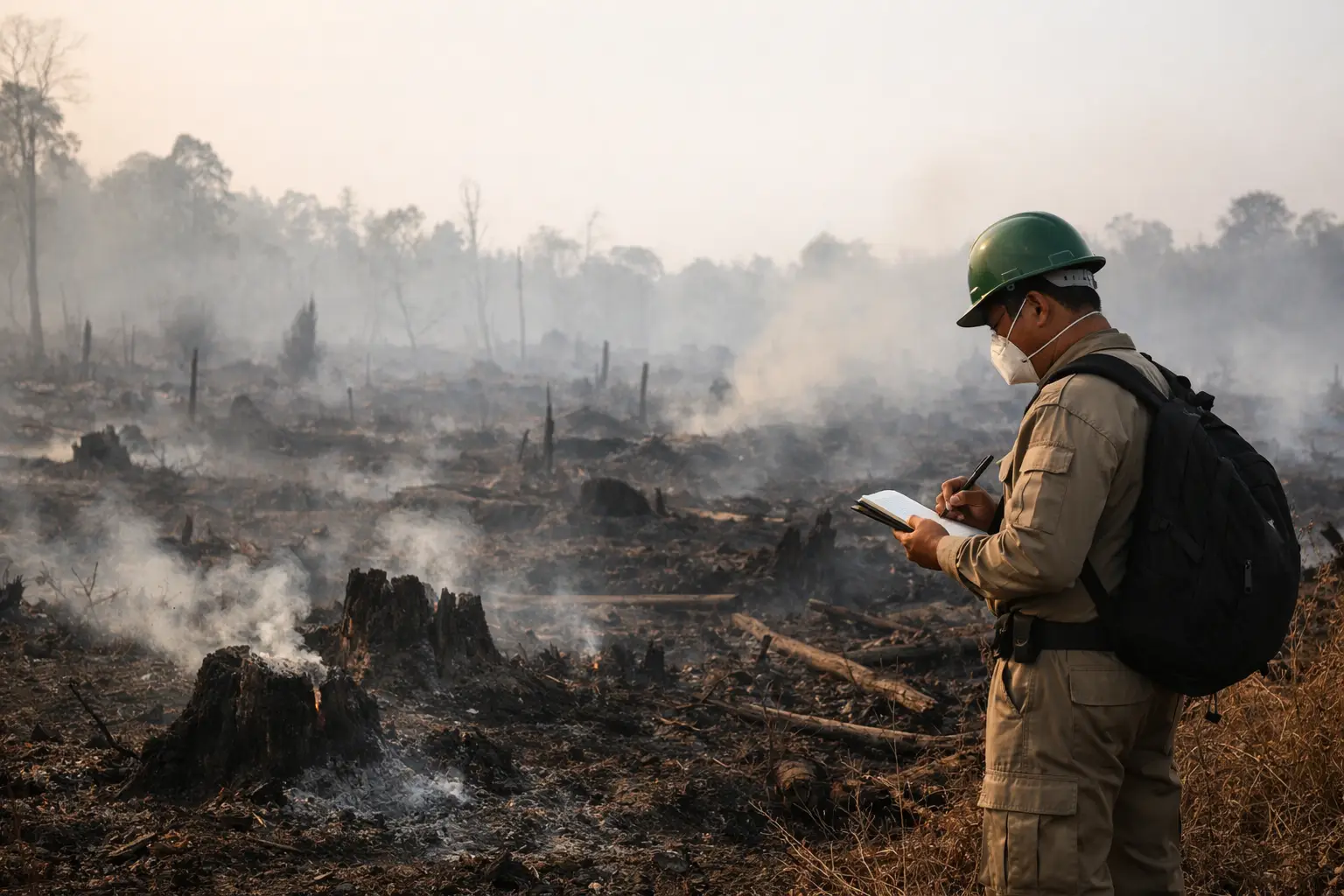
Indonesian wildfire season has once again placed strain on efforts to conserve forests and generate carbon credits. Large peatland and forest fires release stored carbon, damaging the very sinks that underwrite many forest carbon initiatives. The recurrence of these fires complicates long-term carbon accounting and raises questions about the permanence of credits issued for avoided deforestation and peat preservation in Indonesia.
Forest carbon projects operating under voluntary and regulated schemes rely on sustained carbon storage to deliver climate benefits. When fires consume project areas, they can trigger carbon reversals — emissions that negate previously claimed removals. This dynamic affects registries, buffer mechanisms and the perceived integrity of credits, and it places project developers under pressure to demonstrate robust fire risk management and credible monitoring.
Responses to the threat have combined landscape restoration, improved surveillance and revised project design. The Indonesian Peatland Restoration Agency BRG and other institutions have prioritised peat rewetting and canal blocking to reduce fire susceptibility, while some developers incorporate adaptive measures such as firebreaks and community fire brigades. At the same time, methodologies for issuing credits increasingly factor in the risk of reversal and the need for long-term stewardship of peat soils and standing forests, with implications for project costs and credit supply in the forest carbon market.
The interplay between wildfires and carbon projects has broader implications for climate policy and investment. Persistent fire risk may tighten investor scrutiny, shift demand toward credits with stronger permanence guarantees, and spur further collaboration between government agencies, local communities and private actors on prevention and restoration. As Indonesia continues to balance development, peatland management and emissions targets, the performance of forest carbon projects under fire-prone conditions will remain a central test of their role in global mitigation strategies.


