

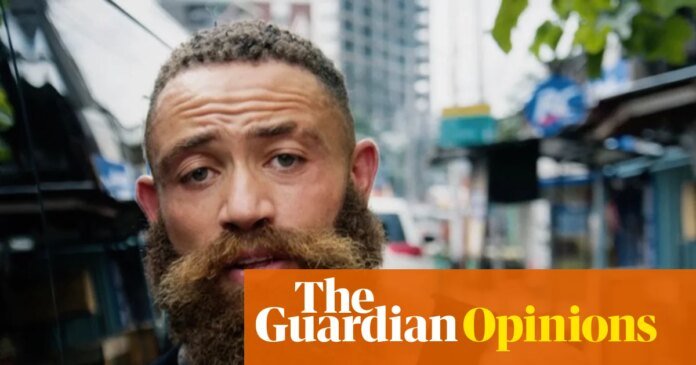
Recent weeks have not been good for Ashley Cain, the former footballer and now former presenter of BBC Three’s Ashley Cain: Into the Danger Zone. While he was once seen as a catch for a legacy broadcaster keen to win back the attention of young men, the Guardian brought to light a number of disturbing posts made by the presenter, describing women as “slags”, “sluts” and “bitches”, as well as tweets joking about hitting and choking women. Although the BBC has announced the axing of Cain’s show, and said that its vetting process “clearly failed”, new reporting in the Guardian shows concerns about Cain’s online comments were raised with the BBC last year.
Questions remain about why nobody apparently thought to run a background check in the first place, and why concerns about Cain were apparently ignored. Cain’s attitude was not exactly a secret. After his football career, he appeared on Ex on the Beach and became known for seducing fellow contestants. Then he gained a big following on Snapchat for posting videos of himself having sex with women. In 2015 he denied accusations of capturing and sharing sexually explicit photos and videos of a woman without her consent. A scroll through his prolific and public social media profiles (“talcum powder pimp slap these bitches already!”) would have revealed several troubling statements. In an Instagram post he said, “I don’t deny it. I don’t excuse it.”
It seems clear that in hiring Cain, establishing his attitudes toward women was not a priority. Legacy media is in an obvious panic, with fewer than half of gen Z watching broadcast TV, and young men in particular appearing to prefer online personalities to stuffy presenters. Cain’s macho persona seemed to be exactly what media executives thought young men want to see. Indeed, in 2025 the BBC noted his “exceptional” ability to connect with young men.
But this calculation is as cynical as it is wrong. Hiring people such as Cain implicitly concedes that the casual degradation of women is a vital component of modern masculinity. Perhaps those within legacy media see themselves as powerless against the changing attitudes of young men, driven by content creators, unregulated social media platforms and politicians building careers on the back of hate.
But the truth is far more complicated. While the threat of the manosphere is real and growing, data shows that young men in Britain remain one of the most progressive demographics in the electorate. They disproportionately vote for left-of-centre parties and policies, and when polled tend to have more progressive views on women and feminism than older men, including millennials and gen X.
Most young men are not, in fact, furious about feminism, rather they are angry about the same things everyone else is angry about: unaffordable housing, insecure work and the price of their food shop. For a small minority, alienation finds expression in misogyny, but the vast majority of us blame the rich and powerful for the ills in our lives.
It is worth questioning, then, why the media and political establishment’s definition of “connecting with young men” still has such a warped political bent. After all, Gary Lineker, a popular presenter among young men, was suspended in 2023 for online criticism of the government’s asylum policy and left the BBC in 2025, a process reportedly hastened by his social media posts criticising Israel (Lineker apologised for one repost containing antisemitic imagery). This level of scrutiny appears absent when it came to Cain. Instead of caricaturing young men as reactionaries, media institutions should take the time to get to know the nuances of our demographic to learn what resonates.
Already there are glimpses of what this kind of representation could look like in the mainstream. The BBC’s Race Across the World made headlines this year over the friendship of contestants Jo and Kush – two young men viewers fell in love with for their warmth and joyful banter. Likewise, the broadcaster’s new documentary starring Gareth Southgate offered up a more sophisticated way of telling the story of Britain’s young men. These moments are proof of a wider concept – that institutions such as the BBC don’t have to compromise themselves to win the attention of young men, they just have to stop assuming the worst about us.
For me, masculinity will never be about degrading women. It is about looking after the people around you and standing up for those who can’t stand up for themselves. That’s the kind of media representation I and so many others are crying out for, not the paper masculinity of the manosphere.
Sign up to Matters of Opinion
Guardian columnists and writers on what they’ve been debating, thinking about, reading, and more
after newsletter promotion
Do you have an opinion on the issues raised in this article? If you would like to submit a response of up to 300 words by email to be considered for publication in our letters section, please click here.
Source:
www.theguardian.com


