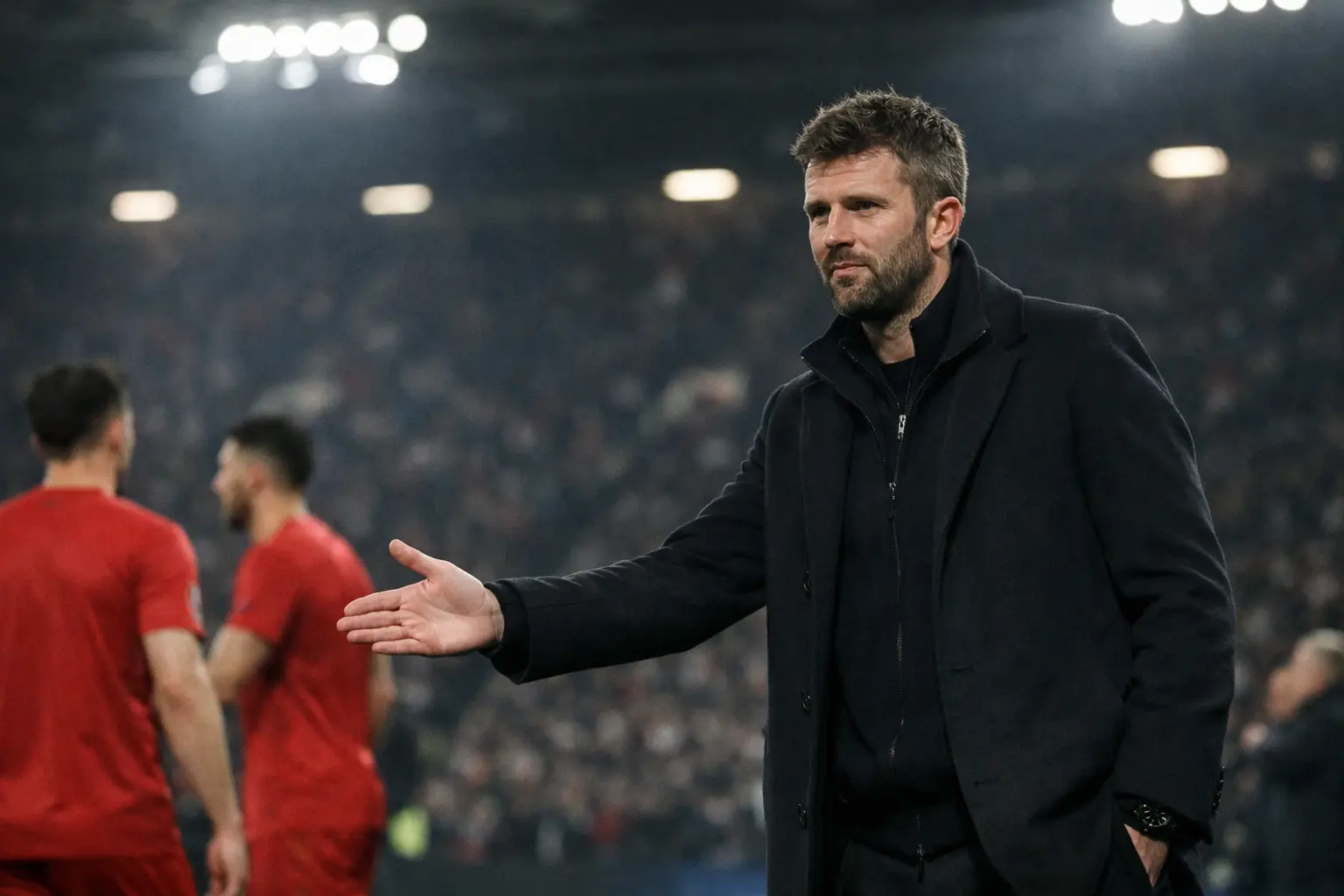
Manchester United’s comeback against Roma gave Michael Carrick the result he most urgently needed on a night that had begun to look deeply damaging for his position. Two goals down at half-time, Manchester United recovered to win, turning a potentially defining setback into a result that changes the immediate tone around the head coach.
The match contained the elements that often reshape a season’s narrative: an interval intervention, a visible shift in momentum and a penalty that had to be taken again. The details matter because United were not simply protecting a lead or managing a controlled performance. They had to respond from a position of clear vulnerability, and the outcome placed renewed emphasis on Carrick’s ability to influence the team when pressure was at its highest.
For a club followed as closely as United, results rarely stand alone. A victory over Roma carries weight beyond the final whistle because it interrupts a damaging storyline and gives players, staff and supporters a moment of release. In that sense, the win has value for football reasons as well as psychological ones: it rewards resilience, restores a measure of authority to the dugout and prevents external pressure from becoming the only subject around the team.
Still, one comeback does not provide a complete answer to the questions surrounding Carrick. It can relieve pressure without removing it. United’s performance before the interval will remain relevant, particularly because the side had allowed itself to fall 2-0 behind. The reaction showed character, but the deficit also underlined why scrutiny had intensified in the first place. For any coach under examination, both parts of the evening will be assessed together.
The significance of the win will depend on what follows. If United build on the response, the Roma match may be remembered as a turning point in Carrick’s tenure. If it proves isolated, it will stand more narrowly as a dramatic escape from a difficult night. For now, the result has given him time, revived the conversation around his leadership and ensured that the next assessment begins from a stronger position than looked possible at half-time.