
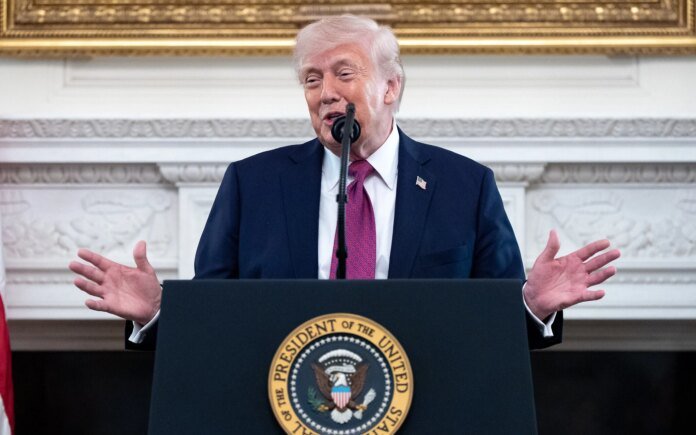
US President Donald Trump on Thursday said the US Navy would “shoot and kill” any boat mining the Strait of Hormuz, and claimed “infighting” has hobbled Iran’s ability to respond to peace proposals, even as The New York Times reported that hard-line generals had consolidated power under the new supreme leader.
Meanwhile, Defense Minister Israel Katz said Israel was ready to renew the fighting with Iran and was awaiting a “green light” from the US to target Iranian energy sites and Supreme Leader Mojtaba Khamenei, whose father and predecessor Ali Khamenei was killed at the start of the war.
Israel and the US launched the bombing campaign on Iran on February 28 in a bid to destabilize the regime and destroy its ballistic missile and nuclear capabilities. The fighting entered a truce on April 8.
The ceasefire was originally conditioned on Iran reopening the Strait, and set to last two weeks, but Trump extended it hours before the early Wednesday deadline, while maintaining a US blockade that he imposed on Iran-linked shipping in the key waterway on April 13.
Although the US had focused much of its fire in the war on Iran’s navy, sinking and heavily damaging dozens of vessels, the Islamic Revolutionary Guard Corps operates a fleet of small attack boats, some of which apparently survived the war. Those vessels typically carry mounted machine guns, and can be used for mining operations, though the US has yet to confirm that Iranian ships have been mining the Strait of Hormuz.
Nonetheless, Trump wrote on his Truth Social platform on Thursday that he has “ordered the United States Navy to shoot and kill any boat, small boats though they may be (Their naval ships are ALL, 159 of them, at the bottom of the sea!), that is putting mines in the waters of the Strait of Hormuz.”
“There is to be no hesitation,” he said, adding that US minesweepers were “clearing the Strait right now.”
“I am hereby ordering that activity to continue, but at a tripled up level,” he said.
Minutes later, Trump claimed on Truth Social that the US has “total control over the Strait of Hormuz.” The comment came a day after Iran seized two ships in the strait and apparently attacked a third without capturing it.
“No ship can enter or leave without the approval of the United States Navy,” Trump wrote. “It is sealed up tight until such time as Iran is able to make a DEAL!”
The later Truth Social post also reveled in what Trump claimed were internal divisions that prevented Iran from submitting a response in ceasefire talks with the US.
“Iran is having a very hard time figuring out who their leader is! They just don’t know!” he wrote.
“The infighting is between the ‘hardliners’ who have been losing BADLY on the battlefield, and the ‘moderates,’ who are not very moderate at all (but gaining respect!),” said Trump, calling the situation “CRAZY!”
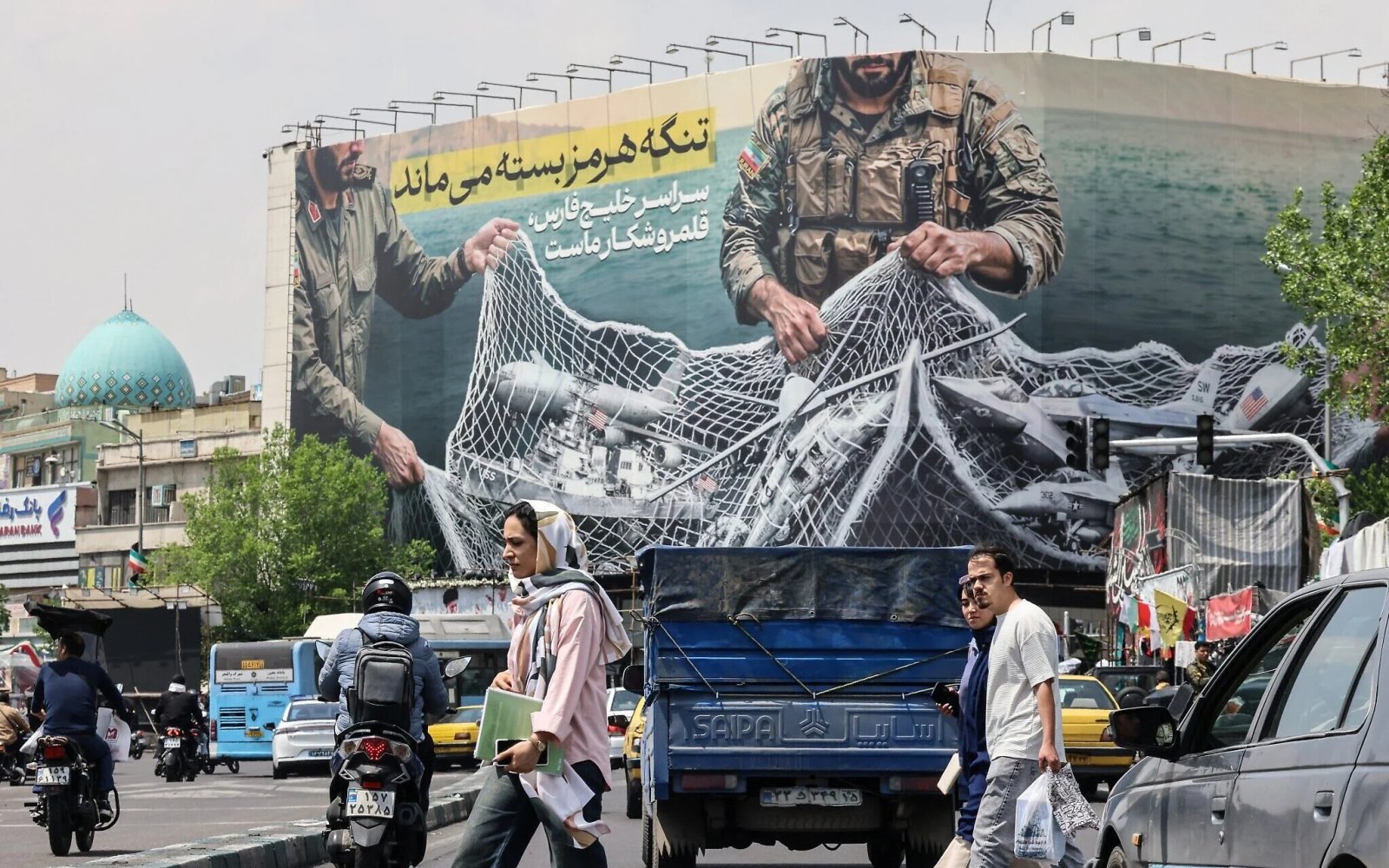
Amid Trump’s threats, Israel’s defense minister said in a security assessment that “Israel is prepared to renew the war against Iran.”
“The IDF is ready in defense and offense, and the targets are marked,” Katz said.
He added that Israel was “awaiting a green light from the United States, first and foremost to complete the elimination of the Khamenei dynasty, the initiator of the extermination plan against Israel, and the successors of the successors of the leadership of the Iranian terror regime, and, in addition, to return Iran to the age of darkness and stone by blowing up central energy and electricity facilities and crushing national economic infrastructure.”
IRGC officials said running security policy instead of Khamenei
Trump’s claims of divisions among Iran’s new leaders came after reports that the hardline IRGC was increasingly seizing control amid a real power vacuum.
Mojtaba Khamenei has not been seen publicly since he was appointed, with reports saying he was severely injured in the strike that killed his father, wife, and son.
Citing numerous sources inside Iran, The New York Times reported Thursday that senior Iranian officials were avoiding visiting Khamenei out of fear Israel would kill them, and that he was communicating by handwritten notes carried on the road by a network of couriers.
Khamenei, who is waiting for a prosthetic leg and possible plastic surgery on his face, has refrained from issuing any video or audio statements so far to avoid appearing vulnerable in his first public address, according to the Times. Iran’s President Masoud Pezeshkian, a heart surgeon by profession, is involved in the supreme leader’s care, as is the country’s health minister, the report said.
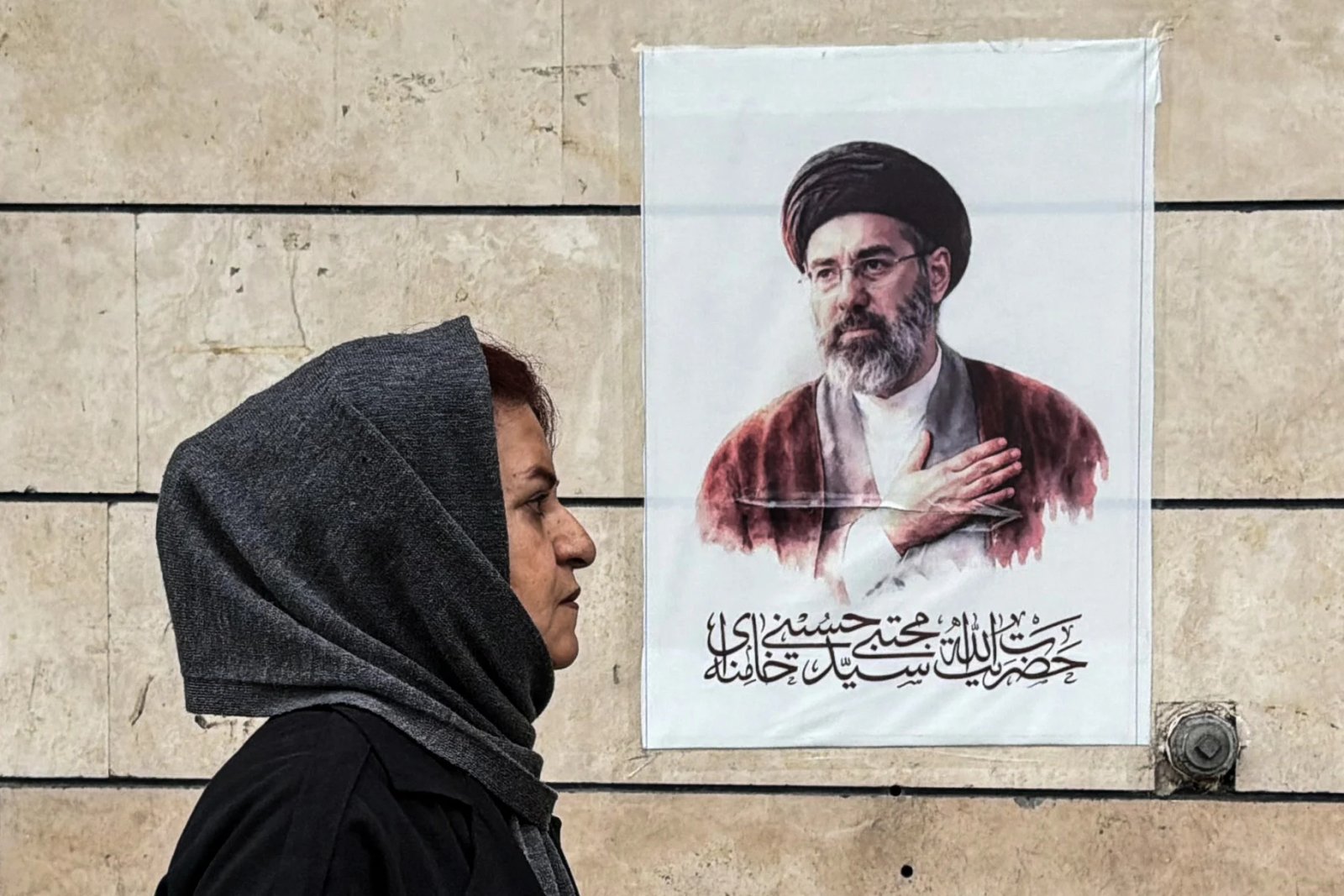
Khamenei’s condition and the difficulty in contacting him have led him to delegate much of the country’s decision-making in security affairs to generals in the IRGC, with which he has been particularly close since his military service in the 1980-1988 Iran-Iraq War, the Times said.
As a result, the newspaper said, Khamenei is not exercising the same centralized authority that his father did, and has “rarely if ever” objected to his generals’ advice, letting them sideline political figures who have expressed more openness to concessions to the US.
The sidelined politicians reportedly include Pezeshkian, who has been told to focus on domestic affairs, and Foreign Minister Abbas Araghchi, who has been replaced by the IRGC-aligned parliament speaker Mohammad Bagher Ghalibaf as Iran’s lead negotiator with the US.
According to the Times, it was the IRGC that pulled the plug on negotiations with the US earlier this week. Generals on Iran’s National Security Council reportedly said the US blockade in the Strait of Hormuz rendered the talks meaningless, overruling Araghchi and Pezeshkian, who warned of the dire economic consequences of the continued fighting.
Times of Israel staff contributed to this report.

Source:
www.timesofisrael.com


