
Syria’s interior ministry said Sunday that security forces thwarted an alleged cross-border attack near the border of Israel planned by remnants of ousted leader Bashar al-Assad’s regime and cells linked to the Iran-backed Lebanese Hezbollah terrorist organization.
From March 2 until a 10-day ceasefire went into force on April 17, Hezbollah was battling Israel after drawing Lebanon into the Middle East war with rocket fire aimed at Israel in support of Tehran.
In a statement, the interior ministry said security forces “arrested members of a sabotage cell” linked to Hezbollah and Assad remnants.
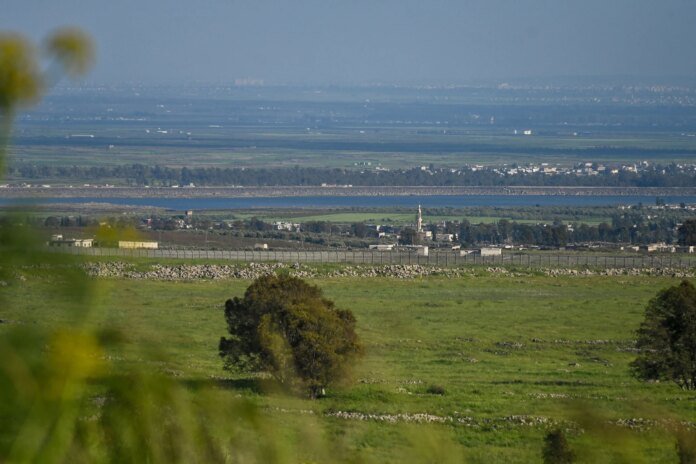
The ministry said the cell “was working to carry out an attack from inside Syrian territory on targets outside the borders” from Quneitra province, which borders Israel. However, authorities didn’t name the country that had been about to be targeted.
Syria’s official SANA news agency, quoting an interior ministry source, said Hezbollah “intended to launch missiles across the border with the aim of destabilizing the country.”
Hezbollah provided military support to Assad, who was overthrown in December 2024 by an Islamist coalition hostile to the Shiite group.
Since then, its supply routes from Syria have been cut off, and Lebanese and Syrian authorities are trying to combat smuggling across the porous border between the two countries.
The ministry said the Quneitra incident was the latest among “several attempts to destabilize the country and undermine public security” involving remnants of the former regime and “unscrupulous individuals linked to Hezbollah.”
Last week, Damascus accused Hezbollah of being linked to a cell that attempted to plant an explosive device in front of a house belonging to an unidentified religious figure in the Bab Tuma area of the Syrian capital.
Israel’s Kan public broadcaster and reports in Syria and Saudi Arabia named the figure as Rabbi Michael Khoury.
The terror group denied the ministry’s claims, saying they were “false and fabricated.”
Hezbollah said it has “no activity, no ties and no relationship with any party in Syria, and has no presence on Syrian soil.”

In February, Syria said it had dismantled a cell responsible for recent attacks targeting Damascus’s Mazzeh district, claiming the weapons came from Hezbollah, which denied any involvement.
Under Assad, Syria was part of Iran’s “axis of resistance” against Israel and enabled the transfer of weapons and money from Iran to Hezbollah.
But since taking over, Syria’s Islamist authorities have rejected Iranian influence.
In March, Hezbollah fired artillery shells into Syria from Lebanon. Syrian army officials said artillery shells fired from Lebanon landed near the town of Serghaya, west of Damascus, according to a report by SANA.
The army accused Hezbollah of targeting Syrian army positions, telling the news agency it observed Hezbollah reinforcements at the Syrian-Lebanese border.

Source:
www.timesofisrael.com


