

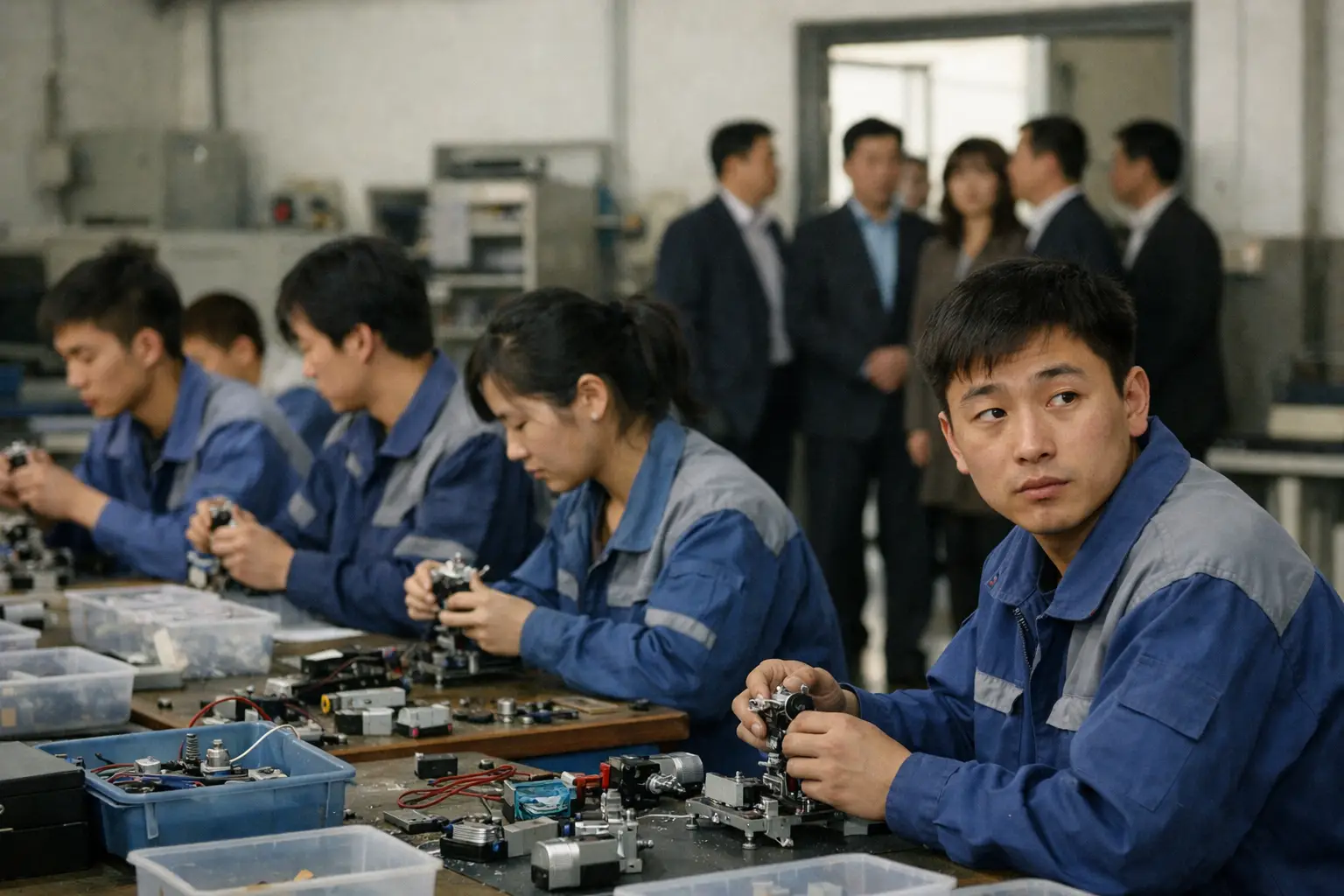
China’s tech push collides with a long-standing social hierarchy that places university degrees above practical training. A majority of the population continues to view vocational schools and manual trades as lower-status options, a perception that discourages many young people from pursuing technical careers even as the economy demands more hands-on expertise.
The disconnect between national aspirations and social preference has practical effects. As China transitions from low-cost manufacturing toward higher-value industries, firms require mechanics, technicians and other specialists. Yet the prestige gap steers families and students toward academic paths that do not always supply the skills employers seek, creating friction between labour market needs and educational outcomes.
Employers and policymakers face harder and costlier talent pipelines when fewer young people choose vocational routes. Training deficits can slow factory upgrades, raise recruitment costs and push companies to rely on in-house training programs or imported expertise. The imbalance also risks widening regional disparities: areas that depend on manufacturing and construction feel the shortfall more acutely, while cities competing in advanced sectors press for a different mix of technical capabilities.
Efforts to revalorize hands-on careers must address cultural norms as much as institutional capacity. Improving facilities, raising wages and enhancing career progression are necessary but insufficient if social status remains skewed. Conversations about the role of technical education, and how it links to lifelong advancement, will be central to any strategy that seeks both innovation and broad-based employment.
The outcome will shape China’s ability to sustain an economy increasingly driven by technology and services. Bridging the gap between ambition and attitude requires aligning education pathways with labour market realities and shifting perceptions so that skilled trades are seen as viable, respected routes to stable careers rather than fallback options.


