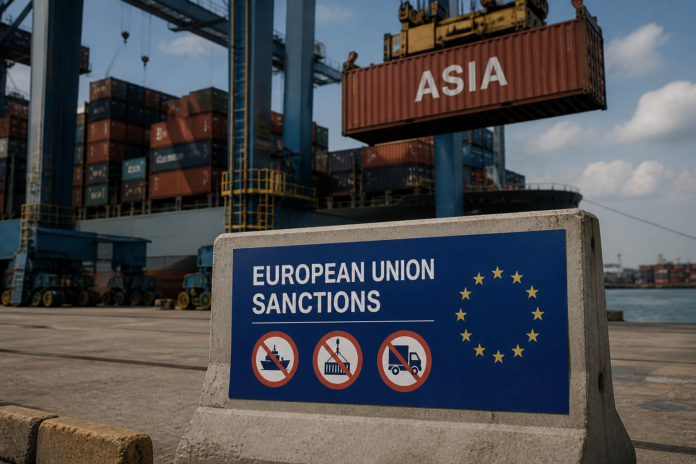
Europe’s economic relationship with Asia has evolved in recent years due to changes in global trade patterns, geopolitical developments and the impact of international sanctions.
The war in Ukraine and the sanctions imposed on Russia have affected energy supply chains and trade flows. European countries have sought alternative sources of energy and new economic partnerships to address these changes.
Shifts in trade and supply chains
Sanctions have contributed to a reorganization of trade routes and supply chains. Energy imports, in particular, have been redirected, with Europe increasing its reliance on suppliers outside Russia.
At the same time, several Asian countries have expanded their role in global manufacturing and trade. Nations such as India, Vietnam and Indonesia have seen increased interest from European investors and companies.
Relations with major Asian economies
China remains one of Europe’s largest trading partners. However, economic relations have been influenced by discussions on market access, technology, supply chain security and regulatory standards.
European institutions have emphasized the importance of reducing vulnerabilities in key sectors, including semiconductors, energy and raw materials.
Strategic initiatives
The European Union has introduced initiatives aimed at strengthening economic resilience and international partnerships. Programs such as Global Gateway focus on infrastructure, connectivity and investment projects in Asia and other regions.
These initiatives are intended to support economic cooperation while promoting diversification.
The role of sanctions
Sanctions are used as a policy tool in response to geopolitical developments. They can affect financial systems, trade flows and access to technology.
In the case of Russia, sanctions have contributed to changes in export destinations, with some energy flows shifting toward Asian markets. These developments have implications for both European and Asian economies.
Ongoing developments
Economic relations between Europe and Asia continue to evolve through trade agreements, investment projects and regulatory cooperation. Discussions on economic security, sustainability and supply chain resilience remain ongoing at both national and regional levels.