

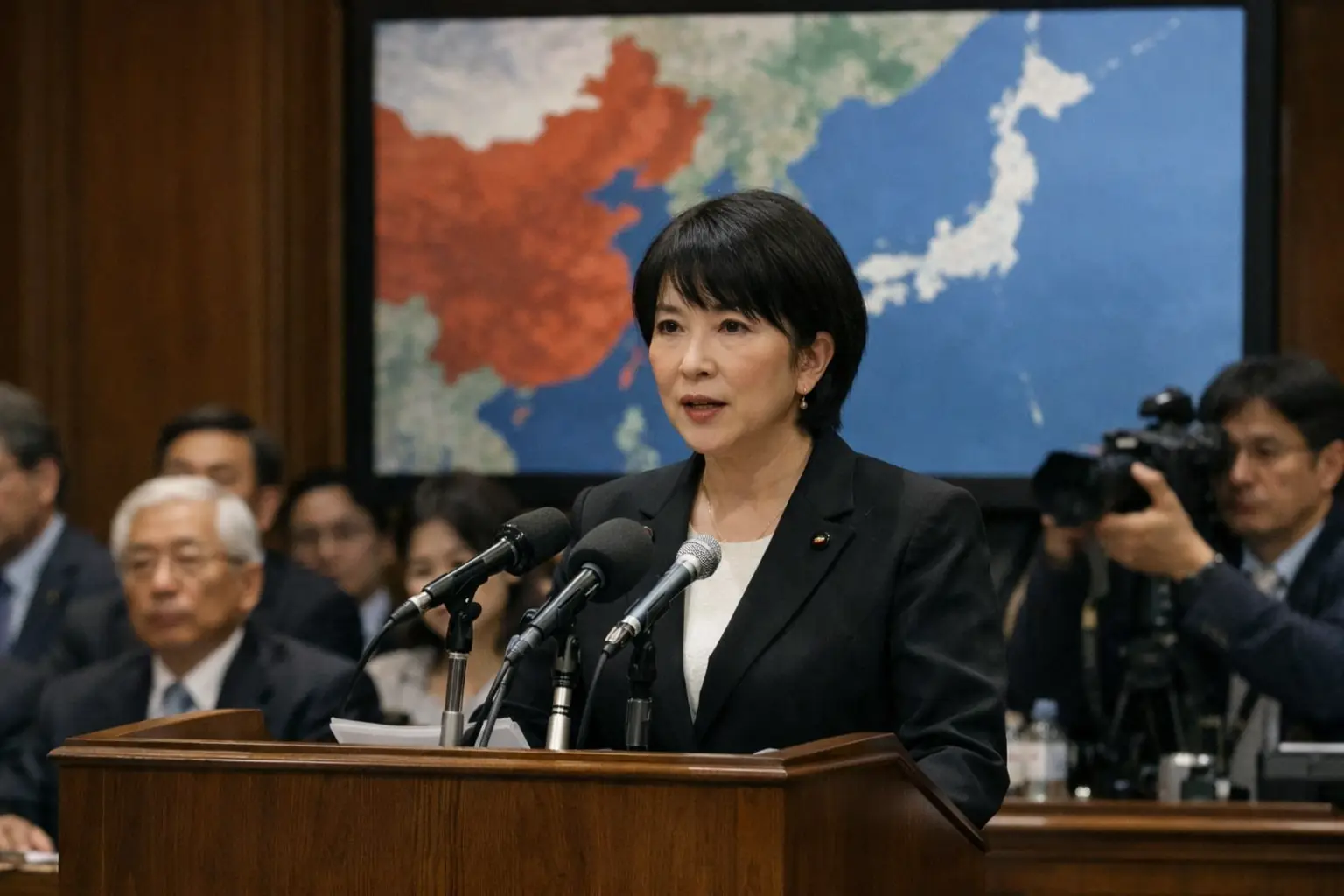
Sanae Takaichi’s policy speeches have helped sharpen one of the central questions in Japanese politics: how far Tokyo should go in adapting its security and economic strategy to a more assertive China. A prominent conservative figure in the Liberal Democratic Party, Takaichi has repeatedly linked national resilience, defense posture and industrial policy, placing Beijing’s rise at the heart of Japan’s domestic debate rather than treating it as a distant diplomatic issue.
The political significance of that message lies in its breadth. Takaichi’s approach connects the defense of Japan’s territory, including the contested Senkaku Islands administered by Tokyo and claimed by Beijing, with concerns over supply chains, sensitive technologies and energy security. These themes reflect a broader shift in Japan, where economic policy is increasingly discussed through a security lens. The Ministry of Foreign Affairs of Japan continues to describe stable ties with China as important, but Japanese strategic documents also identify regional military activity and coercive behavior as major challenges.
Takaichi’s speeches are also closely watched because of her longstanding emphasis on deterrence. She has supported stronger defense capabilities and has been associated with calls for Japan to take a more proactive role in regional security. That position resonates with a political environment shaped by North Korea’s missile program, Russia’s war against Ukraine and Chinese military activity around Taiwan. For Tokyo, the stability of the Taiwan Strait is not an abstract concern: it affects sea lanes, trade flows and the security of Japan’s southwestern islands.
At the same time, the China question cannot be reduced to defense. Japan and China remain deeply connected commercially, making any political hardening economically sensitive. Takaichi’s focus on economic security speaks to this tension. Reducing vulnerabilities in critical sectors, protecting advanced technology and diversifying supply chains are now mainstream priorities across many advanced economies. In Japan, however, they carry particular weight because companies have long relied on production networks and consumer markets tied to China.
The result is a policy debate in which Takaichi’s speeches function as more than campaign rhetoric. They frame China as a test of Japan’s ability to combine deterrence with diplomacy, openness with protection, and alliance commitments with national decision-making. The challenge for Japanese leaders is to signal resolve without closing channels of communication with Beijing, a balance that will remain central to the country’s foreign policy and to the wider Indo-Pacific order.


