

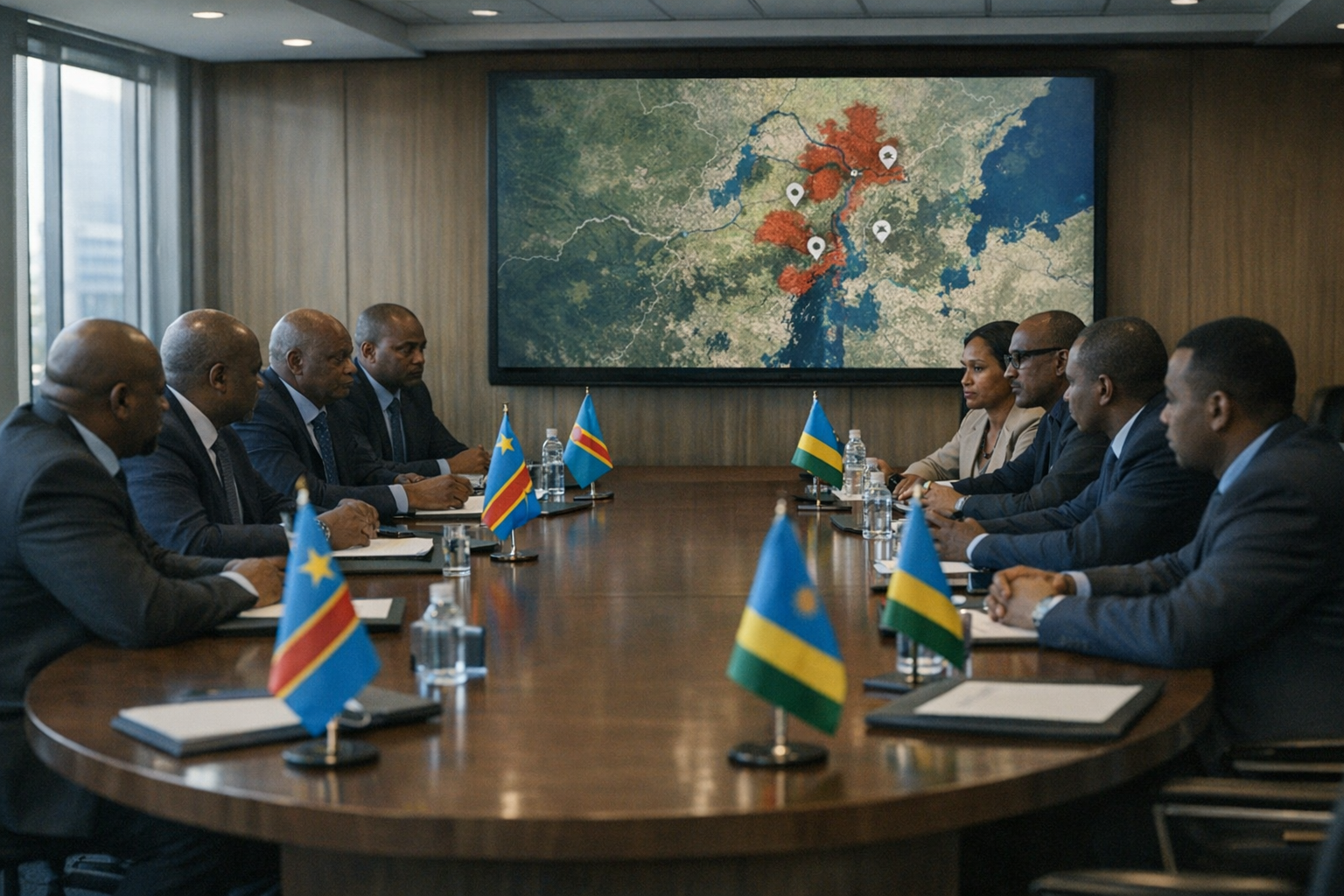
New peace roadmap proposes a framework to reduce violence and open political channels in the eastern Democratic Republic of Congo, but key disagreements risk stalling implementation. The document sets out conditions intended to create space for negotiations and improved security, yet observers say the parties involved remain sharply divided on core issues.
The most contentious subject is the future of the M23 movement: negotiators differ on whether the group should be integrated, disarmed or subjected to international justice mechanisms. Parallel disputes surround the involvement of Rwanda, with divergent views among regional actors and the DRC government about how any outside influence should be monitored and addressed within the roadmap.
Security arrangements form the third major fault line. Parties have not yet reached agreement on the composition and mandate of any monitoring force, the sequencing of troop movements, or guarantees that would protect civilians during a transition. Humanitarian agencies and local communities have emphasised the need for immediate measures to prevent renewed displacement and attacks, while negotiators balance those demands against political and military sensitivities.
Implementation capacity and verification will determine whether the roadmap leads to tangible calm or becomes another stalled initiative. International and regional actors are expected to play roles in mediation, monitoring and support, but their engagement depends on consensus among the principals and on concrete commitments to timelines and benchmarks. Without clear, mutually accepted mechanisms, gaps between pledges and on-the-ground realities could widen.
The roadmap represents a structured attempt to address long-standing conflict drivers in eastern DRC, yet its prospects hinge on resolving the three disputed pillars: the status of the M23, the role of Rwanda and enforceable security guarantees. Observers warn that progress will require sustained diplomatic pressure, robust monitoring and concrete safeguards for civilians to reduce the risk that renewed fighting undermines the process.


