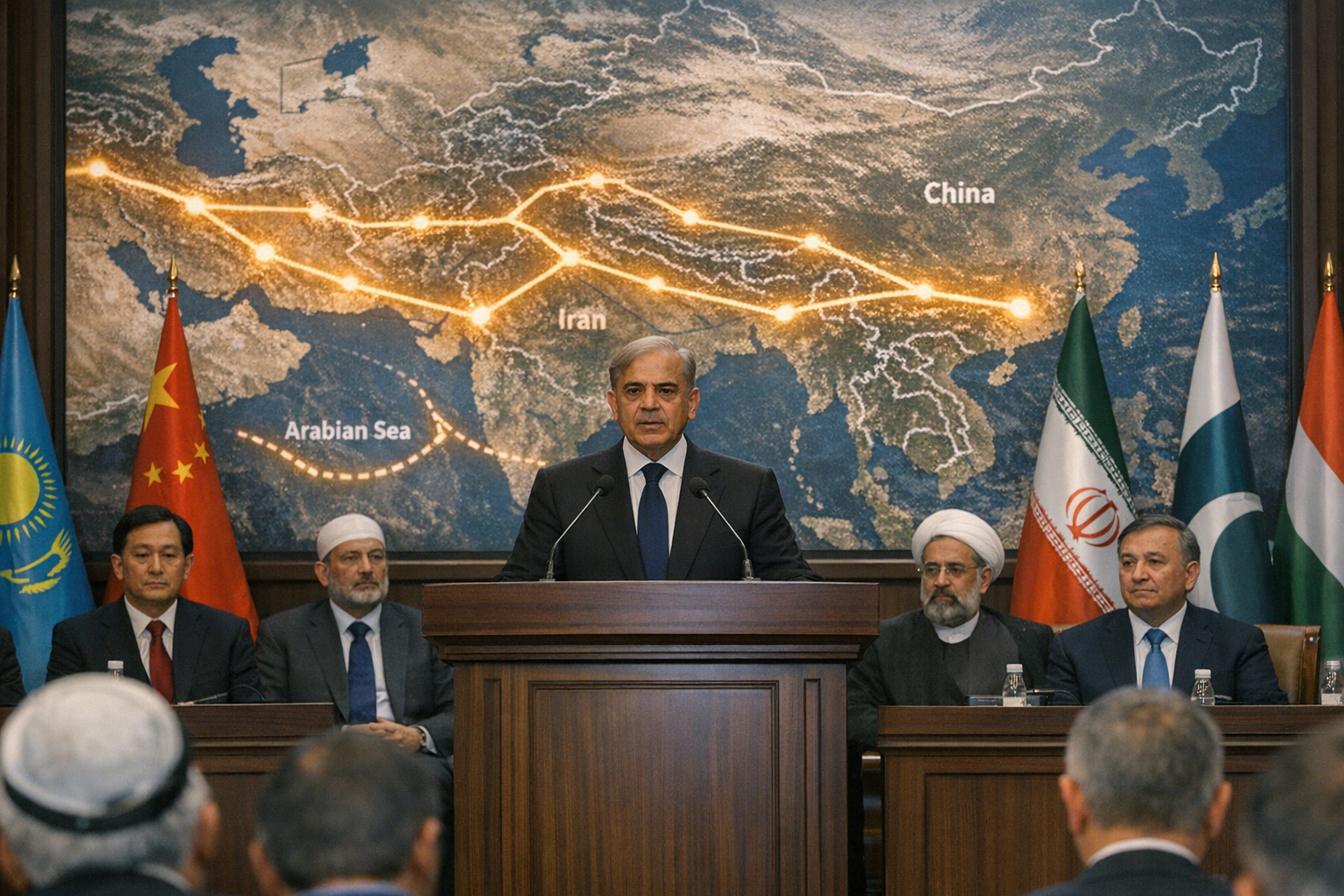
Pakistan assumes SCO leadership as the Shanghai Cooperation Organisation begins a new rotation, placing transport and trade links higher on the multilateral agenda. Pakistan takes the chairmanship at a moment when member states are renewing emphasis on infrastructure cooperation, and the role offers Canberra a platform to advance proposals that could reshape regional transit corridors.
The Shanghai Cooperation Organisation convenes governments across Eurasia on security and economic issues; its rotating presidency traditionally allows the chair to steer discussions and priorities during its term. For Islamabad, the chair role opens diplomatic space to underscore connectivity projects that intersect with broader initiatives already underway in the region.
Central to Islamabad’s projected priorities are proposals for enhanced linkages through Iran and Central Asia that would tie the Belt and Road Initiative more directly to the Arabian Sea. Such routes aim to provide overland access for inland economies and to diversify maritime access points. Discussions will likely touch on road and rail connections, port linkages and streamlined customs arrangements as mechanisms to lower transit times and costs for goods moving between Central Asian states and markets beyond the Gulf and South Asia.
The emphasis on new corridors carries implications for trade patterns and for the balance of regional transport networks. Advancing these projects will require coordination not only among SCO member governments but also with neighbouring states and international investors. Progress during the presidency will hinge on technical planning, financing agreements and political willingness to align national infrastructure plans with cross-border projects, all of which will determine whether proposed routes move from concept to construction.