
In March 2025, art enthusiasts celebrated an extraordinary milestone. A masterpiece by Pablo Picasso, “The Painter and His Model,” went on display for only the second time in decades. It was shown at the Tehran Museum of Contemporary Art, in a rare celebration of a different face of Iran — and with similarly rare approval from the Islamic regime.
The 1927 painting was recently described by Bloomberg as “arguably the most important canvas in the world that cannot be visited or seen.” The work that helped inspire Picasso’s “Guernica” — which showcases the destruction caused by the Spanish Civil War — now sits in what Bloomberg called “one of the world’s most dangerous cities.”
The current war is only tertiarily preventing the piece from being made available to the public, and little is known about the museum’s current fate. Its website, like many others in Iran, has been down, possibly due to internet disruptions in the country. Some users on social media shared posts showing artifacts in some museums put away or wrapped in protective materials.
However, like dozens of other masterpieces in the museum, “The Painter and His Model” has spent virtually all of the 47 years since the Islamic Revolution shut away in TMOCA’s vaults, considered too inappropriate by the ayatollahs for display.
The museum’s core collection was assembled in the 1970s by Queen Farah Pahlavi, wife of then-shah Mohammad Reza Pahlavi. Deeply passionate about art, the queen took advantage of the soaring prices of oil to bring to Tehran some of the best modern and contemporary art, acquiring works by Picasso, Andy Warhol, Claude Monet, Jackson Pollock, Vincent Van Gogh and dozens more, including Jewish and Israeli artists such as Marc Chagall and Yaacov Agam, and gay ones like Francis Bacon. In 2018, the value of the collection was estimated at $3 billion.
The Tehran Museum of Contemporary Art was inaugurated in 1977, only two years before the deeply unpopular shah was deposed and ayatollah Ruhollah Khomeini took power in 1979.
For several years following the coup, Western art was kept in the basement and the building was used to showcase revolutionary propaganda and honor the revolution’s “martyrs.” As reported in a 2015 Bloomberg article, the first exhibition displaying Western art was not held until 1999.
Since then, permanent and special exhibitions have featured many of the masterpieces, offering a glimpse of what Iran could have been, and at times, has attempted to be, despite its oppressive regime.
The 2025 exhibition “Picasso in Tehran” marked the first time “The Painter and His Model” was shown in public in the country, according to Bloomberg (in 2012, it was briefly loaned to the Kunsthaus Zurich museum in Switzerland).
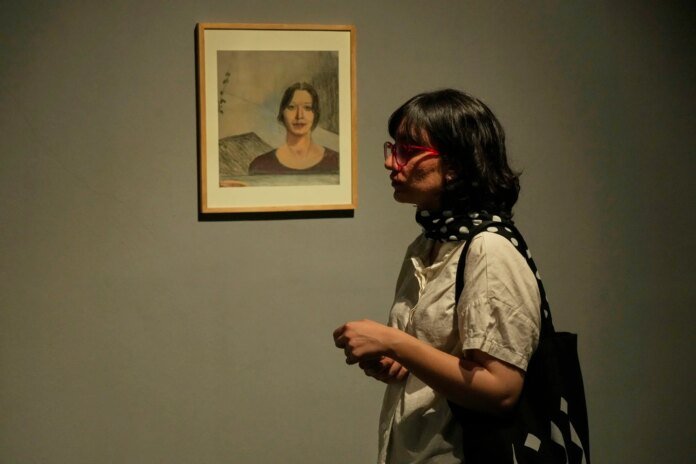
A few months later, an Associated Press photographer visited another exhibition inaugurated this past July, “In Women’s Words,” showcasing artworks of modern Iranian women artists. His pictures show many female visitors, as well as the women portrayed in the paintings, without head coverings, which is illegal in the Islamic Republic.
A $1,200 coffee-table book to keep the spotlight on
For art experts and enthusiasts outside of the Islamic Republic, it has not been easy to keep track of the state of the museum and its masterpieces over the decades, considering the museum’s policy to keep much of the art hidden, the general communication barriers and the difficulties of visiting Iran after the revolution.
Tourists from some Western countries considered less hostile by the regime have been able to visit Iran, especially during quieter periods, but there have also been numerous instances when foreigners were arrested and accused of espionage or other offences.
A few years ago, however, an art curator and a writer embarked on a journey from afar to track everything they could about the collection, its patroness and their stories to shine a spotlight on the hidden art. Their work led to the $1,200 coffee-table book “Iran Modern: The Empress of Art,” originally published by luxury book publisher Assouline in 2018, and now in its second printing.
“I was familiar with the collection because of my arts background, and the story had always fascinated me,” art curator Viola Raikhel told The Times of Israel over a joint video interview with writer Miranda Darling last month. “When Miranda and I met, we realized that we both had this passion about extraordinary women in history. I asked her whether she thought we could make a good book, and that’s how our collaboration began.”
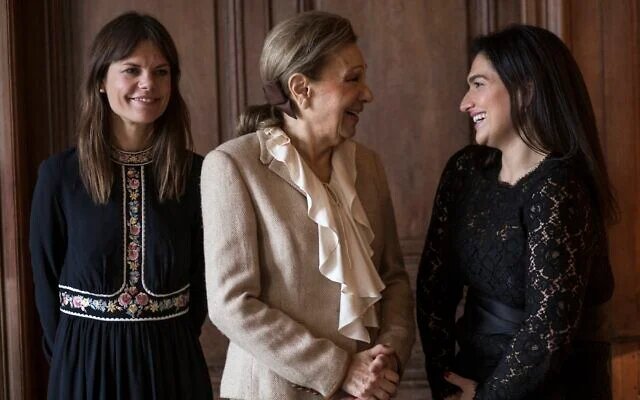
Raikhel and Darling, who split their time between Australia, the UK and Switzerland, began to work on the project in 2014 and managed to get Farah Pahlavi on board and meet with her.
“We were very interested in the idea of soft power and how women navigate geopolitics in a way that is uniquely their own when they are not in a position of overt power,” Darling said. “When we met [Pahlavi], we began to understand a lot more about the influence she had through culture and the art in a sort of quiet, soft way.”
“She wanted the young people of Tehran to be able to see the best of the world’s contemporary art at home,” she added.
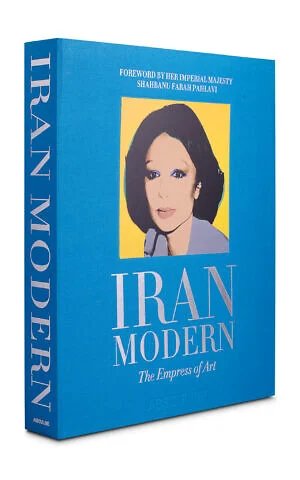
In the book, the authors recall some of the queen’s most iconic moments as she met with various artists.
“She first met Andy Warhol at a state dinner at the White House [during the Ford administration],” Raikhel said. “Warhol was one of the guests, and she wanted to meet him, but he kept avoiding her. He was shy and thought [the queen] wanted to dance with him.”
Eventually, the two connected. Warhol even visited Tehran and painted a portrait of the queen, one of the very few works damaged during the revolution.
Pahlavi also shared that the first time she met Chagall, he gave her three of his paintbrushes as a gift.
“She left them in her library in Tehran,” Raikhel said. “She told us she hopes everyone just thinks they are old paintbrushes and leaves them there.”
During the revolution, the museum’s curator and many staff members put themselves in harm’s way to protect the art. Thanks to their efforts, the collection was stored in the museum’s vault, where it remained mostly intact.
“The curator locked himself into the vault, and he would not open the doors even when [the rioters] threatened him,” Darling said. “I think he probably saved the collection from the initial impulse to destroy or loot. He fought like a lion to protect the art.”
A glimpse of what Iran could be
While researching their book, the two authors tried to learn as much as possible about what has been happening at the museum in more recent years, reading anything the press published about the exhibitions there and studying pictures from newspapers and from international visitors who had gone to Tehran.
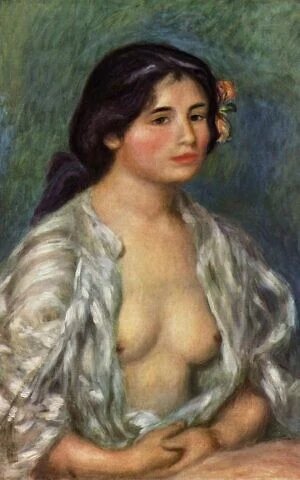
“There are a number of works which would not be deemed appropriate [to be displayed], but at times, [the museum] would open the vaults and show something,” Raikhel said. “We tried to put out the most comprehensive summary of the collection possible.”
Works by Bacon and gay Iranian artist Bahman Mohasses were displayed in 2017, according to a report by the Guardian.
The following year, some 30 pieces were supposed to go on display in Berlin and then Rome.
Raikhel and Darling had arranged for Palahvi to visit the exhibition in Germany privately, allowing her to see the artwork for the first time in 30 years.
However, the exhibition was canceled at the last minute, and the works remained in Tehran.
According to Raikhel, during the years they worked on the book, the Tehran Museum of Contemporary Art was routinely included in the itinerary of foreign dignitaries visiting the country.
“I don’t know if it has still been the case in the last few years,” she said.
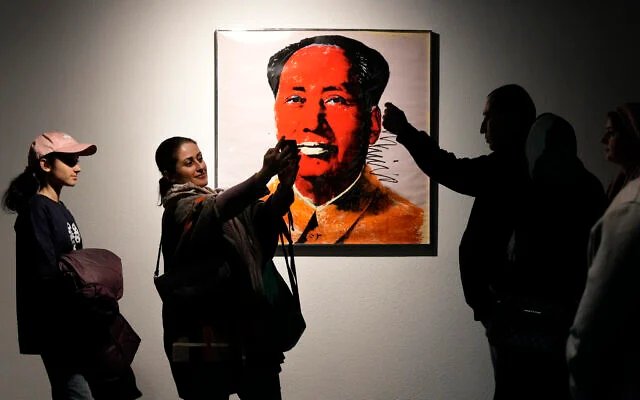
Recently, ArtDependence Magazine, an outlet that describes itself as “an international magazine covering all spheres of contemporary art, as well as modern and classical art,” mentioned a report by Iranian news agency ISNA quoting the museum’s director Reza Dabirinejad, expressing hope that museums and historical artifacts would not suffer serious damage during the conflict.
“Miranda and I both pray for the safety of everyone in Iran and that the artworks remain protected at TMOCA and all of the museums in Tehran,” Raikhel told The Times of Israel in a message earlier this month.
Raikhel and Darling said that, as they worked together on the book, for Pahlavi, it was important to focus on the art, not on the politics of Iran. At the same time, she always expressed optimism that a better day would come for her country.
“She always says light will overcome darkness,” Raikhel said.
Source:
www.timesofisrael.com


