

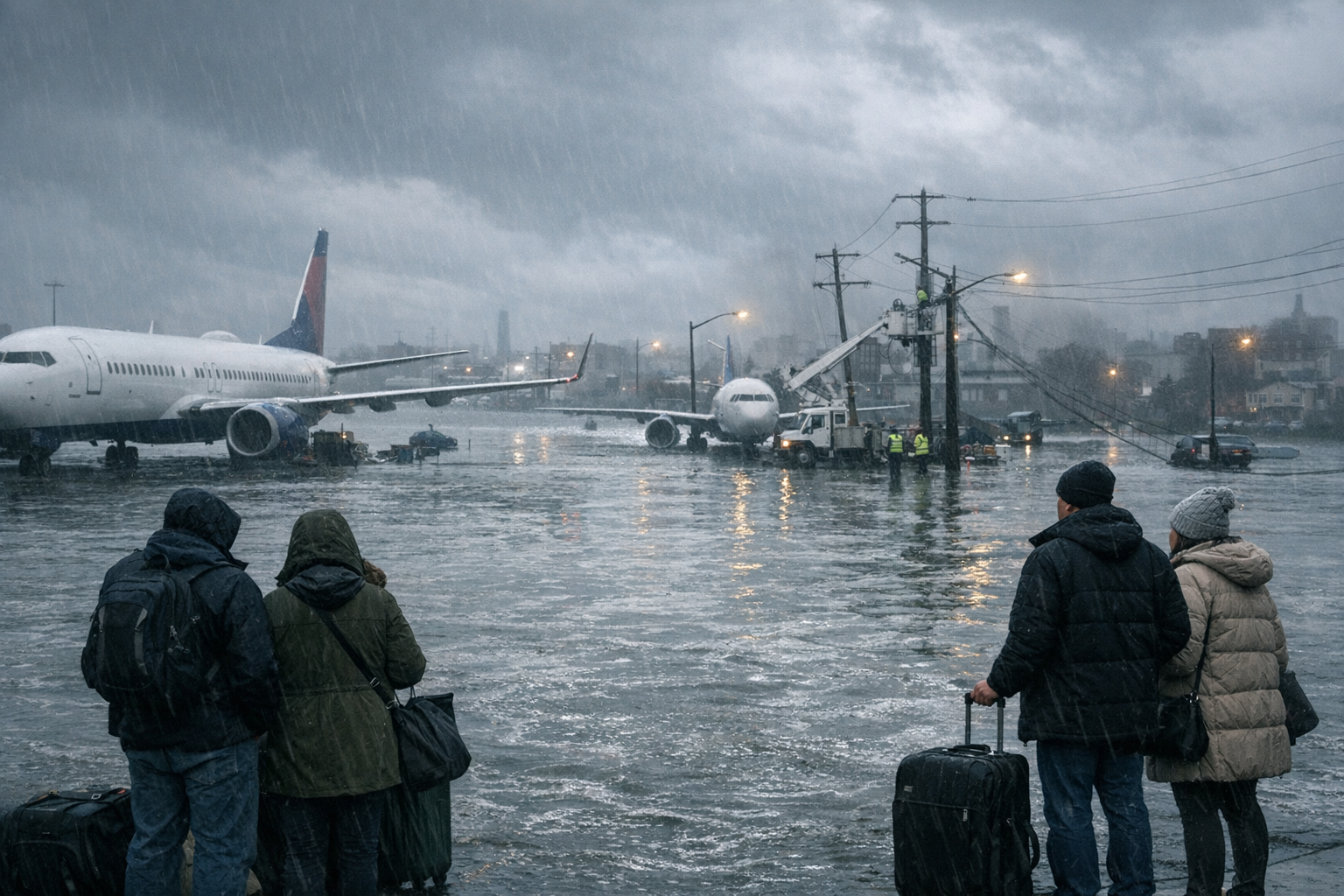
Powerful nor’easter batters the northeastern United States, prompting hundreds of flight cancellations and leaving thousands of passengers delayed as flooding and power cuts affected urban areas. The system brought heavy precipitation and strong coastal winds that disrupted travel and daily routines in cities including New York, Boston and Philadelphia. Flooding and outages created localized hazards on streets and interrupted normal services for residents and businesses.
Airlines canceled hundreds of flights and postponed thousands more, producing widespread disturbances at major airports and on connecting routes. Passengers faced extended waits and altered itineraries while carriers adjusted schedules and rebooked travelers. Surface transportation also suffered delays as standing water and infrastructure impacts slowed buses, trains and road traffic, compounding disruption for commuters and long-distance travelers.
Power cuts left portions of homes and commercial properties without electricity, and floodwaters made certain neighbourhoods difficult to access. Utilities and municipal crews encountered challenging conditions in assessing damage and planning repairs, while essential services continued to operate under constrained circumstances. The combination of inundation and outages added friction to recovery efforts and to the restoration of normal operations across affected communities.
Transportation networks remained under strain as the weather system moved through the region, with restoration timelines dependent on improving conditions and infrastructure assessments. Travelers should check airline notices and transportation updates before traveling, as schedules are likely to change while cleanup and repairs proceed. The event highlights the recurring vulnerability of the Atlantic corridor to powerful coastal storms and their capacity to disrupt urban life and regional mobility.


