

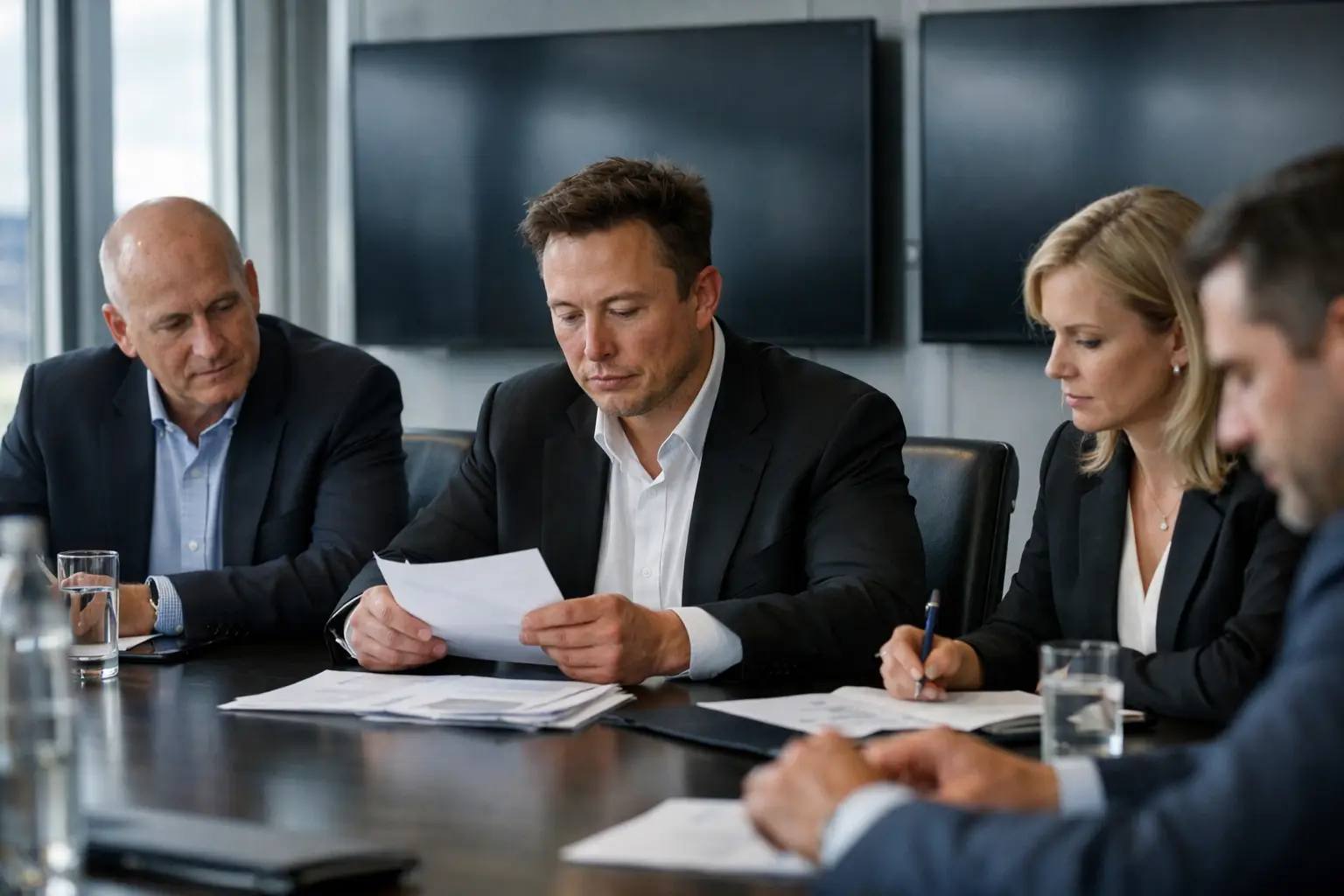
Elon Musk says special committees have been formed within both Tesla and SpaceX to evaluate a potential merger. The announcement signals that senior leadership at the two companies has moved from informal discussion to a structured review process, though no transaction has been proposed and no timetable was provided.
Special committees are normally established by boards to provide independent oversight when exploring strategic alternatives, to assess conflicts of interest and to protect shareholder value. Any course of action recommended by those committees would still require approval from the full boards and, if a deal were proposed, votes by shareholders in line with corporate governance rules.
Combining a major automaker and an aerospace firm would present complex commercial and regulatory considerations. Potential hurdles include antitrust reviews in multiple jurisdictions, national security assessments where defence or sensitive technologies are involved, and the integration of distinct manufacturing and supply-chain operations. Companies pursuing large cross-sector transactions also typically face detailed scrutiny of financial disclosures and governance arrangements.
The establishment of review committees does not itself determine an outcome: it opens a formal pathway for analysis and consultation with advisers. Observers will watch whether the committees pursue a full transaction study, alternative partnership structures or decide not to proceed. Market participants, shareholders and regulators will remain key actors if the process advances beyond this exploratory stage.


