

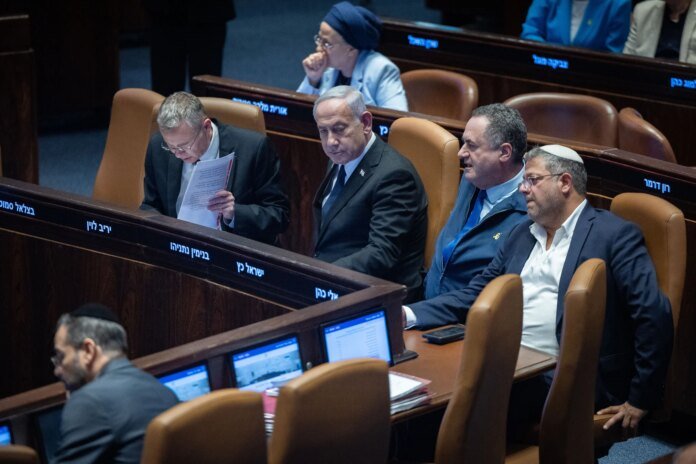
Several cabinet members and coalition lawmakers called again for Prime Minister Benjamin Netanyahu’s corruption trial to end after judges recommended Monday that a bribery charge against the premier be dropped.
The judges’ suggestion to prosecutors came after Netanyahu concluded his lengthy testimony in the three related cases for which he is on trial, and repeats a recommendation the panel made three years ago. If prosecutors do ditch the bribery charge, Netanyahu will still face fraud and breach of trust charges in three cases, which concern allegations that he received illicit gifts and traded favors for positive press coverage.
But the judges’ statement injected new energy into calls by Netanyahu’s allies to end the trial altogether. Netanyahu, Israel’s first sitting premier to be tried, denies all wrongdoing in the cases.
His supporters have long echoed his contention that the charges amount to a political witch hunt that has dragged on for too long. In a video statement on Monday, Justice Minister Yariv Levin claimed that the bribery charge was the “central” allegation that was “trumped up” against Netanyahu.
“The least that can be done now is to prevent this miscarriage of law and justice to continue,” Levin said. “To prevent Prime Minister Netanyahu from being dragged into more years of legal proceedings on marginal and unprecedented charges.”
He said the judges’ recommendation gave prosecutors a “last chance to salvage some part of the system’s honor,” and called for the premier to be pardoned or for the cases to be thrown out.
Netanyahu formally requested a pardon late last year. In March, the Pardons Department of the Justice Ministry published a position paper saying that it would be extremely problematic to grant Netanyahu a pardon since his trial is ongoing and he has not yet been convicted, and since he has not admitted guilt or expressed remorse.
The following month, President Isaac Herzog, who has the power to grant pardons, rebuffed Netanyahu’s request, instead proposing negotiations over a plea deal. Netanyahu’s legal team has yet to respond to that request.
A position paper submitted earlier this year by far-right Heritage Minister Amichay Eliyahu endorsed Netanyahu’s pardon request. Eliyahu was acting in place of Levin, who had recused himself due to a conflict of interest.
In a letter to Herzog on Monday, Eliyahu again urged a pardon, calling the judges’ request “testimony to the fact that at the heart of the justice system itself, they understand that this process is far from being unequivocal.”
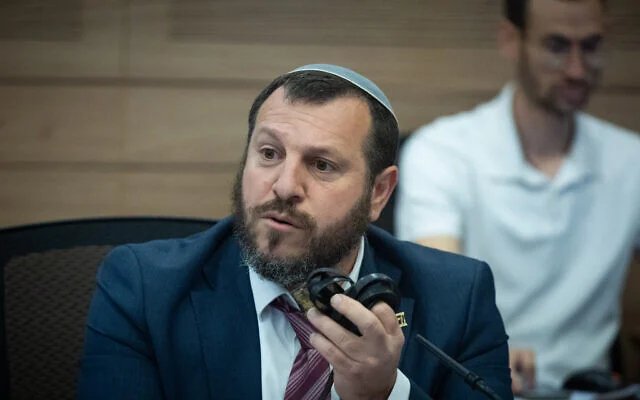
Pointing to the IDF’s continued battle on multiple fronts, Eliyahu added, “The authority to pardon was meant for these moments as well: when there is a national need that necessitates looking beyond the legal proceeding.”
He urged Herzog to “end this political hunt and legal circus, and to allow the State of Israel to focus on the true challenges it faces.”
Defense Minister Israel Katz likewise posted on X, “The trial must be canceled, and those responsible for this fabricated indictment need to be held to account.”
Likud lawmakers joined the chorus as well.
“This is not a fair trial, this is a witch hunt,” MK Moshe Saada, the former deputy chief of the Department of Internal Police Investigations, said on the pro-Netanyahu Channel 14 on Tuesday. “They put the prime minister on the cross.”
Likud MK Amit Halevi, meanwhile, characterized the trial as a betrayal of Netanyahu’s elected government, and alluded to elections due to be held by late October.
“This putsch — there’s no other word for it — needs to end,” he said. “And you’ll need to respond to it at the ballot box.”
A poll by The Times of Israel’s sister site, Zman Yisrael, taken shortly after Netanyahu requested clemency, found that most Israelis oppose granting him a pardon.


Source:
www.timesofisrael.com


