

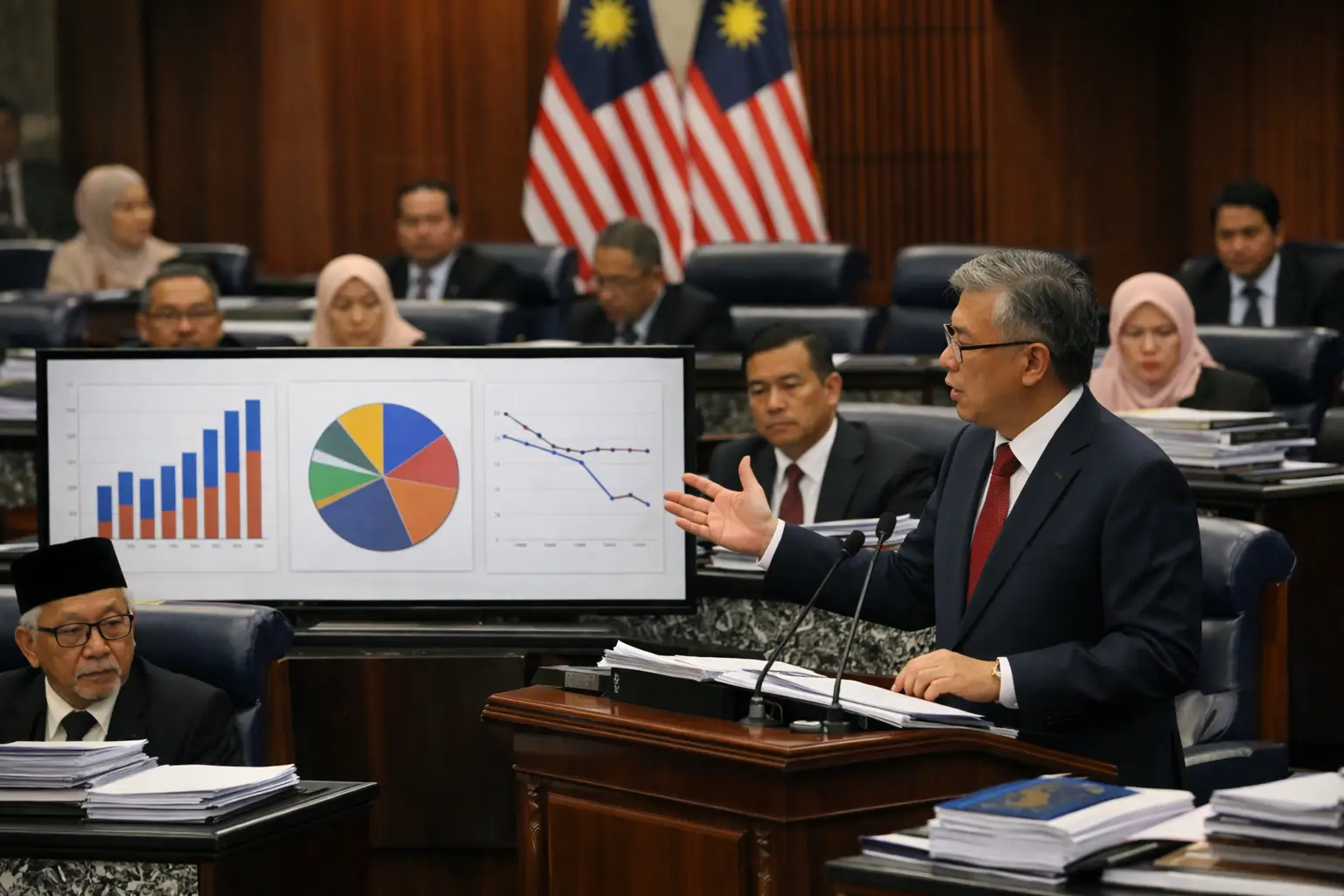
Malaysia enters 2027 with a fiscal outlook that stands out in Southeast Asia: stronger growth, higher public revenue and a narrowing deficit. The direction set by the country’s 2027 budget keeps fiscal consolidation at the centre of economic policy, giving Malaysia a more favourable position than many of its regional peers as governments across ASEAN face tighter budget choices.
The importance of that trajectory lies in the combination of three forces that do not always move together. Economic expansion can support revenue collection, while stronger state income can reduce the pressure to rely on borrowing. A smaller deficit, in turn, can improve fiscal flexibility at a time when public finances across the region remain exposed to external demand, financing costs and competing domestic priorities. The 2027 budget therefore signals continuity rather than a sharp policy break.
Fiscal consolidation is often politically and economically difficult because it requires a balance between public spending, revenue mobilisation and growth protection. In Malaysia’s case, the budget outlook suggests that deficit reduction is being pursued alongside economic momentum, rather than through a contractionary setting that would undermine activity. That distinction matters for investors, households and rating observers because the credibility of a fiscal plan depends not only on announced restraint, but also on whether the economy can generate the revenue base needed to sustain it.
The regional contrast adds weight to the Malaysian picture. Several ASEAN economies are navigating a more complicated mix of slower external trade, domestic spending needs and pressure on public accounts. Against that backdrop, Malaysia’s expectation of rising state revenue and shrinking deficits gives policymakers more room to manage priorities without abandoning fiscal discipline. The broader issue for the region is whether growth can be maintained while governments rebuild buffers after years of heavy demands on public budgets.
The budget’s implementation will be closely watched through official economic updates and fiscal documents published by the Ministry of Finance Malaysia. For now, the central message is clear: Malaysia’s 2027 fiscal plan places the country among the more resilient budget stories in ASEAN, with consolidation advancing on the back of growth and stronger revenue rather than austerity alone.


