

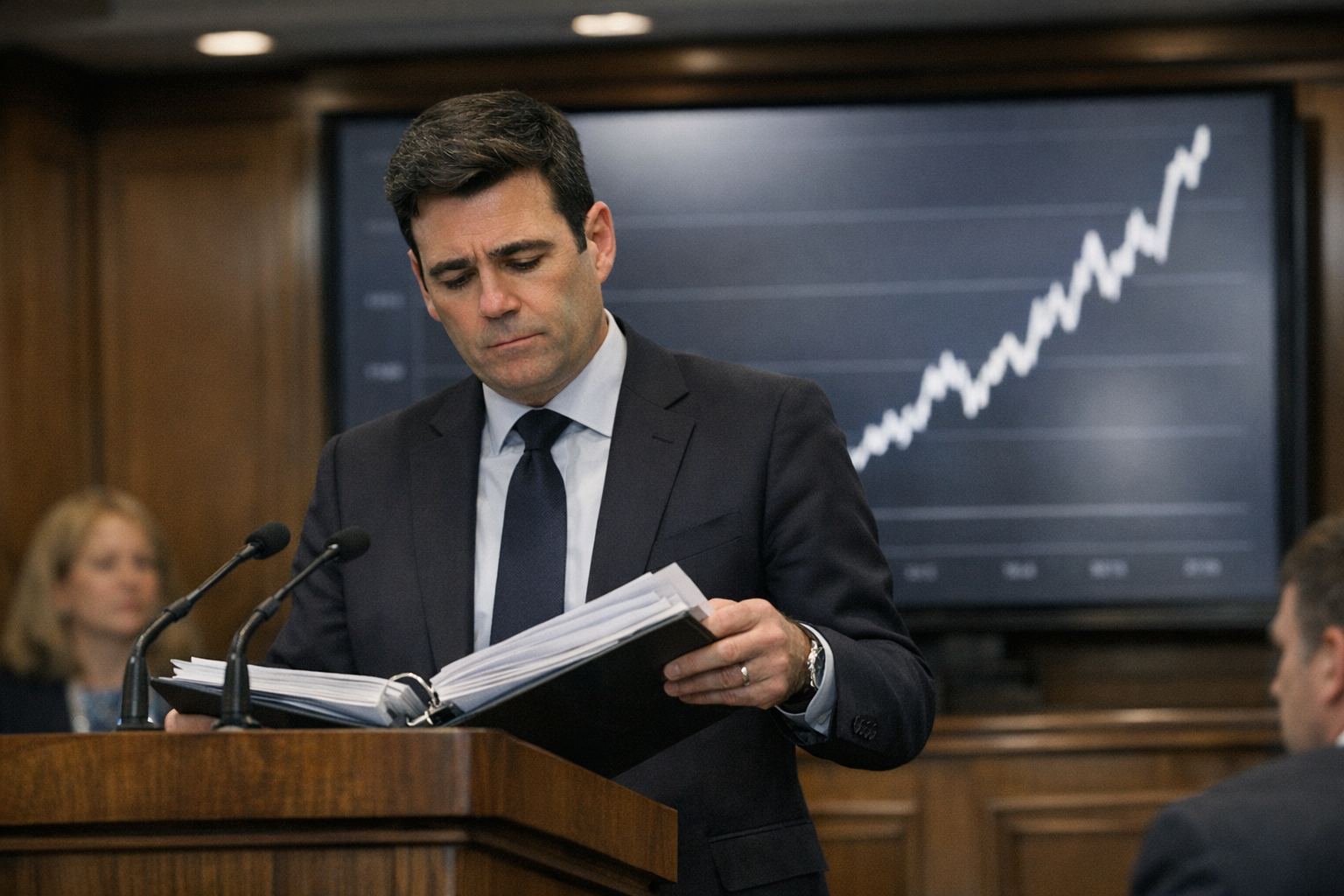
Higher borrowing costs in the UK have reached levels not seen since 1998, intensifying scrutiny of fiscal plans ahead of October. The rise in long-term yields has immediate implications for public finances, tightening the environment in which local and regional leaders must plan spending and capital investment. Markets’ repricing of risk and time horizons is increasing the cost of securing funds over extended periods.
The move in long-term rates affects not only central government bond issuance but also the borrowing conditions faced by devolved bodies and local authorities. Increased debt-servicing costs can reduce fiscal headroom and complicate multi-year budgets, particularly for projects reliant on external financing. Observers note that higher yields typically feed through to a broader range of interest-sensitive commitments across the public sector.
Andy Burnham, preparing his first municipal Budget in October, will face decisions about priorities for transport, housing and public services against this backdrop. The mayoralty’s ability to commit to new long-term programmes may be constrained if market conditions persist, and any proposals that depend on borrowing could require reassessment or reprioritisation. Local stakeholders and councillors will be watching how cost pressures translate into practical choices for planned capital expenditure.
Greater Manchester’s financial plans are set within a national fiscal framework that will be shaped by central decisions in the coming weeks. The Greater Manchester Combined Authority and other regional bodies will need to align their proposals with the prevailing cost of finance, while monitoring any policy responses from Westminster that could alter the outlook for borrowing costs or grant support.
With the October Budget approaching, the interaction between market rates and public budgeting will be closely watched. For regional leaders and municipal finance officers, the immediate task is to reconcile local ambitions with the realities of a higher-cost borrowing environment, ensuring that commitments remain affordable over the lifetime of projects.


