

A Beersheba family court judge on Friday ruled that the sperm of Yotam Haim, an Israeli hostage who was mistakenly killed by troops after escaping Hamas captivity in Gaza, may be used to conceive a child, saying it was his express wish before his death.
In a statement hailing the end of “a year and a quarter of honorable and respectful legal and governmental proceedings,” the Haim family said “the State of Israel took an important step forward,” calling the decision “a significant point of light for bereaved families, and a source of pride for us.”
“From our perspective, this is a significant and emotional milestone – but no less than that, it inspires and opens a pathway for other families in a similar situation. This is the beginning of a long journey,” the family added.
They went on to thank the State Attorney’s Office, as well as their own legal team, and “the nation of Israel, for their endless support.”
Yotam’s mother Iris has previously said she is seeking a surrogate mother for his child who will not only provide the egg and carry the child, but also raise them. Judge Ariel Maman noted that Iris requested his written decision be published, both due to its public importance and to aid in the search for a potential mother.
In his decision, Maman noted that there is no clear legislation about such a case, and said he was forced to rule based on precedent and his own judgment. The State Attorney’s Office last May approved of the Haim family’s request on principle, but said it required proof that using Yotam’s sperm to conceive a child after his death would have been his will.
Yotam was 28 when rampaging Hamas terrorists abducted him from Kibbutz Kfar Azza on October 7, 2023. On December 10 of that year, he was mistakenly killed by Israeli troops in Gaza as he tried to reach freedom. The soldiers mistook him and two other hostages as a threat in the Shejaiya neighborhood of Gaza City.
In 2024, Iris Haim was given the honor of lighting one of the torches at Israel’s official Independence Day ceremony in Jerusalem.
In an introduction to his decision, Maman quoted a variety of traditional Jewish sources, primarily around an interaction recorded in Genesis, in which the matriarch Rachel, then childless, tells her husband Jacob, “Give me children, or I shall die,” to which Jacob responds, “Can I take the place of God?”
The judge cited rabbinic criticism of the patriarch for his answer, citing a tradition that God reprimanded Jacob, demanding: “Is that the way one answers the distressed?”
According to the decision, the Haim family recounted a series of explicit statements made by Yotam, expressing not only his desire to have children, but his desire that – even if he were to die – his sperm be used to ensure his continuity.
Iris recalled an occasion when one of Yotam’s brothers said he didn’t want to have children, at which point Yotam interjected: “Don’t worry, I’ll bring you grandchildren.” His therapist testified to his desire for a stable relationship, stemming in part from a desire to be a father.
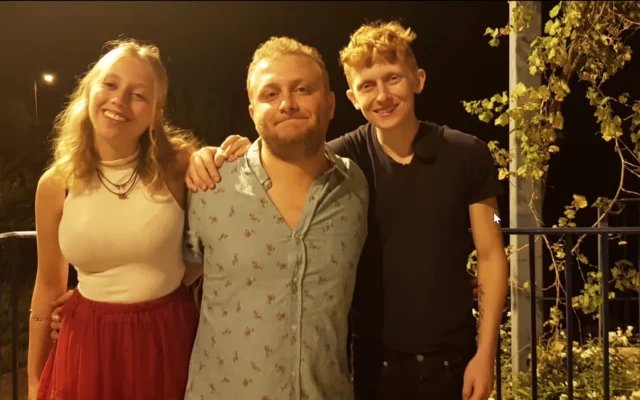
A friend of Yotam’s also provided the court with correspondence from 2022, in which Yotam told her about his desire to have children, and wrote to her: “You’re going to be my kids’ cool aunt, like it or not.”
Moreover, the family recalled a conversation about two years before Yotam’s death, sparked by his father’s sharing about a near-death experience he had when he was younger.
“In this conversation, Yotam said to his father that if something were ever to happen to him, he asked that [the father] ensure that he and his mother have grandchildren, who would be his legacy,” the judge noted.
“I reason that Yotam’s unequivocal desire for continuity… was not necessarily limited to bringing a child into the world with a specific woman, but rather that he expressed his altruistic, existential wish for the creation of life and continuity,” Maman wrote in his decision, adding that he hoped the ruling could bring some comfort to the deceased’s family.

In the days following October 7, 2023, when Hamas-led terrorists invaded southern Israel — slaughtering some 1,200 people, mostly civilians, and taking 251 hostages — embryologists and specialists reported an unprecedented number of requests for postmortem sperm retrieval.
Since then, according to Health Ministry figures from November 2025, postmortem sperm retrieval has been performed on at least 250 soldiers and security forces personnel, including 193 at the request of a parent. Sperm was also retrieved from 21 civilians, again with 10 of those requests coming from parents.
Before October 7, posthumous sperm retrieval was permitted for the parents only with court approval. After the start of the war, the Health Ministry and the Justice Ministry approved a temporary regulation allowing parents to authorize sperm retrieval without the need for court approval. But there is no national policy about what is done with the sperm.
Diana Bletter contributed to this report.

Source:
www.timesofisrael.com


