

Israel and Lebanon held a historic summit on Tuesday in Washington, DC, as envoys for the two nations met with the hopes of reaching a peace deal that would end decades of conflict.
The roughly two-hour meeting between Israel’s Ambassador to the US Yechiel Leiter and his Lebanese counterpart Nada Hamadeh Moawad marked the highest-level meeting to date between Israeli and Lebanese officials, and the first direct talks between the two neighboring countries in decades. The talks were mediated by US Secretary of State Marco Rubio and other American diplomats.
No date for a follow-up meeting had been set as of Tuesday evening, although Leiter described the talks as having gone as well as they could have done, and said he expected them to pick back up in the coming weeks.
Beirut and Jerusalem have been in a state of war since Israel’s establishment in 1948. More recently, Israel has repeatedly fought terror groups in Lebanon, including an ongoing fight against Hezbollah that began last month, shortly after the start of the Iran war. Amid that conflict, Israel has floated the reestablishment of a buffer zone in southern Lebanon, a policy first employed several decades ago as a means of deterring terror attacks.
Tuesday’s summit took place against the backdrop of that conflict. It came as the Lebanese government has distanced itself from Hezbollah and made efforts to disarm the Iran-backed terror group, though Israel is skeptical of its ability to do so.
In the wake of the historic trilateral meeting, the US, Israel and Lebanon issued a joint statement saying that they had held “productive discussions toward launching direct negotiations” between Beirut and Jerusalem.
The characterization suggested that today’s meeting was not the actual start of peace talks, rather a preparatory step toward that end.
“The United States congratulated the two countries on this historic milestone and expressed its support for further talks, and for the government of Lebanon’s plans to restore the monopoly of force and to end Iran’s overbearing influence,” the joint statement said.
Washington “expressed its hope that talks can exceed the scope of the 2024 agreement and bring about a comprehensive peace deal,” the statement says, referring to the previous Lebanon ceasefire brokered by the Biden administration, which required Hezbollah to disarm and withdraw its forces from southern Lebanon — goals that largely went unmet.
Hezbollah staunchly opposes the peace talks and responded on Tuesday by bombarding Israel as the summit began, triggering warning sirens across the Galilee. Previously, the Israel Defense Forces had warned that “increased fire from Lebanese territory is possible, likely focused on the northern region.”
The US in the statement also expressed its support for Israel’s right to defend itself from the continued Hezbollah attacks and stressed that any ceasefire in Lebanon must be the result of talks between Jerusalem and Beirut, rather than being connected to any other tracks.
Iran, over the weekend, demanded that a halt to Israeli attacks on Hezbollah be included as part of any agreement with the US.
Israel and the US rejected this possibility, and Lebanon’s Foreign Minister Youssef Raggi said on Monday that Beirut was seeking “direct negotiations” with Israel to reinforce “the separation between the Lebanese file and the Iranian track.”
Fighting between Israel and Hezbollah has accordingly continued in the week since the Iran truce came into place.
Still, the joint statement recognized Lebanon’s position in favor of the “urgent need” to restore the November 2024 ceasefire.
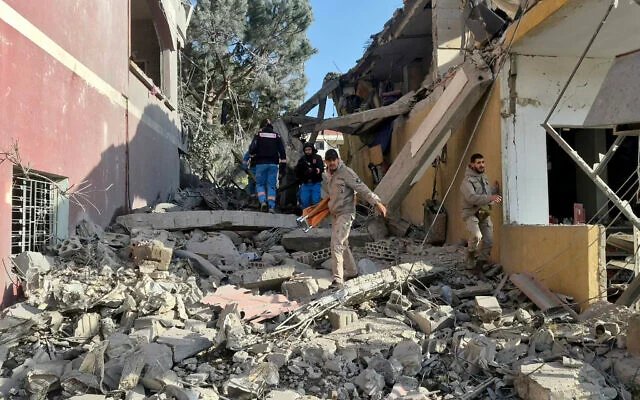
Beirut, the joint statement said, “underscores the principles of territorial integrity and full state sovereignty, while calling for a ceasefire and concrete measures to address and alleviate the severe humanitarian crisis that the country continues to endure as a result of the ongoing conflict.”
As for Israel, the joint statement said Jerusalem “expressed its support for disarming all non-state terror groups and [to] dismantle all terror infrastructure in Lebanon and expressed its commitment to working with the government of Lebanon to achieve that goal to ensure security for the people of both countries.”
“Israel also expressed its commitment to engage in direct negotiations to resolve all outstanding issues and achieve a durable peace that will strengthen security, stability and prosperity in the region,” the statement said — in what is seen as a gesture toward the preference of diplomatic over military solutions after Jerusalem for weeks ignored appeals from Beirut for direct talks.
“All sides agreed to launch direct negotiations at a mutually agreed time and venue,” the joint statement added.
Officials have sought to tamp down optimism regarding the talks, given the significant gaps that exist between the two countries. But ahead of the summit, Rubio, Foreign Minister Gideon Sa’ar, Lebanon’s president and other countries’ top diplomats took a hopeful tone.
“This is a historic opportunity. We understand we’re working against decades of history and the complexities that have led us to this unique moment and the opportunity here,” Rubio said at the State Department as he welcomed the ambassadors of the two countries.
“The hope today is that we can outline a framework upon which a current and lasting peace can be developed,” he added.
Sa’ar, speaking at a press conference, said Israel seeks “to reach peace and normalization with the state of Lebanon,” adding that “Israel and Lebanon don’t have any major disputes between them. The problem is Hezbollah.”
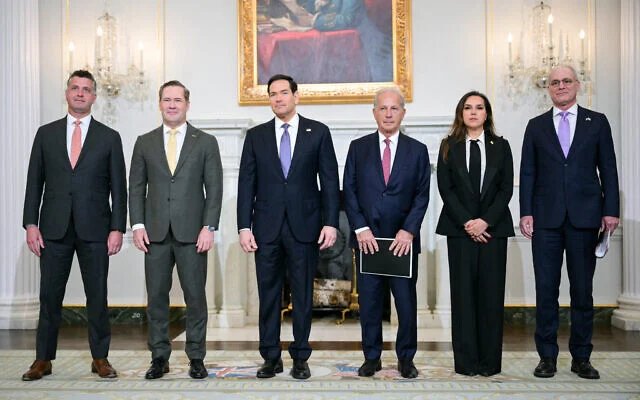
Before the meeting, Rubio, US State Department Counselor Mike Needham, US Ambassador to Lebanon Michel Issa and US Ambassador to the UN Mike Waltz posed with Hamadeh Moawad and Leiter before entering a private room to begin the talks. The Israeli and Lebanese envoys did not publicly shake hands, avoiding a gesture that a US official had predicted ahead of the talks would take place.
Israel is aiming to use the meeting to discuss the disarmament of Hezbollah along with an eventual peace treaty with Lebanon, while Beirut’s top priority is to secure a ceasefire in Lebanon to facilitate further negotiations — something Jerusalem has ruled out.
Foreign ministers from 17 countries also urged Israel and Lebanon to “seize this opportunity” ahead of the Washington talks. Britain’s foreign ministry posted the joint statement from a collection of European nations and Australia, which said that “direct negotiations can pave the way to bring lasting security for Lebanon and Israel as well as the region.”
The statement condemned Hezbollah’s attacks on Israel, as well as Israel’s heavy strikes on Hezbollah targets on April 8. It praised Lebanon’s stated commitment to disarm Hezbollah and take control of the country’s entire territory.
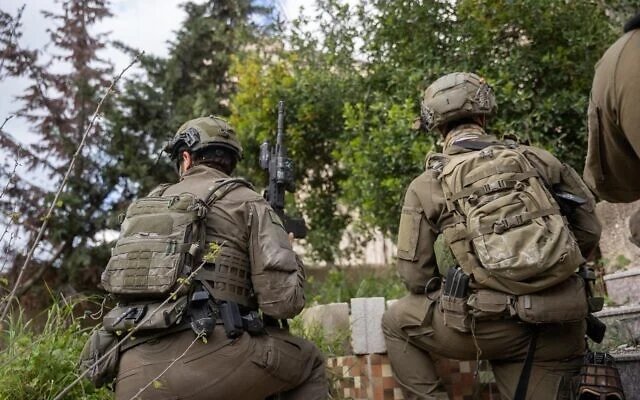
Ahead of the summit, Lebanese President Joseph Aoun expressed his hope that the meeting would “mark the beginning of the end of the suffering of the Lebanese people in general and the residents of the south in particular.”
“The only solution lies in the Lebanese Army redeploying to the internationally recognized borders,” he told Italian Armed Forces Chief of Staff Gen. Luciano Portolano, according to a Lebanese readout, “thereby becoming the sole authority responsible for the security of the region and the safety of its residents, without any partnership from any party whatsoever,” a likely reference to Iran and Hezbollah.
Lebanon expelled Iran’s ambassador late last month, but he refused to leave, underlining Hezbollah’s outsized power within the country.
Aoun said he would welcome the presence of Italy and other nations contributing to UNIFIL, the UN peacekeeping force in Lebanon, after the mission’s mandate ends at the end of 2026.
United on ridding Hezbollah ‘occupation’ of Lebanon
Following the meeting with his Lebanese counterpart, Leiter told reporters that the meeting went about as well as it could have, as they “discovered today that we’re on the same side of the equation, and that’s the most positive thing we could have come away with.”
“We are both united in liberating Lebanon from an occupation power dominated by Iran called Hezbollah,” he said.
The talks focused on crafting a “long-term vision,” Leiter said, “where there will be a clearly delineated border between our countries, and where the only reason we’ll need to cross each other’s territory will be in business suits to conduct business or in bathing suits to go on vacation.”
Praising the Lebanese government for bucking Hezbollah’s call to withdraw from the talks, Leiter declared the meeting to be “the beginning of a very strong, fortified and consistent battle against Hezbollah.”
Asked what he heard from Hamadeh that has him so optimistic, Leiter responded, “They expressed a strong will to this time disarm Hezbollah.”
“The Lebanese government made it very clear that they will no longer be occupied by Hezbollah,” he added.
The Israeli envoy was non-committal on whether Israel would heed Lebanese calls for a ceasefire, insisting that Israel would do whatever is necessary to safeguard its citizens.
He further claimed that Beirut knows that the current government would not be in place today if it weren’t for Israel’s degrading of Hezbollah over the past two years.
“Iran has been weakened, Hezbollah has been dramatically weakened, so this is an opportunity. This is the first time our two countries are sitting together in over three decades. Let’s enjoy the moment,” the Israeli envoy said.
With the meeting over, Leiter said both sides would be taking proposals raised at it back to their respective capitals, and that talks would likely resume in the coming weeks in Washington.
The agreement being crafted will cover both security and civilian matters, he said, so that “we can take the peace treaty and embark on a harmonious relationship like we have had with the other Abraham Accords countries.”
In her own remarks to reporters, Hamadeh said she used Tuesday’s meeting to reiterate Beirut’s call for a ceasefire between the IDF and Hezbollah.
“I reiterated the urgent need for the full implementation of the November 2024 cessation of hostilities agreement,” the Lebanese envoy said. “I emphasized the integrity of our territory and the full sovereignty of the state over all Lebanese land. I called for a ceasefire and for displaced persons to return to their homes.”
“I also urged the adoption of practical steps to alleviate the severe humanitarian crisis that the country continues to suffer from as a result of the ongoing conflict,” Hamadeh said, adding that the date of the next meeting would be announced later.
Separately, a US State Department official sought to reiterate that the talks in Washington had been planned for a month and were not connected to the negotiations between the US and Iran in Pakistan over the weekend.
“As the president has made clear, there is no link between the negotiations between the United States and Iran in Islamabad and the Israel-Lebanon talks,” the State Department official said.
“Iran dragged the Lebanese people into a war so it cannot pretend to be Lebanon’s protector,” the official continued. “Hezbollah is a terrorist organization that does not deserve a place. It must be fully disarmed and the United States supports that goal. Iran will not be allowed to dictate the future of Lebanon anymore. These talks are part of that effort.”
Source:
www.timesofisrael.com


