

Geopolitical Analysis
There is something almost cinematic about Vladimir Putin’s trajectory. A child from the gray backalleys of Leningrad, the son of a factory worker and a survivor of the Nazi siege, who ends up ruling the world’s largest country for over a quarter of a century. A KGB agent trained in the culture of secrecy, manipulation, and brute force, who became the absolute master of a nuclear power. And today, a seventy-three-year-old man who, from his bunker, sees the foundations of his empire cracking beneath his feet.
The question is no longer really whether the Putin system is weakened. It is a matter of how fast, and by what mechanism, it could collapse.
The Child of the KGB
To understand Putin, one must go back to his origins. Born in 1952 in a Leningrad still scarred by the wounds of World War II, he grew up in a cramped communal apartment, in a modest family that passed down a worldview made of harshness, mistrust, and a visceral patriotism. As a teenager, he dreamed of joining the Soviet secret services—not out of ideology, but out of a fascination with discreet power, the kind that acts in the shadows and shapes events without ever exposing itself.
He joined the KGB at twenty-three, was sent to Dresden, East Germany, in the late 1980s, and it was there that he experienced the collapse of the Soviet Union from the inside. He himself recounts burning archives on the night of November 5, 1989, as angry crowds surrounded the local KGB headquarters. No one was answering in Moscow. The center was no longer holding. That night, something broke inside him—or rather, something crystallized. The conviction that the weakness of the State is the worst of catastrophes. That national humiliation is a fatal wound.
Upon returning to Russia, he climbed the ranks at a staggering speed: deputy mayor of Saint Petersburg, director of the FSB (the successor to the KGB), Prime Minister, and then acting president upon Boris Yeltsin’s surprise resignation on December 31, 1999. In less than a decade, the obscure provincial agent had become the master of the Kremlin.
The Vision: Restoring Lost Greatness
Putin is not an ideologue in the classical sense of the term. He does not have a coherent doctrine like Marx or Lenin. What guides him is an obsession: erasing the humiliation of 1991. For him, the dissolution of the USSR is, in his own words, “the greatest geopolitical catastrophe of the 20th century.” Not because he is nostalgic for communism—he couldn’t care less about it—but because this dissolution reduced Russia to a weakened state, plundered by oligarchs, mocked by the West, and incapable of influencing world affairs.
His vision is Eurasianist, imperial, and deeply revisionist. He considers that Russia, Ukraine, and Belarus form one and the same people, that the borders born from the Soviet collapse are accidents of history, and that the West—NATO in particular—took advantage of Russian weakness to encircle and humiliate Moscow. This reading of the world is not entirely false in its historical premises, but it is catastrophically false in its political conclusions.
For Putin mistakes imperial nostalgia for contemporary legitimacy. He believes that the peoples of Ukraine, Georgia, or the Baltic states secretly yearn to return to the Russian orbit, and that their resistance is merely the fruit of Western manipulation. This fundamental misreading has been at the heart of all his failures since 2014.
Why the West Supports Ukraine—and Cannot Stop
To understand the solidity of Western support for Kyiv, one must understand what this war represents in the eyes of European and American democracies. This is not simply a territorial conflict between two neighbors. It is an existential test for the rules-based international order that emerged after 1945.
If Russia succeeds in annexing by force sovereign territories recognized by the UN, it sends a devastating signal to all authoritarian regimes around the world: might makes right, borders are negotiable, and great powers can devour their neighbors without lasting consequences. China is closely watching what is happening regarding Taiwan. Iran, North Korea, and others are drawing their own lessons.
For Europe in particular, the stakes are even more immediate. The Baltic states, Poland, Finland, Sweden—all know that if Ukraine falls, they could be next on the list. Support for Kyiv is therefore not altruism: it is collective security, calculated and accepted. Every missile delivered to Ukraine is an investment in European deterrence.
There is also a moral dimension that Western leaders cannot ignore without losing their credibility. After guaranteeing Ukraine’s territorial integrity in exchange for its relinquishment of the Soviet nuclear arsenal in 1994—the Budapest Memorandum—the West could not afford to watch Moscow violate this agreement without reacting. Inaction would have meant the death of any preventive diplomacy based on security guarantees.
Finally, there is Ukraine itself. A country that surprised the entire world with its fierce resistance, its capacity to reform under bombs, and the determination of its civil society. The West supports Ukraine because Ukraine fought to earn that support.
The Ukrainian Trap: When War Devours Its Author
The invasion of February 24, 2022, was supposed to last three days. Putin was convinced of it. Russian intelligence services had sold him the idea of an artificial Ukrainian state, a demoralized army, and a population ready to welcome Russian soldiers as liberators. The reality was quite different.
Four years later, the war has become the graveyard of the Russian army. Human losses are colossal—there is talk of more than a million soldiers killed or wounded since the beginning of the conflict, a figure that exceeds Soviet losses in Afghanistan over ten years. To maintain this flow of cannon fodder, the Kremlin has had to recruit from prisons, from ethnic minorities in the most remote regions, attract foreign mercenaries, and pay increasingly high enlistment bonuses that weigh heavily on the state budget.
And yet, despite this dizzying human sacrifice, territorial gains have become derisory. In the spring of 2026, the Russian army is attacking more intensely than ever—more than two hundred assaults per day in certain sectors—but is making almost no forward progress. Military analysts speak of a profound “qualitative degradation”: elite units have been decimated, replaced by poorly trained recruits sent to the front in small groups, often eliminated by drones before even reaching their objectives.
What has changed the nature of the conflict is precisely the drone war. Ukraine has developed a domestic drone industry at a staggering speed, going from a few thousand units in 2022 to several million per year today. These cheap machines have transformed the battlefield: they spot, they track, they strike. They have made troop and armored vehicle movements extremely dangerous over a depth of several dozen kilometers. The Russian advantage in artillery and tanks, which had allowed advances in 2023 and 2024, is largely neutralized.
The War Hits Home
But the real psychological and political rupture of the year 2026 is that the war has entered Russia. Not symbolically: physically, concretely, into the daily lives of Russians.
Ukrainian drones now regularly strike oil refineries hundreds of kilometers from the border. Explosions light up the sky over Moscow. Gas stations are rationing gasoline in dozens of regions. Weapons factories are hit. The Saint Petersburg Economic Forum, the great annual showcase of Russian power, was held in June 2026 under clouds of black smoke rising from a burning refinery in the city’s suburbs. The image was striking: the very symbol of the regime’s economic arrogance, framed by the consequences of its own war.
This intrusion of war onto Russian soil has a profound psychological effect that the Kremlin’s propaganda struggles to contain. For years, Putin sold his population the idea of a clean, distant, controlled “special military operation.” A war that Russians watched on television like an action movie, without feeling its direct effects. This narrative is now impossible to maintain. The war is here, in the lines at gas pumps, in the nightly air raid alerts, in the coffins returning to the poorest provinces of the country.
The Economy: The Silent Overheating
On the economic front, Russia in 2026 resembles an engine running at full speed but whose parts are wearing out at an alarming rate. The war economy has created an illusion of dynamism: weapons factories are running non-stop, unemployment is virtually zero, and the wages of soldiers and defense workers have ballooned. But this activity produces nothing durable: it manufactures shells that are destroyed in Ukraine, missiles that fall on cities, and tanks that burn in muddy fields.
Meanwhile, civilian sectors—agriculture, construction, services, technology—are suffocating under prohibitive interest rates that the Central Bank is forced to maintain to curb inflation that is eating away at household purchasing power. The budget deficit has exploded well beyond official forecasts, widened by falling oil revenues and ever-increasing military spending. The National Wealth Fund, Russia’s strategic reserve built up during the boom years of oil, is melting away before our eyes.
Russian economists themselves—those who still dare to speak—whisper about the risk of a “silent stagnation” that could stretch on for decades. Young graduates, entrepreneurs, and engineers have fled by the hundreds of thousands since 2022. Russia is emptying itself of its vital forces at the exact moment it needs them most. This is a demographic and intellectual drain whose effects will be felt for a generation.
The Kremlin Mistrusts Itself
This is perhaps the most telling sign of the regime’s fragility: Vladimir Putin is afraid of his own allies. Western intelligence services documented, in the spring of 2026, an unprecedented reinforcement of security measures around the Russian president. His travels have become rare and unpredictable. His public appearances are increasingly pre-recorded. Access to his person is filtered through successive layers of control. The circle of people he trusts is shrinking to a shadow of its former self.
This paranoia is not irrational. The Wagner mutiny in June 2023, led by Yevgeny Prigozhin, showed that the system could crack from the inside in a spectacular manner. Even though that rebellion was quickly contained—Prigozhin died in a plane crash two months later, under circumstances that no one truly considers accidental—it revealed a truth the Kremlin preferred to hide: the men of war that Putin created and enriched can turn against him.
Today, tensions within the Russian elites have reached an unprecedented level. Rivalries between the FSB, the regular army, and the National Guard are exacerbating in a context of shrinking resources and a search for those responsible for military failures. Technocrats in charge of the economy are publicly warning about growing imbalances, an audacity unthinkable just a few years ago. Oligarchs, forced to pay “voluntary contributions” to the war budget and seeing their assets nationalized at the whim of the authorities, have lost the implicit protection once guaranteed to them in exchange for their silent loyalty.
The most serious analysts are now talking about a phase of “coup anxiety” in the Kremlin. Not that tanks are about to roll onto Red Square. But the idea of a palace transition—a discreet ousting of Putin by a coalition of security and economic elites who would judge his presence more dangerous than his departure—is no longer in the realm of speculation. It is a hypothesis that Western chancellories are taking very seriously.
What End for Putin?
Russian history teaches a cruel lesson: autocratic regimes do not fall gradually. They appear solid until the moment they collapse, often in a matter of days, sometimes in a matter of hours. No one predicted the fall of Tsar Nicholas II in 1917. No one anticipated the dissolution of the USSR in 1991. Personalized power systems have this characteristic: their apparent solidity masks an internal fragility that only a shock reveals.
Several scenarios are on the table today. The first, and most likely in the short term, is that of authoritarian consolidation: Putin holds on, represses, censures, and the war drags on in a sort of slow and costly agony for both sides. This scenario is painful, but it remains possible as long as the security forces remain loyal to him.
The second scenario is that of a palace transition. If the military situation deteriorates further, if the economy plummets into a frank recession, if Ukrainian strikes continue to intensify on Russian territory, a faction of the elite could decide that it is time to change captains to save the ship. The pretext would likely be medical—a “sudden illness,” a “temporary incapacity”—and the successor would be chosen to preserve the essentials of the system while offering a diplomatic way out to the West.
The third scenario, the most dreaded by all, is that of chaotic implosion: a combination of military defeat, economic collapse, and disintegration of State structures that would lead to a period of chaos in a country equipped with the largest nuclear arsenal in the world. It is precisely to avoid this scenario that the West, while supporting Ukraine, seeks to arrange political ways out of the crisis.
Conclusion: The End of a World
What is currently playing out in Russia goes beyond the person of Vladimir Putin. It is the end of a model—that of the oil-backed autocracy that believes it can indefinitely defy the laws of economics, demographics, and geopolitics. A model based on hydrocarbon rents, the repression of civil society, nationalism as the opium of the people, and the conviction that military force can compensate for all development delays.
This model worked for twenty years, as long as oil was expensive, the West looked away, and the Russian population accepted the implicit exchange: relative prosperity for freedom. The war in Ukraine broke this contract. It revealed the limits of the Russian army, exhausted the country’s financial reserves, isolated Russia on the international stage, and triggered an unprecedented brain drain.
Vladimir Putin wanted to remake History. He is currently enduring it. The man who dreamed of restoring Russia’s imperial greatness may well enter the history books as the one who precipitated its irreversible decline. The irony is cruel, but it matches the hubris that led a KGB agent to believe that he could, alone, rewrite the destiny of a continent.
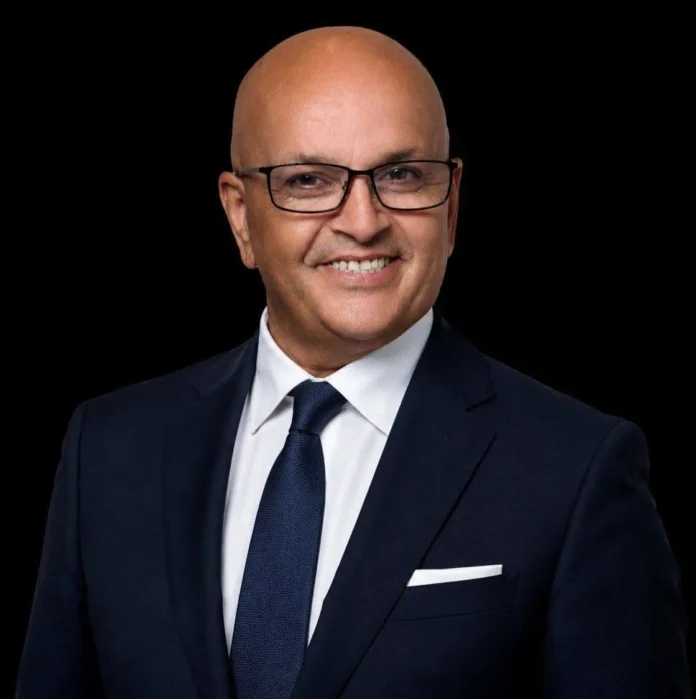
() Isaac Hammouch is a Belgian-Moroccan journalist and writer. Author of several books and numerous op-eds, he analyzes societal stakes, governance questions, and the mutations of the contemporary world.*


