
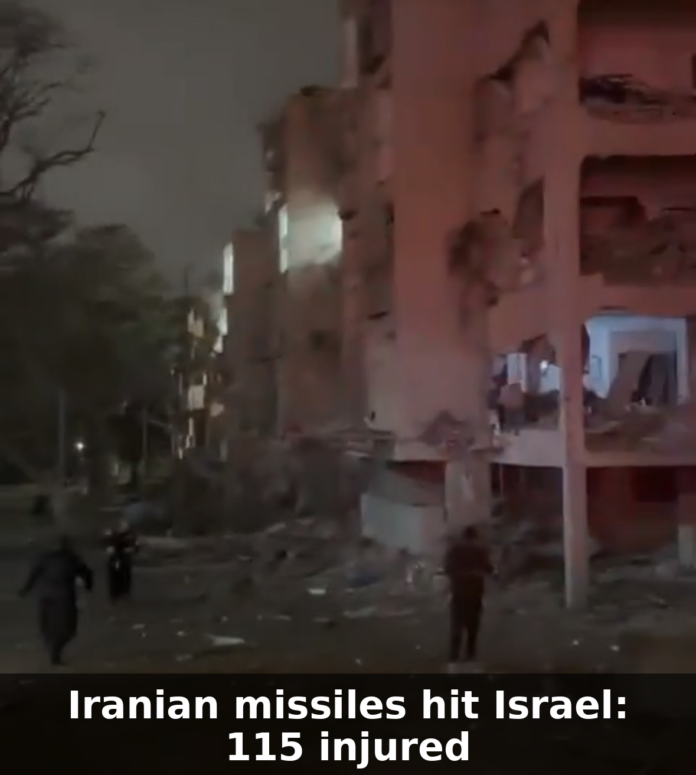
Missile strikes attributed to Iran have hit southern Israel, leaving at least 115 people injured, according to local authorities. The cities of Dimona and Arad were directly affected, with several impacts reported in residential areas. Among the victims are at least nine people in serious condition, including a 12-year-old boy and a 5-year-old girl. Emergency services were rapidly deployed, and evacuations were carried out in the most heavily affected neighborhoods.
According to initial reports, two waves of missiles were not intercepted by Israel’s air defense systems. Despite Israel’s advanced multi-layered defense architecture, including the Iron Dome, the system appears to have been partially overwhelmed. Possible explanations include simultaneous launches designed to saturate defenses, more complex trajectories, or the use of longer-range or faster missiles.
These strikes stand out due to their direct attribution to Iran, marking a potential shift compared to previous confrontations. Until now, tensions between Israel and Iran had largely been expressed through indirect means, including actions carried out by allied groups across the region, particularly in Lebanon, Syria, and Yemen. Direct involvement, if confirmed, would represent a significant change in the nature of the confrontation.
On the ground, Israeli authorities have implemented heightened security measures across the southern region. Movement restrictions have been introduced, public facilities have been closed, and emergency protocols have been activated. Damage has primarily affected residential buildings, while the broader impact on civilian populations remains significant.
At the regional level, the incident occurs in an already tense environment. Direct Iranian involvement could have repercussions across multiple fronts, particularly in southern Lebanon, where Hezbollah maintains a strong presence, as well as in other areas influenced by Iran, including Syria and Iraq. The risk of a broader escalation will depend largely on the military and political responses of the actors involved.
Internationally, the United States is closely monitoring the situation as Israel’s key ally. Any escalation could lead to increased military or logistical support. European countries have so far focused on calls for de-escalation, while international institutions may become more actively involved if tensions continue to rise. Russia and China, both influential in the region, could also play a role in potential diplomatic efforts.
At this stage, several uncertainties remain, including the official confirmation of the origin of the strikes, the exact type of missiles used, and the scope of any potential Israeli response. The situation continues to evolve in a context marked by fragile regional balances.


