

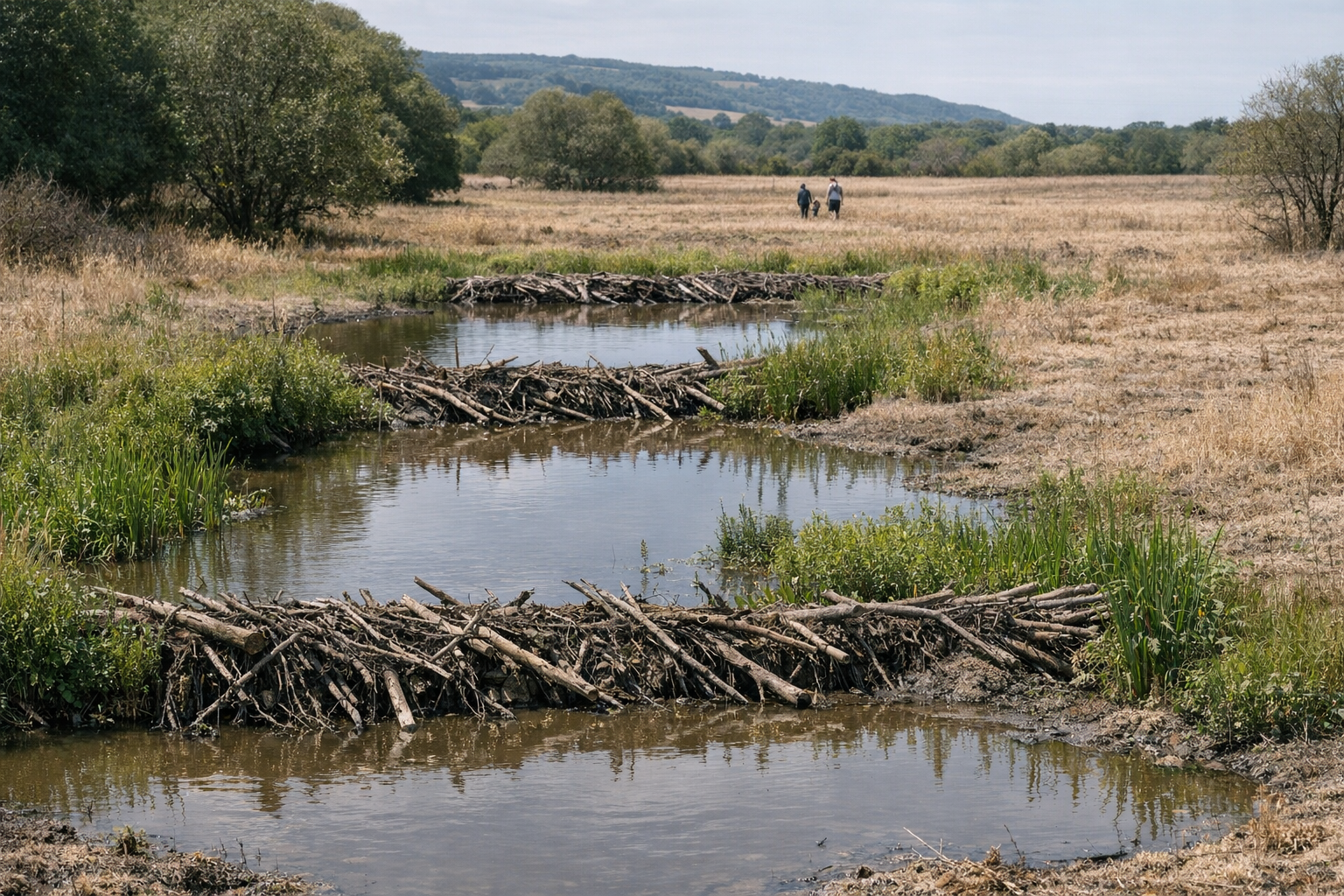
Green pocket on Holnicote estate has remained visibly lush while much of the surrounding countryside has turned dry this summer. The contrasting patch lies within the boundaries of The National Trust property and is fed by a network of ponds and sluggish channels where animals known for shaping waterways have had an outsized effect on the landscape.
Across the wet area, the activity of beavers — building dams and felling small trees — slows the flow of water and promotes standing pools. Those engineered features keep soil and vegetation cooler and moister than adjacent slopes, creating a literal island of green. Ecologists describe such patches as potential buffers: by maintaining higher local humidity and saturated ground, wet corridors can interrupt the rapid spread of flames, acting as a complement to conventional firebreaks.
The prospect of harnessing these natural processes is gaining attention as droughts become more frequent and intense. Land managers preparing for the fire season are increasingly considering nature-based strategies that enhance resilience, including restoring wetlands and allowing keystone species to re-establish. Incorporating beaver activity into wider drought-preparedness planning implies coordinating with farmers, local authorities and conservation bodies to balance water retention goals with flood risk, infrastructure protection and land-use rights.
Using animal-driven wetland creation as part of a risk-reduction portfolio carries potential co-benefits: increased habitat diversity, improved water storage and greater landscape heterogeneity that helps species cope with climate variability. At the same time, practitioners stress the need for monitoring and adaptive management so that water levels, access routes and downstream impacts are assessed. Where feasible, the wet patches created or maintained by beavers can serve as living features in a broader strategy to reduce fire vulnerability while supporting ecological recovery.


