

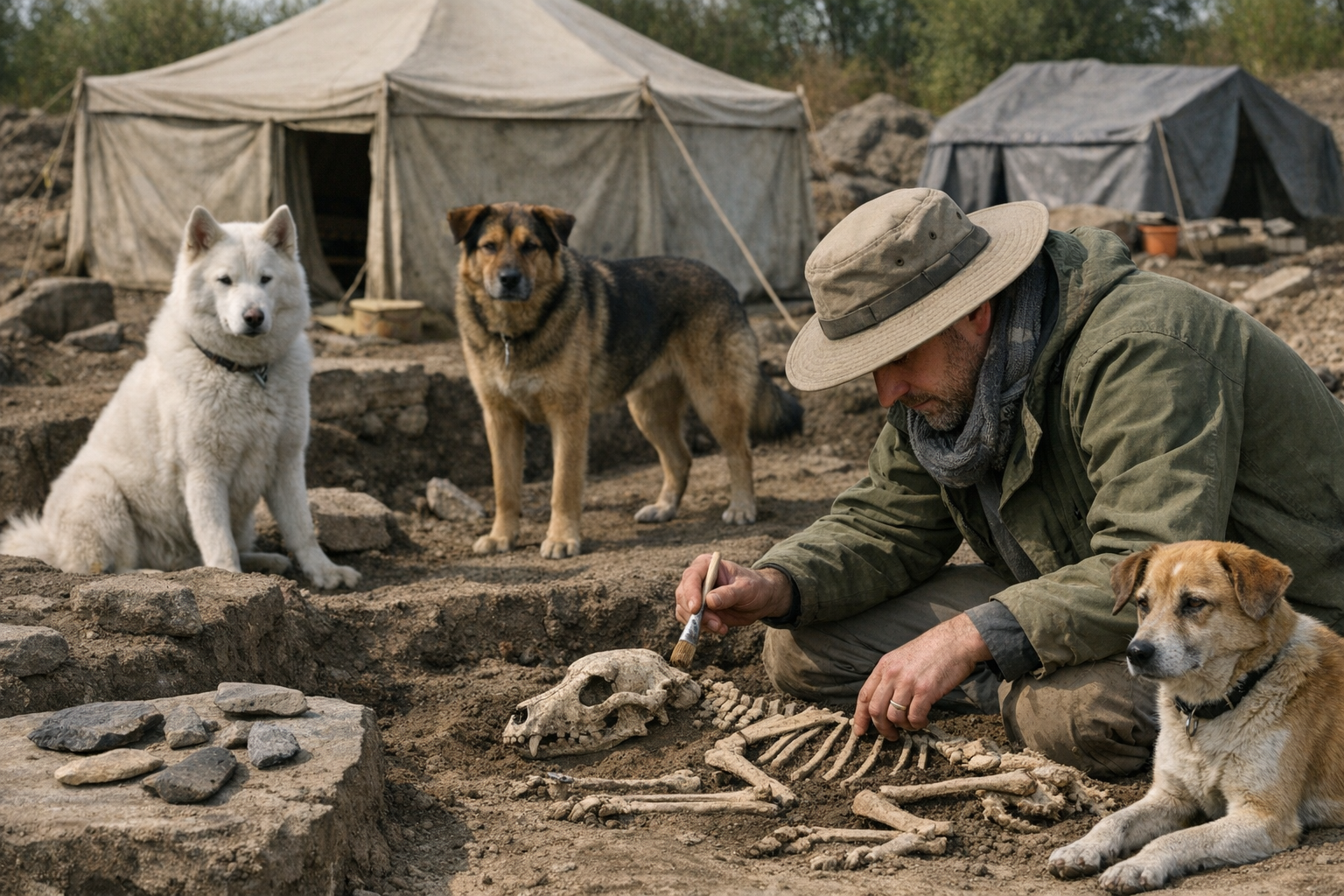
Dogs and humans have shared an enduring biological and cultural relationship that is visible in the archaeological record and in living canine diversity. Archaeological evidence records dogs buried with people nearly 14,000 years ago and their depiction in ancient art across continents, indicating sustained proximity and utility. Across that span, dogs served as hunters, guards, draft animals, herders and companions, roles that shaped their morphology and behaviour in different regions.
Domestication produced a distinct lineage commonly identified as Canis familiaris, whose changes reflect both human selection and environmental pressures. Early selective processes favoured tameness and traits useful to particular tasks, while natural selection operated on dogs living in diverse climates and ecosystems. The combined effect of human-directed breeding and local ecological constraints led to measurable differences in size, coat type, dentition and temperament among regional populations.
Regional specialisation is apparent in both historical and contemporary examples. Arctic communities developed stout, thick-coated dogs suited for pulling sleds and enduring cold; pastoral societies in Eurasia bred nimble, responsive herding types for livestock management; and many tropical and subtropical human settlements maintain free-ranging or pariah populations adapted to scavenging and cohabiting with dense human settlements. These patterns are supported by zooarchaeological finds, skeletal morphology studies and comparative behavioural observations that link form and function to human economic practices.
The worldwide mosaic of dog forms therefore reflects parallel adaptation to human lifestyles rather than a single, uniform trajectory. Dogs embody a record of human mobility, trade and cultural practice as much as they do evolutionary change: regional human needs directed breeding and deployment, while dogs’ biological plasticity allowed populations to stabilise into distinct local types. Contemporary genetic and archaeological research continues to refine timelines and pathways, but the core fact remains that the diversity of modern dogs is the product of long-term, reciprocal interaction between people and their canine partners.


