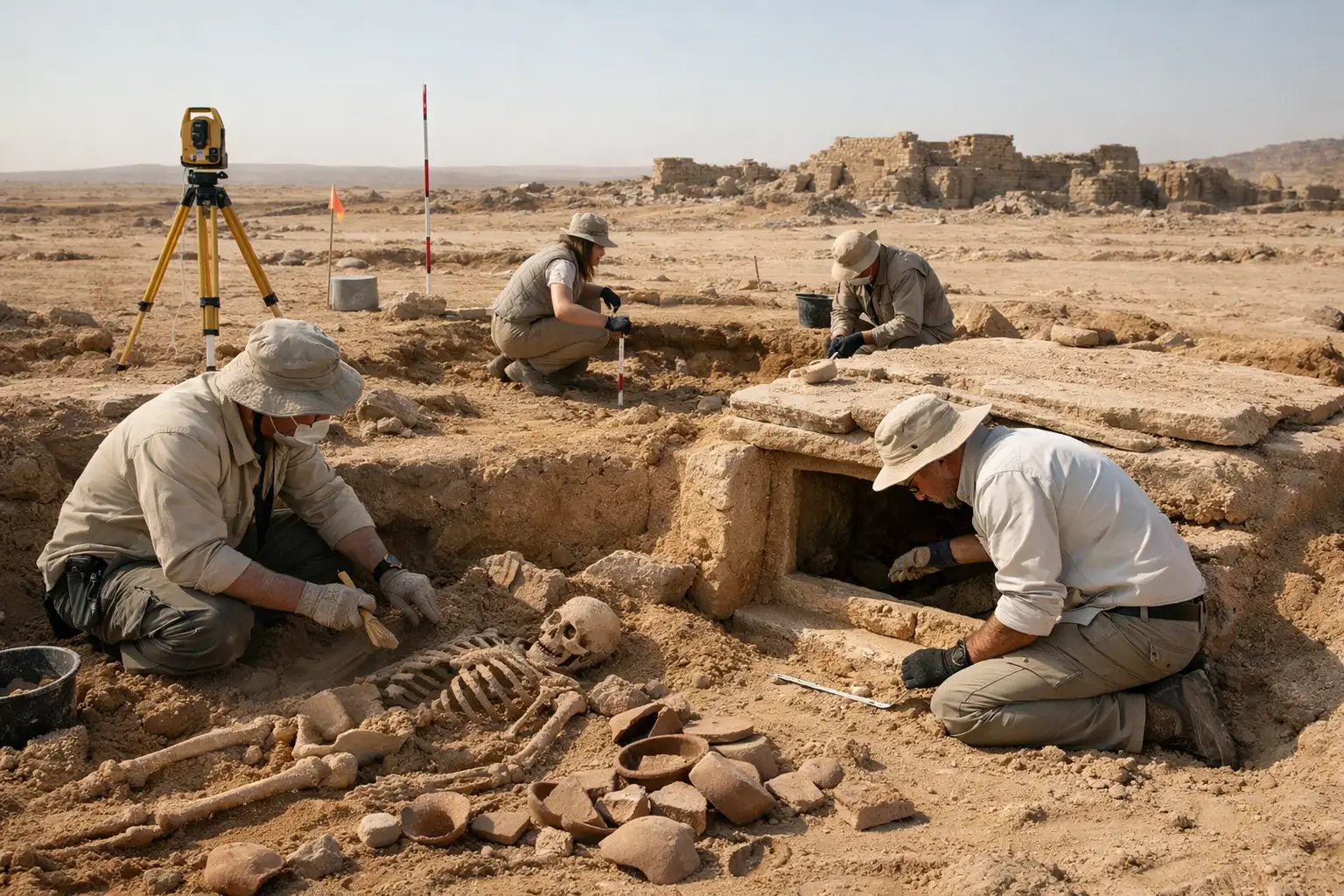
New forensic evidence indicates that several royal burial complexes from the earliest dynastic period in Egypt were accompanied by large numbers of attendant interments that occurred at the same time as the king’s burial. The study focuses on cemeteries associated with the First Dynasty, more than five centuries before the construction of the Great Pyramid, and interprets the clustering and timing of those burials as consistent with ritual killing of household officials and artisans to accompany the ruler in death.
The findings emerge from a combination of osteological and stratigraphic analysis of human remains and burial layouts. Skeletal data and the patterning of graves suggest a high number of deaths concentrated around the moment of royal interment rather than spread over a long interval. Researchers characterize this pattern as evidence that attendants were buried contemporaneously with their ruler, a practice distinct from later funerary traditions in the region.
Placed in a broader archaeological context, these results illuminate the organization of power and the role of mortuary rites in the formation of early states. The presence of numerous attendant burials adjacent to a single royal tomb implies an institutional capacity to mobilize, control and ritually dispose of a segment of the population at the end of a ruler’s life. Such practices have implications for how scholars understand labour, loyalty and social hierarchy during the transition from predynastic communities to a centralized kingship.
While the study refines knowledge of early royal cemeteries, it also highlights limits in the current evidence and the need for comparative work across contemporaneous sites. The concentration of attendant burials in these First Dynasty complexes will prompt renewed examination of other early cemeteries and encourage further application of forensic methods to clarify timing and cause of death. The research contributes a significant data point to the evolving picture of funerary ritual in early archaeology of the Nile Valley.