
In the context of the Indo-Pacific’s growing geopolitical centrality, Fincantieri is progressively strengthening its presence in Malaysia, seizing the opportunities created by rising defense spending and the increasing demand for advanced naval capabilities.
Sponsored content by

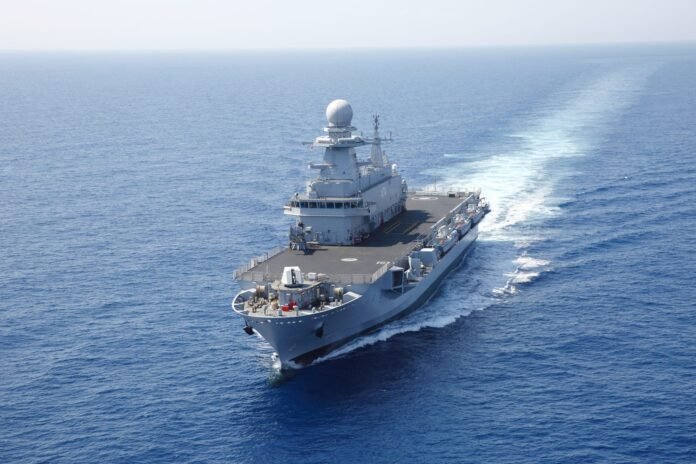
Within this framework, the LPD San Giusto Enhanced stands as a clear example of the Group’s ability to evolve proven platforms into modern, multi-mission assets. This ship, a well‑proven amphibious transport vessel whose design and capabilities have been steadily refined over decades of active service, combines a solid and reliable design heritage with advanced technological integration, resulting in a platform optimized for flexibility and adaptability. With a full load displacement of approximately 8,800 tons and a length of 142.9 meters, the ship is powered by a CODAD propulsion system featuring two high-power diesel engines, independent engine rooms and controllable pitch propellers. This configuration ensures efficiency, redundancy and sustained performance, enabling speeds exceeding 20 knots and extended operational range.
One of the most distinctive features of the LPD San Giusto Enhanced is its amphibious capability. The floodable dock, measuring 20.5 by 7 meters, allows the deployment of multiple landing craft, including LCMs with significant payload capacity. This is complemented by a movable shore ramp and full RO-RO functionality, enabling rapid and efficient transfer of vehicles – including heavy armored units – directly onto unprepared shorelines.
The ship’s aviation capabilities further expand its operational envelope. The flight deck is designed to support medium to heavy helicopters, enabling a wide range of missions such as troop transport, vertical replenishment and search and rescue operations. Internally, the vessel features modular spaces that can be rapidly reconfigured to accommodate mission-specific needs, including unmanned systems, medical facilities or command centers. This modularity is a key enabler of the platform’s versatility, particularly in regions like Southeast Asia where navies must address both conventional and non-traditional security challenges.
In addition, the inherent flexibility of the platform extends to its mission system capabilities. The vessel can be equipped with a payload tailored to constabulary and low-intensity operations, while maintaining the structural provisions to progressively and significantly upgrade its capabilities. Through a “fitted for but not with” approach, the ship can evolve into a more heavily equipped combatant, allowing navies to scale capabilities over time in line with operational needs and budgetary priorities.
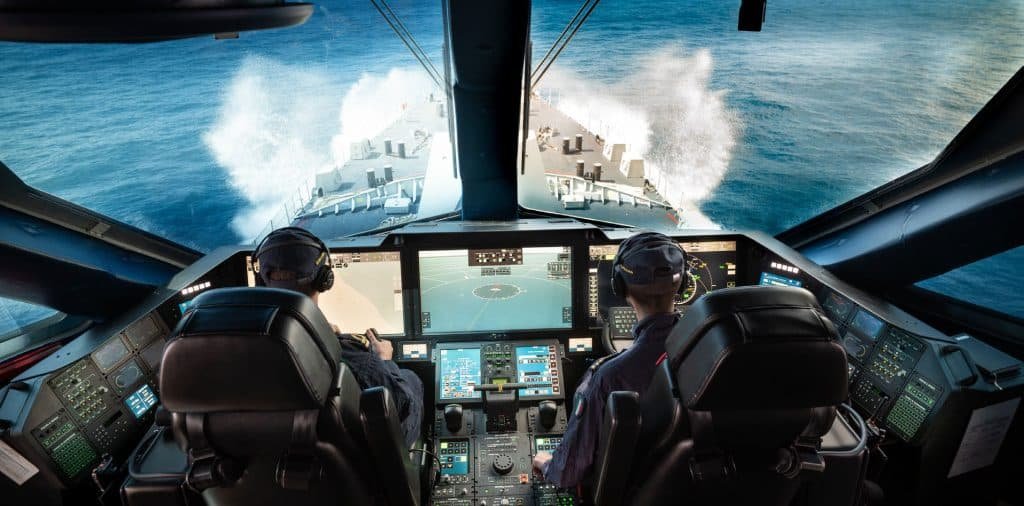
Complementing amphibious capabilities, Fincantieri is introducing advanced digital solutions across its latest generation of naval platforms, such as the MPCS/PPA Frigate and the PPX, Next Generation OPV. The MPCS/PPA Frigate embodies this evolution, leveraging a highly innovative digital architecture that transforms the ship into a smart, interconnected system. At the core of this concept is the Naval Cockpit, an aviation-inspired interface that integrates navigation, platform control and combat management into a single, intuitive environment, enabling streamlined operations and enhanced situational awareness.
This digital approach is further reinforced within the Combat Information Center, which consolidates multiple command functions into a flexible, reconfigurable space. Supported by Artificial Intelligence and Augmented Reality tools, the system enables rapid data processing and more effective tactical responses. The same digital innovations are now being extended beyond high-end combatants. Fincantieri is transferring these capabilities to new classes of vessels, including next-generation offshore patrol vessels such as the PPX. The first ship of this new class for the Italian Navy has recently been launched, marking a key milestone in the adoption of advanced digital solutions for patrol missions. This ensures continuity between high-end platforms and more cost-effective assets, enabling a broader application of digital naval technologies. Notably, the export success of this approach is demonstrated by the delivery of two MPCS/PPA units to the Indonesian Navy, confirming the relevance of these platforms within the regional context.
Beyond surface platforms, Fincantieri is also advancing a comprehensive approach to the underwater domain, bringing together expertise in submarines, unmanned systems, sensors and subsea technologies. The Group has developed a range of unconventional platforms based on a modular “system of systems” concept. These solutions integrate unmanned surface and underwater vehicles, an array of active and passive underwater sensors and both soft-kill and hard-kill effectors within a cyber-secure command-and-control architecture. This scalable and adaptable approach is particularly suited to the complex and dynamic maritime security environment of Malaysia.
At the core of underwater operations is the U212 NFS submarine, a state-of-the-art platform representing the evolution of conventional submarine technology. Designed as the future backbone of Italy’s underwater fleet, it incorporates advanced Air Independent Propulsion and high-performance lithium battery systems, ensuring extended endurance, reduced detectability and superior operational flexibility. Its low acoustic and magnetic signatures, achieved through non-magnetic materials and advanced sound-dampening technologies, enable highly stealthy operations even in contested environments.

The U212 NFS also features a fully integrated combat system, combining sonar, electronic warfare, communication and weapon systems into a cohesive operational architecture. Its capability to deploy special forces further enhances its versatility. Designed with modularity and future growth in mind, the platform is well suited to address a wide range of missions, from intelligence gathering and anti-submarine warfare to deterrence and strategic operations.
Complementing these capabilities, the DEEP system represents Fincantieri’s approach to protecting underwater critical infrastructure through a layered, modular and cyber-secure architecture. By integrating unmanned vehicles, early warning systems and the Underwater Management System, DEEP enables real-time detection, identification and response to potential threats. It supports missions such as seabed monitoring, pipeline inspection and intrusion detection, while also enabling coordinated multi-domain operations. Its scalability allows for the integration of additional capabilities, including deterrence systems and above-water surveillance modules. Its dual-use nature also makes it suitable for civil applications, such as environmental monitoring and infrastructure maintenance, further increasing its strategic value.
Ultimately, Fincantieri positions itself as a long-term strategic partner, capable of supporting naval capability development across the entire lifecycle – from design to sustainment – while reducing operational risks and ensuring performance over time. By endorsing Government-to-Government frameworks, it promotes transparency, reliability and sovereign assurance, while its comprehensive technology transfer approach fosters industrial autonomy, skills development and the growth of a resilient national maritime defence ecosystem, ultimately contributing to a sustainable and future-ready naval capability of Malaysia.
Source:
www.navalnews.com


