
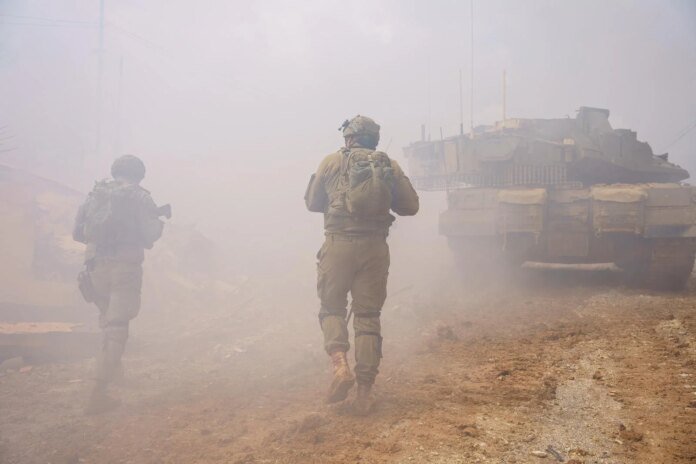
After the long, costly US experiences in Iraq and Afghanistan, a clear bipartisan consensus emerged firmly opposing putting American boots on the ground in another Middle East war.
US President Donald Trump seems open to violating that taboo — despite railing against it in election campaigns — deploying thousands of US infantry troops to the Middle East ahead of a possible invasion of Iranian territory.
But it’s not only the Americans who could be set to reopen old wounds in the fight against Iran and its proxies.
Top Israeli leaders are openly declaring their intention to create another security zone in southern Lebanon.
On Sunday night, Prime Minister Benjamin Netanyahu boasted that Israel has created “three security zones deep in enemy territory,” and that in Lebanon, he has given the order to “further expand the existing security zone to definitively thwart the [Hezbollah] invasion threat and to push anti-tank missile fire away from our border.”
In May 2000, Israel ended its traumatic, 18-year-long occupation of southern Lebanon. Never again, Israelis pledged, would they get stuck in the “Lebanese mud” that saw an average of over 20 IDF soldiers die every year.
Now, Israel looks to be sliding back into that quagmire. And while more than a quarter-century has passed since Israel pulled out of the security zone, it is fighting the same enemy, operating with much the same logic, and risks achieving the same result.
The emergence of the security zone
Israeli leaders did not intend to create a security zone controlled by the IDF in the 1980s. That result instead emerged as the child of imperfect solutions and short-term thinking, which eventually was seen as unalterable.
Since before Israel’s founding, Jewish authorities had maintained ties with Maronite Christian villages in southern Lebanon. In the 1970s, as Lebanon descended into a multifaceted civil war, Israel — in concert with Iran — backed the Christian militias facing off against the Palestine Liberation Organization, providing them with arms, equipment, training, and medical aid.
But Israel expressly ruled out entering that battle. “We will not fight for them. We will help them… so they’ll be able to fight [for] themselves,” Northern Command chief Rafael Eitan said at the time.
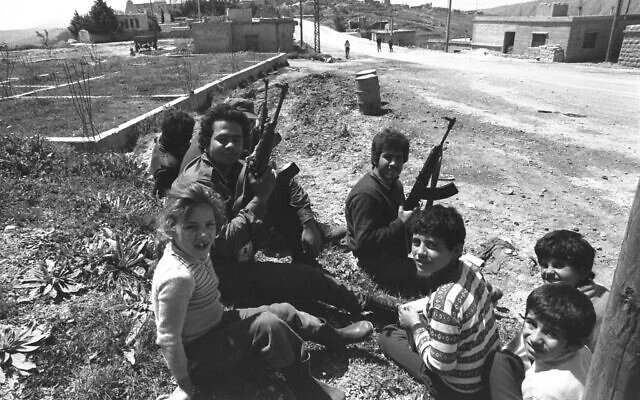
What had been quiet cooperation evolved into direct military support in the late 1970s, after Syrian forces moved into Lebanon and PLO terrorists carried out a series of shocking attacks in Israel.
In 1978, after Palestinian terrorists hijacked an Egged bus and left 35 Israelis dead, the IDF responded with Operation Litani, which included massive airstrikes and a ground incursion.
During Menachem Begin’s second tenure as prime minister in the early 1980s, Israel sought the expulsion of Syria and the PLO, and for the Maronites to be put in control of Lebanon. After hundreds of PLO Katyusha rocket attacks on northern Israel between August 1981 and May 1982, and a Palestinian assassination attempt on Israel’s ambassador to the UK, Israel embarked on Operation Peace for Galilee in June 1982.
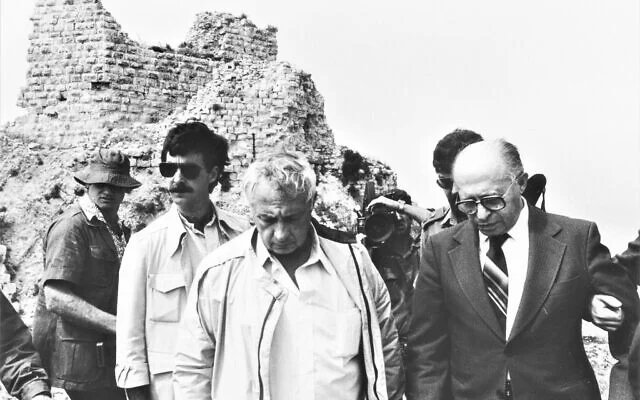
Then-defense minister Ariel Sharon tried to engineer the installation of a friendly government in Beirut, but that effort was effectively neutralized by an assassin’s bomb that killed Lebanon’s president-elect Bachir Gemayel in 1982. Three years later, after the PLO and Syria had been pushed out — with Hezbollah emerging in the resulting vacuum — Israel withdrew its forces from most of Lebanon, settling on a security zone designed to keep Palestinian terrorists away from the border.
The buffer zone was meant to be managed and secured by the South Lebanon Army, a Christian militia backed by Israel, with a minimal IDF presence of some 50 advisers. But when the SLA started to collapse in the face of Hezbollah attacks, Israel could not help but be sucked in.
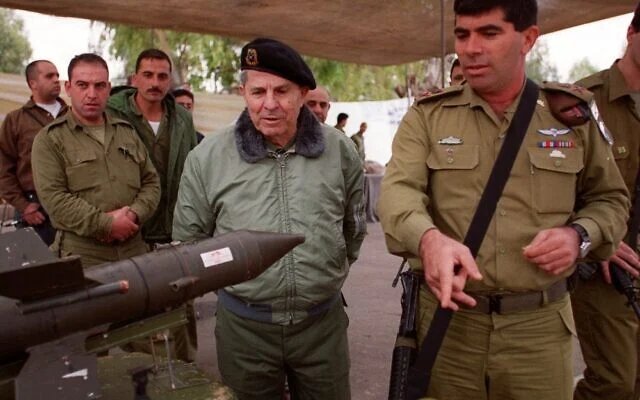
The next 15 years of conflict against Hezbollah would cost hundreds of Israeli lives, with a trauma that persisted until it was replaced by another, the October 7, 2023, Hamas invasion of southern Israel.
The Lebanon occupation was the culmination of Israel’s attempt to shape the region and intervene in the internal politics of an Arab country. The scars from the 18-year attempt have left Israeli leaders with an instinctive aversion to moves that could get them stuck in anything resembling the “Lebanese mud.”
“We go into Lebanon in ’82 with very big ideas about what we’re doing. We’re trying to change the Middle East. We’re a military power, and we’re going to rewrite the regional dynamic,” said Matti Friedman, author of “Pumpkinflowers,” an on-the-ground account of the experiences and emotions of soldiers serving there in the mid- and late-1990s.
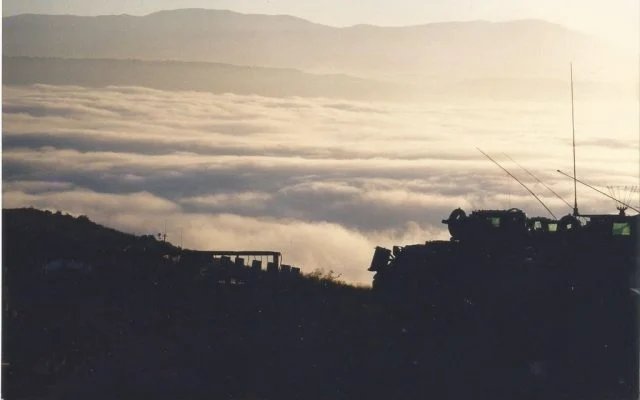
Back into Lebanon
The day after the October 7 attacks, Hezbollah opened fire on Israel as well. With its focus on Gaza, the IDF engaged in tit-for-tat strikes with Hezbollah until July 2024, when a Hezbollah rocket killed 12 children on a soccer field in the Golan Heights.
On September 17, thousands of pagers simultaneously exploded in the southern suburbs of Beirut and other Hezbollah strongholds across Lebanon, causing thousands of casualties.
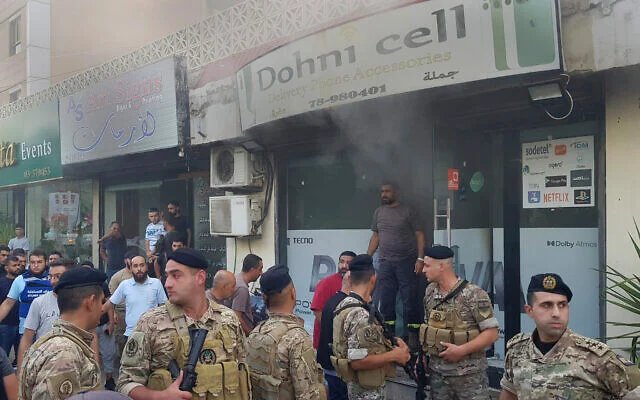
The coordinated attack dealt a deadly blow to the Iran-backed terror group, and kicked off an escalation that continued with the assassination of almost all of Hezbollah’s leadership — including Secretary General Hassan Nasrallah — and a limited Israeli ground invasion of southern Lebanon.
A significantly weakened Hezbollah agreed to a ceasefire in November 2024. Under the terms of that truce, Hezbollah was required to vacate southern Lebanon and be replaced by the Lebanese military. Israel was also required to withdraw, but reserved the right to respond to threats. It has also declined to vacate troops from five strategic locations inside Lebanon.
Lebanon’s efforts to disarm Hezbollah have fallen far short of what Israel expected, and Jerusalem warned publicly that Iran was helping Hezbollah rebuild its capabilities.
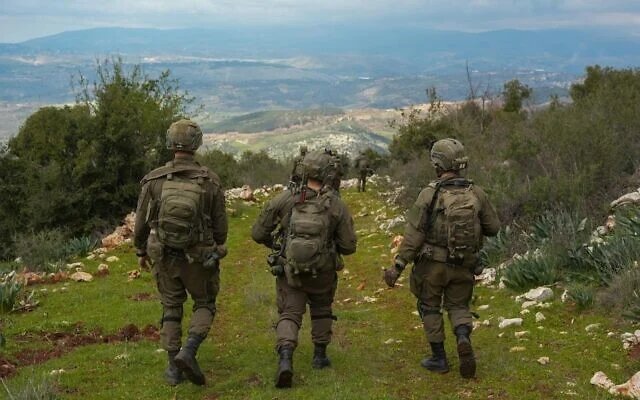
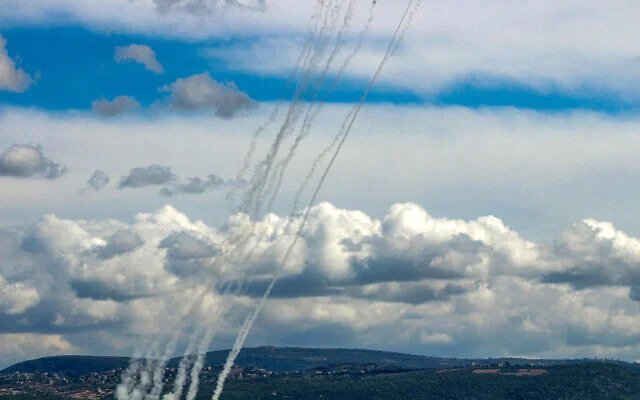
The terror group waded into the US-Israeli war with Iran on March 2, firing rockets at northern Israel. Israel responded by sending thousands of troops into Lebanon in a steadily expanding offensive.
Israel insists that the demilitarized zone it is creating would be different than the security zone. IDF officials say the area will be controlled primarily with surveillance and firepower, as well as ground troops in areas deemed strategically necessary.
That claim isn’t especially convincing.
“We are doing the same thing under the same conditions, and the result will be the same,” said Haim Har-Zahav, who wrote “Lebanon: The Lost War,” a landmark account of the security zone experience.
IDF forces would be able to effectively keep Hezbollah off the border and away from Israeli towns. But they would be less effective against the primary Hezbollah threat. “Rockets will fall on the north because rockets don’t care who holds the ground,” said Har-Zahav. “They fly over.”
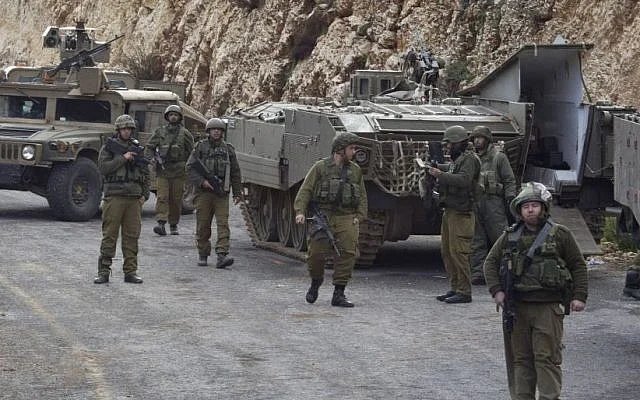
Limited troop presence has a tendency to expand over time, creating new targets for the enemy. “You can’t hold forces in enemy territory without logistical support,” said Har-Zahav. “If you have logistical support, that needs protection. If you have guards, they need a guardhouse, and if you have a guardhouse, it needs a fence. Then suddenly you have an outpost, and the outpost turns into a target.”
Logistical convoys were enticing soft targets for Hezbollah in the 1990s, forcing Israel to switch to helicopters for troop movements and supplies. That indirectly led to the mid-air helicopter crash that cost the lives of 73 soldiers in 1997, and sparked the grassroots movement that brought the security zone to an end.
Hezbollah would likely go after convoys again.
“No matter where you put the border, there’s going to be friction on that border,” said Friedman. “Let’s say the new border is the Litani [River]. That gets Hezbollah away from our civilian communities. Great. But it means you’ve got guys in Lebanon who are going to be facing snipers and IEDs and anti-tank rockets and mortars.”
The decisive option
Establishing a new security zone is only one of the options available to Israel, and not an especially good one.
In addition to not solving the threat, a security zone would also serve Hezbollah’s political interests. There are only two Hezbollah ministers in the 24-member cabinet, a sign of the movement’s current political weakness after dragging the country into war with Israel.
An Israeli security zone “would resolve Hezbollah’s severe political problems,” according to Israeli military thinker Eran Ortal. “A prolonged Israeli occupation would help rally broader segments of the Lebanese public around it once again.”
Another option is to target government infrastructure to force the state to disarm Hezbollah. There are hints of that approach in Israel’s targeting of bridges across the Litani.
But the fundamental problem that has always plagued Lebanon is the state’s weakness. That has allowed foreign actors like the PLO, Syria and Iran to use the country as a base from which to threaten Israel.
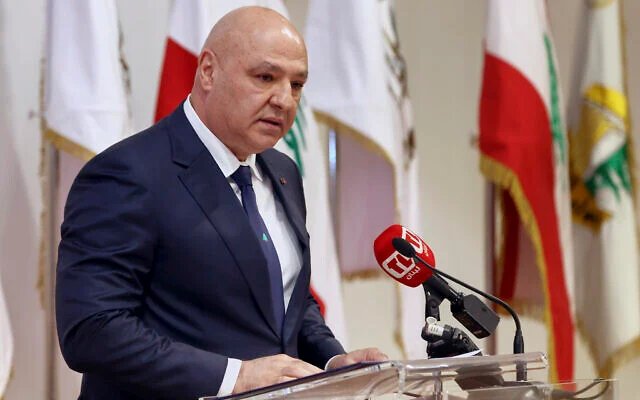
The Western-backed Joseph Aoun government that took power after the 2024 ceasefire would like nothing more than for Hezbollah to be disarmed, but doesn’t have the will or capacity to do it itself.
Israel still expects the government to act. “Our demands from the Lebanese government remain as they were — disarming Hezbollah, and they can start by firing Hezbollah ministers in the government,” an Israeli official told The Times of Israel.
But while Israel issues demands that the Lebanese government deal with Hezbollah, residents of northern Israel are demanding that Israel deal with the problem itself.
“In the post-October 7th world, Israelis are quite understandably not willing to stake their security on myths,” said Friedman.
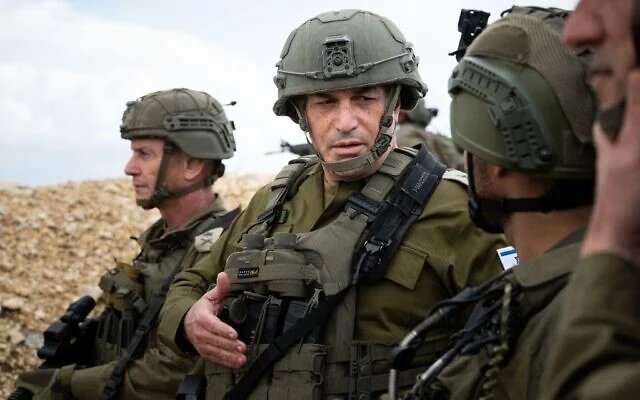
A third option is to conduct an aggressive, decisive ground campaign designed to defeat Hezbollah’s military and not focus on capturing and holding territory.
Despite Iran’s efforts to rehabilitate Hezbollah, its elite units have only been able to fire the occasional anti-tank missile or rocket. It hasn’t shown that it learned from the Russia-Ukraine war to use drones to target ground troops either.
“Everywhere that our forces have come into close contact with the enemy, the battle is decided quickly in our favor,” said Ortal.
If Israeli leaders don’t choose that option, then we can expect a long-term presence over the border.
Defense Minister Israel Katz said last week that Israel will maintain control of a “security zone” in southern Lebanon, up to the Litani, until the threat of Hezbollah is removed — and given their rocket and missile arsenal, that threat will long remain.
Israel’s troops crossed into Lebanon in 1982, and came out in a rush 18 years later, as the South Lebanon Army collapsed around them. Sending them back in to establish a security zone may seem like a relatively sensible and straightforward option to keep Hezbollah away from the border. But history tells us we don’t know when they’ll come out.
Source:
www.timesofisrael.com


