

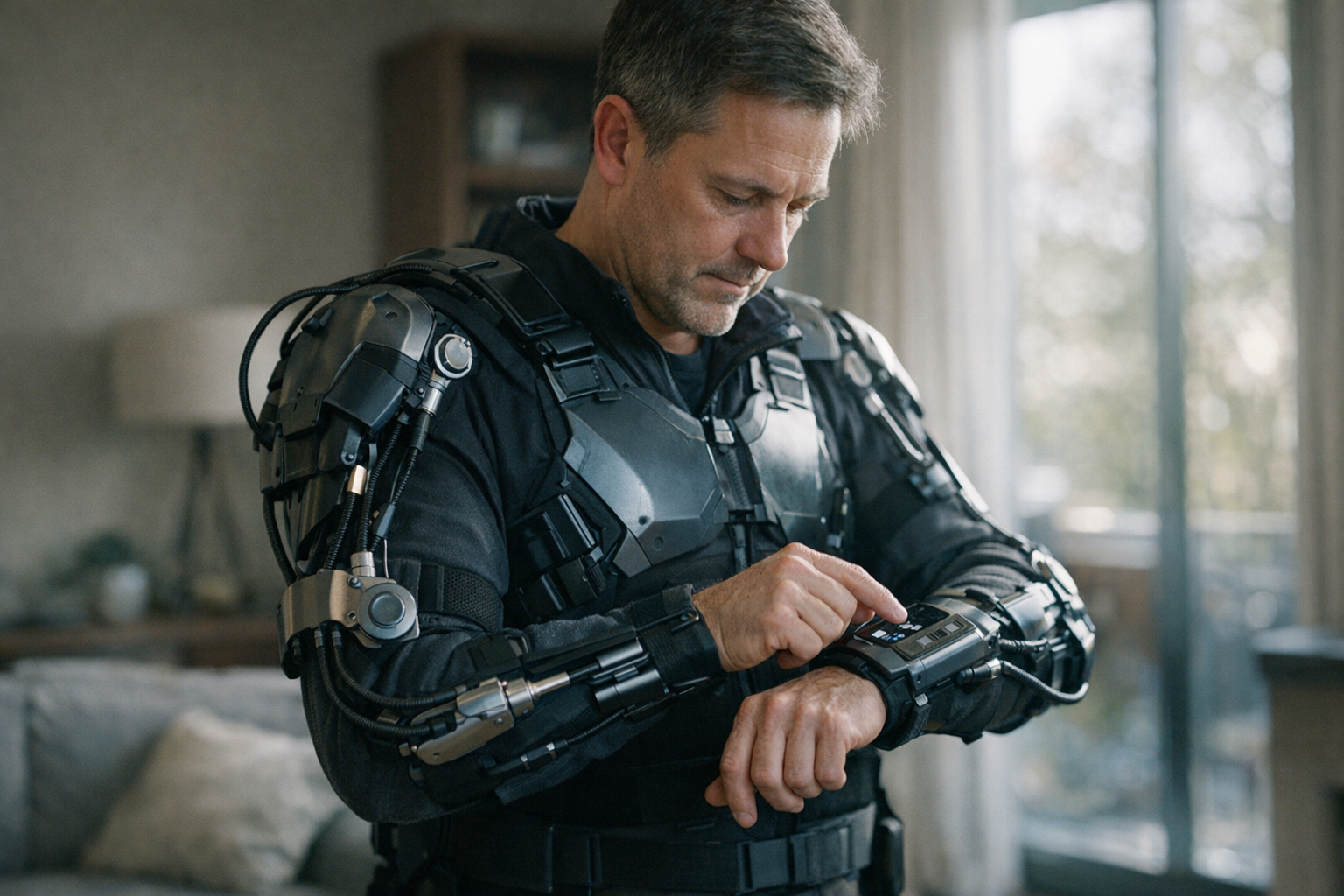
Chinese exoskeleton makers are adapting wearable robotic frames for everyday users, marking a shift from specialised industrial and clinical applications toward consumer-oriented products. Driven by advances in lightweight materials, battery life and simplified controls, these devices are increasingly presented as aids for mobility support, household assistance and recreational use. The trend reflects a broader reorientation of the robotics sector in China, where developers seek new markets beyond factories and hospitals.
Designers have focused on reducing cost and complexity to reach households and small businesses. Consumer models tend to prioritise ease of wear, modularity and safety features over the heavy-duty capabilities required in industrial settings. Manufacturers highlight potential applications such as supporting older adults with routine tasks, assisting workers in light manual roles and enabling users with mild mobility limitations to remain active at home.
The move raises practical and regulatory questions. Consumer exoskeletons must meet safety and durability standards for prolonged everyday use, and their integration with healthcare or workplace support systems remains uneven. Concerns also include battery management, maintenance, user training and the need for clear guidelines on when and how devices should be deployed in domestic environments. These considerations will influence adoption rates and the scope of permitted uses.
International interest is growing as Chinese-made devices travel beyond domestic markets, prompting conversations about certification, interoperability and supply-chain resilience. Manufacturers aiming for export face differing regulatory regimes and consumer expectations in Europe, North America and other regions. At the same time, competition from established industrial suppliers and new entrants in wearable technology is shaping product roadmaps and pricing strategies.
Looking ahead, incremental improvements rather than sudden breakthroughs are likely to define the consumer exoskeleton market. Continued miniaturisation, user-centred interfaces and clearer safety standards could expand practical uses without replacing existing medical or industrial solutions. Policymakers, industry actors and care providers will play a central role in determining how these devices fit into everyday life and the services that surround them.


