

Leaked internal documents from Elbit Systems, Israel’s largest arms manufacturer, show the firm was in talks to sell the United Arab Emirates dozens of strategic drones, part of a much wider package of advanced Israeli armaments for the Gulf nation.
The documents, which date from late 2021 to early 2023, include price proposals sent to the UAE, requests received from the Gulf state and correspondence among senior sales and research officials at Elbit. It’s unclear whether or how many of the deals mentioned in the documents went through.
Iran-backed hacker group Handala recently published the documents after apparently stealing them from the private Gmail account of at least one Elbit official who had failed to use a secure company account in email chains with colleagues. The content of the documents was reported on Monday by the Haaretz newspaper and last week by the anti-Israel outlet Drop Site News.
Elbit opened an office in the UAE after the country normalized relations with Israel under the 2020 US-brokered Abraham Accords. But Elbit has only once, in January 2022, publicly acknowledged that it cut a deal with the UAE, when the firm announced a $53 million sale of defense systems for Emirati fueler jets.
However, Elbit announced in November that it had reached a $2.3 billion deal to sell unspecified strategic equipment to an unidentified customer, whom a French intelligence-focused magazine claimed was the UAE.
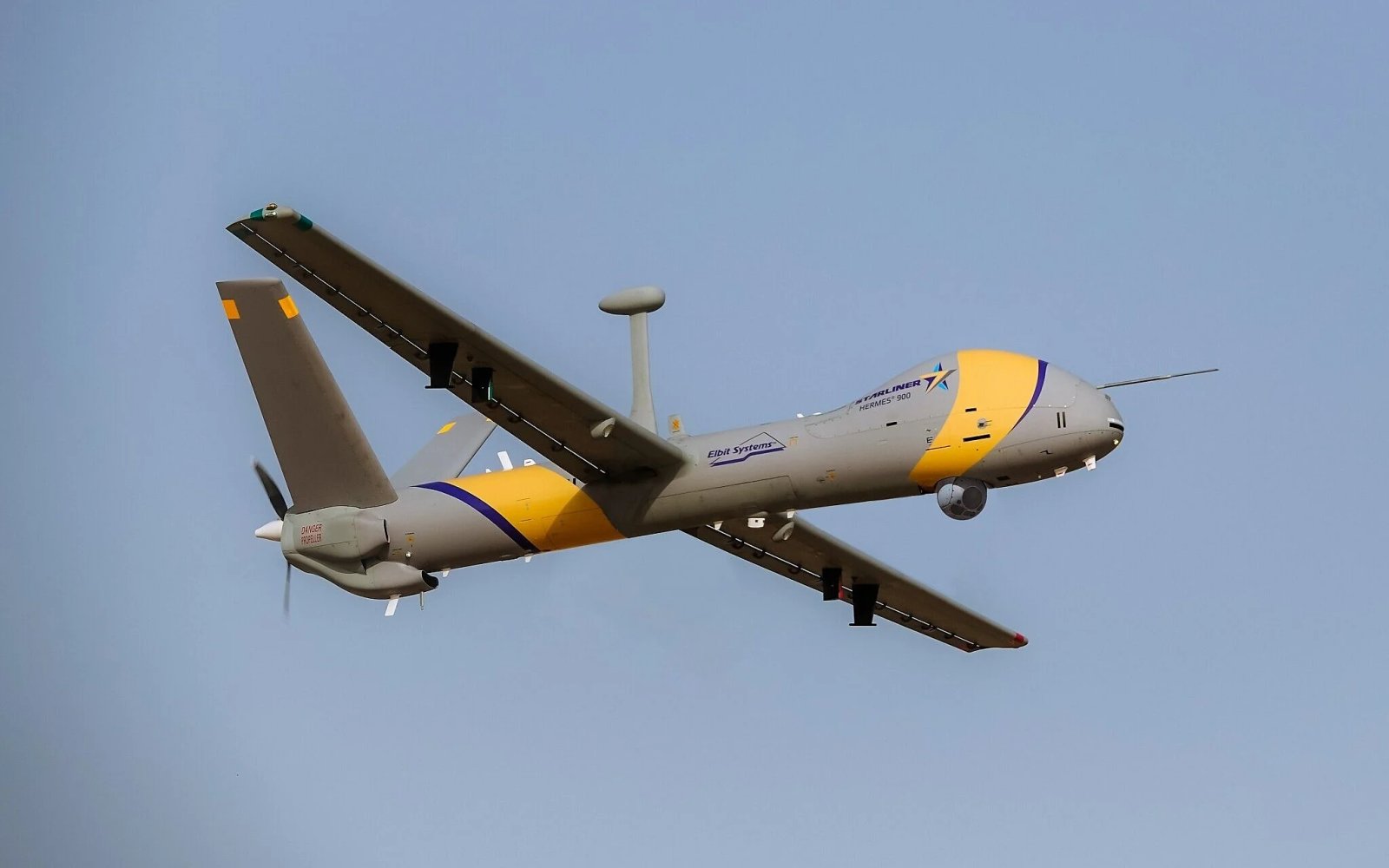
According to Haaretz, a leaked 2021 Elbit memo reportedly indicates that Israel’s Defense Ministry also gave the firm a green light to sell the UAE short-range SkyStriker loitering munitions and Hermes-900 surveillance drones.
The Hermes-900 drones are some of the most advanced in Elbit’s arsenal. They are able to give users high-resolution, multi-angle footage that can be rewound in real time.
In March 2022 — two months after Yemen’s Iran-backed Houthi rebels attacked refineries and an airport in Abu Dhabi — the UAE sent Elbit an urgent request to supply the Gulf state with six Hermes-900 systems, each of which includes three aircraft, Haaretz reported.
Elbit responded that month with a proposal that priced each system at $40 million. The UAE later expressed an interest in expanding the deal to 15 systems, for a total of roughly $1.3 billion, Haaretz said.
Other leaked correspondence reportedly showed Elbit pitching its newest drone, the Hermes-650, to the UAE in March 2023 — a year before the model was publicly unveiled at a defense expo in Singapore.
The drone has both signal intelligence (SIGINT) and electronic warfare capabilities. A slideshow from the sales pitch said the Hermes-650 works with Elbit’s SkyStriker munitions and attack drones produced by fellow Israeli arms firm Aeronautics, suggesting those products may have already been sold to the UAE, Haaretz said.
Elsewhere in the leaked documents was a photo of an Emirati “airborne SIGINT wish list” marked “confidential.” The wish list, whose date was unclear from the reports, included a request to procure four Elbit surveillance aircraft, as well as cyber, electronic warfare and other capabilities, within 42 months of the agreement.
In a response quoted by Haaretz and Drop Site, Elbit Systems said it “does not comment on business matters relating to its customers” and that “the materials presented do not accurately reflect the company’s business activities.”
The Emirati Ministry of Defense did not respond to a request for comment, Drop Site said.
Israel’s defense cooperation with the UAE has reached unprecedented levels during the Iran war that began on February 28, in which Iran also targeted Gulf states and especially the UAE.
Early in the war, Israel sent Iron Dome missile defense systems and staff to the UAE, where the system managed to shoot down dozens of Iranian missiles. The systems are produced by Aeronautics owner Rafael.
It was the first time Iron Dome was deployed in a country other than Israel or the US, Axios has reported. Prime Minister Benjamin Netanyahu, who covertly visited the UAE during the war, ordered the Iron Dome deployment to the UAE following a call with Emirati President Mohamed bin Zayed Al Nahyan, the news site reported at the time.


Source:
www.timesofisrael.com


