

Unlock the White House Watch newsletter for free
Your guide to what Trump’s second term means for Washington, business and the world
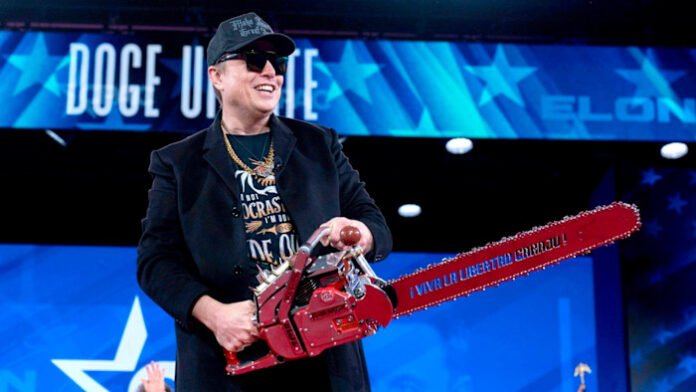
A group pushing Republicans to restore foreign aid slashed by Elon Musk’s Doge is targeting key swing districts with a multimillion-dollar advertising spree ahead of the US midterm elections.
The Campaign for America First International Assistance, funded by conservatives who believe the US has a moral and strategic imperative to help poorer countries, has already spent more than $1mn in Pennsylvania, Iowa and Arizona and plans to target more districts.
“Our focus is to try and ensure that there is as much funding as possible for the life-saving, evidence-backed programmes that are run and funded by the US and ultimately save tens of millions of lives around the world” said Nate Soule, a Republican strategist hired to lead Cafia.
“This is an issue where if a Republican talks about the work they’ve done, especially in swing districts, there’s a sizeable number of Democrats and even more independents who say they’re more likely to vote for them.”
Cafia has an operating budget of roughly $8mn-10mn and is organised as a non-profit that does not have to disclose its donors. It has enlisted one of Donald Trump’s pollsters, Jim McLaughlin, who found last year that more than 70 per cent of the president’s voters and 77 per cent of evangelical Christians supported international aid.
Further polling carried out this spring by McLaughlin in five swing districts in Iowa, Arizona, Colorado and Pennsylvania, and shared with the FT, showed majorities supporting foreign aid, particularly on global health.
Republicans are engaged in an uphill struggle to maintain control of Congress, with poll after poll showing the party is likely to cede the House, and perhaps even the Senate to Democrats, amid anger at Trump’s handling of the economy and the war in Iran.
There are signs that the Trump administration has become more sensitive to accusations that it callously cut life-saving schemes. In a note to journalists last month, the state department argued that figures showing a decline in US care for children with HIV had been misinterpreted.
“The message is clear: we cut overall spending by 30 per cent while preserving critical frontline HIV care and eliminating wasteful programs,” the department said. It added that in the coming months, “we expect the data to show more lives saved per taxpayer dollar”.
Trump’s chief of staff Susie Wiles told Vanity Fair last year she was “initially aghast” at Musk’s dismantling of USAID while he was at the helm of the so-called Department of Government Efficiency. “Anybody that pays attention to government and has ever paid attention to USAID believed, as I did, that they do very good work,” she said.
Congress in February passed a bill allocating $50bn for foreign aid — nearly $20bn above the White House’s proposed budget.
But the funding runs out in September, and other parts of Trump’s coalition remain resolutely opposed to any foreign aid.
Asked about Cafia’s work, Maga activist Jack Posobiec told the FT: “There is no appetite whatsoever within the American electorate for international assistance. If the globalists want to burn their money they are welcome to do so.”
Cafia’s ads stress that foreign aid has helped the US economy.
“America is strongest when we help our farmers stop starvation,” runs an ad in Iowa, a state with a large agricultural sector. Another soon-to-air ad, seen by the FT, urges support for a Republican congressman who “delivered millions for Wisconsin’s top research centres to fight deadly diseases and protect children”.
The group is looking at running ads in districts in Georgia, New York, New Jersey and Virginia.
“The scepticism is definitely there, but we’ve seen in our polling that the virtuous side of US foreign policy still really matters to the American people,” said Carrie Filipetti, who worked for the first Trump administration and is now executive director of the Vandenberg Coalition, which advocates for robust US leadership on the world stage.
Cafia is also considering flexing its muscles after the midterms, when the Republican race to succeed Donald Trump will begin.
“We feel confident based on the partnerships that we’ve been able to develop that this will be an organisation that has an opportunity to influence some of the presidential policies on international assistance in the 2028 cycle and beyond,” Soule said.
That race is likely to include ardent isolationist JD Vance, the vice-president, and a former champion of US aid, Marco Rubio, who has been less vocal about his stance while serving as Trump’s secretary of state.
Source:
www.ft.com


