

At Sea Air Space 2026, Ultra Maritime unveiled a new vision that transforms torpedo defense from a collection of systems into a fully integrated, mission-ready capability designed for modern conflict.
Jeremiah Richardson, Ultra Maritime’s Chief Technology Officer, sat down with Naval News to discuss the company’s next steps to drastically overhaul anti-torpedo defensive capabilities across the entire fleet. Ultra Maritime seeks to not only upgrade each vessel’s standalone anti-torpedo defense, but to change how the U.S. Navy defends against undersea threats entirely.
As of the present, fleet-wide anti-torpedo defense amongst the United State’s various classes of vessels has begun to slip. Countermeasures remain largely bespoke and unintegrated across a vessel’s architecture, with many independent systems themselves encountering outdated designs, components, and integration into combat systems, forcing U.S. Navy vessels towards a defensively biased posture.
Ultra Maritime has begun to upgrade these bespoke systems both independently, and has begun integration work into a common system. Which in tern allows for a more succinct defense against torpedoes through the streamlining of command decisions, expansion of sensor coverage, qualitatively upgraded countermeasures, and the automation of countermeasure deployment, rather than the current hand-launching method of certain types of expendable decoys.
Components and Integration

Ultra Maritime’s torpedo defense ecosystem leverages several soft-kill components. One of which is an iteration of the upgraded AN/SLQ-25E Nixie towed torpedo decoy, which combines the proven torpedo decoy’s capability, with a new towed set of sensors, one active and one passive.
All of these features fit within the space of the current Nixie system and utilize similar winches, allowing for better detection and decoying of sub-surface threats which operate at different volumes, without taking up an larger amount of space. Integration of these sensors allows at least enhanced detection across all Nixie operating surface ships such as Arleigh Burke-class Destroyers, or in the case of carriers and auxiliaries, a completely new method to track in-bound torpedo threats.
“The Navy says they want things working in unison. So we’re going to take a hard-kill countermeasure, a soft-kill countermeasure, active and passive detection, and then towed countermeasures, and put them all in a single system so that right now, if a torpedo salvo gets fired on a U.S. Navy surface ship, our main course of action is not to run away or to shoot soft kill countermeasures and hope they’re effective.”
Jeremiah Richardson, Ultra Maritime’s CTO
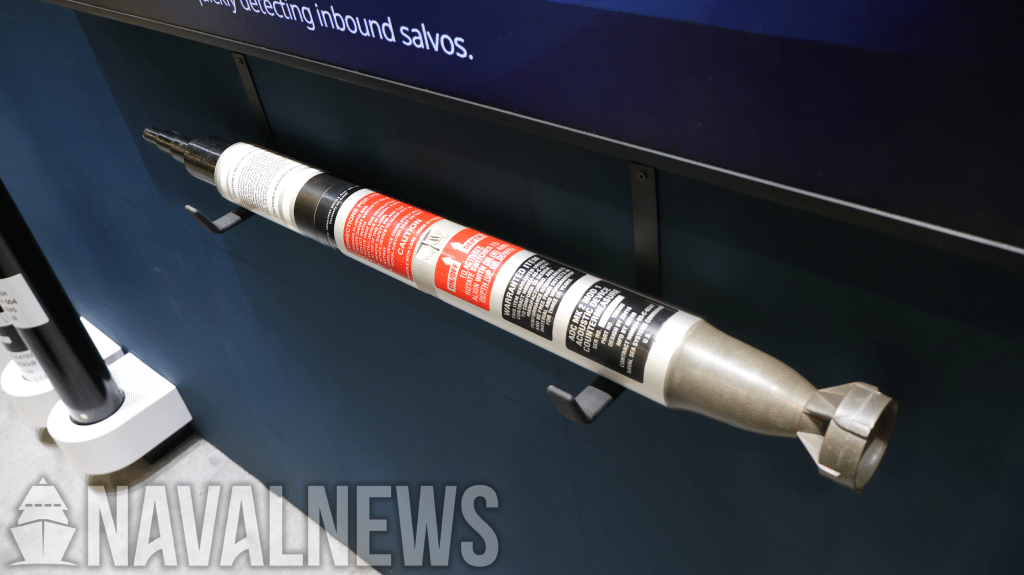
Another key piece is the new variant of the Acoustic Device Countermeasure (ADC) Mk2 expendable acoustic decoy, also manufactured by Ultra Maritime. The 3 inch in diameter disposable countermeasure drastically expands upon the ability of current expendable decoys to emulate a set of acoustic signatures designed to confuse continually more advanced threats.
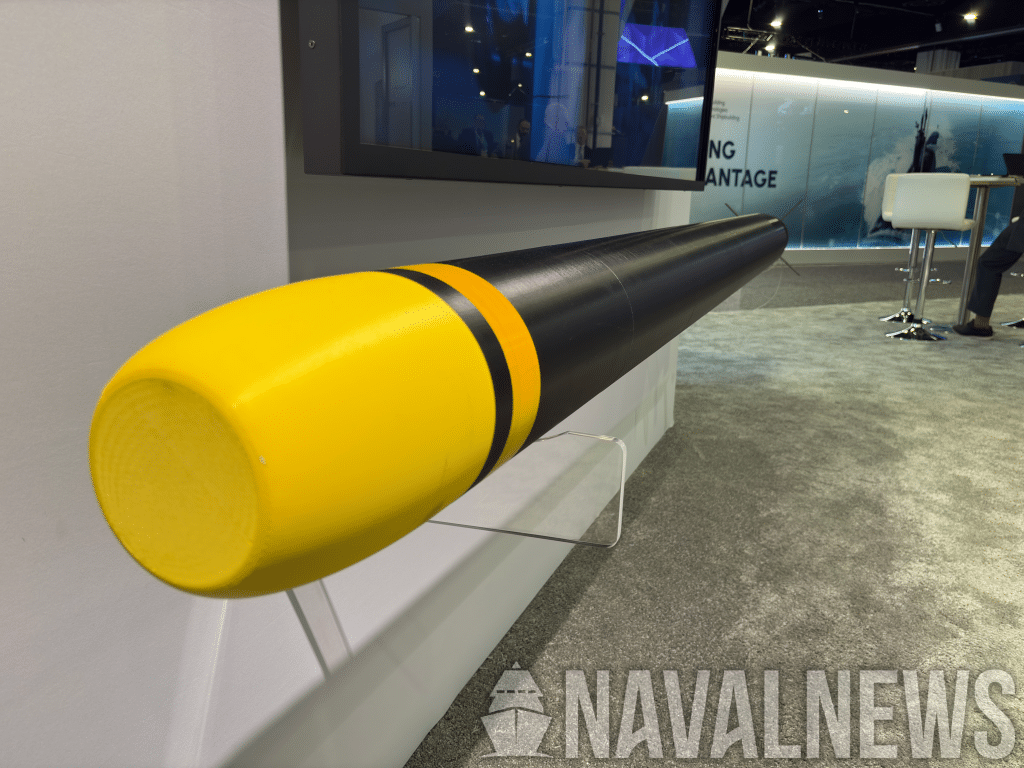
Hard-kill duties are shouldered by the 6.75 inch diameter Mk-58 Compact Rapid Attack Weapon (CRAW), designed and produced by RTX, with Ultra Maritime handling the production of the acoustic guidance section of the torpedo. Naval News has previously reported on CRAW’s design lineage, with it now serving as the primary counter-torpedo torpedo, destined to be fired off a common launcher across the majority of U.S. Navy surface ship types.
Program Progress
Ultra Maritime currently seeks to bring all of these systems together under a unified banner for each vessel which utilizes their system, with UM largely already having completed the software side of integration and computerization various countermeasure systems. In water testing of the entire upgraded Nixie towed system is already ongoing, with a test deployment having taken place in 2024 in Indiana.
Richardson has stated that development of a common launcher for CRAW could take place in as little as 12 months, with ejection options already surveyed. Also, CRAW deployment as a part of bringing Layered Torpedo Defense online across the fleet is heavily dependent on production quantities and timelines, with Richardson confirming the start low rate initial production for the MK-58, with eventual production numbers enabling fleet wide deployment.
Going Fleet Wide

Currently, the Navy seeks to upgrade counter torpedo warfare on a ship-by-ship basis by implementing a common torpedo defense system by the early-mid 2030s. However, UM has stated that the timeline could likely be pushed up, with the whole system entering service by the end of the decade, following the investment cycle initialized in 2023.
“We need to be able to defend these ships from torpedo salvos. And that includes refuelers, logistics, all the way up to carriers and everything in between.”
Jeremiah Richardson, Ultra Maritime’s CTO
Potential integration beyond just sensors/systems on each ship is still in Ultra Maritime’s purview, with the eventual goal of networking the entire fleet’s sensors and defense system under one umbrella, similar in concept to the current data-links/picture sharing present amongst Naval/Naval aviation radar systems. Whilst the Navy presently wants to shore up torpedo defense on a singular ship basis, there may be room to advance towards a completely integrated fleet wide system of anti-torpedo defense.
Included in this eventual integration plan is another more near term goal of expanding torpedo defense to submarines. Subsequently, Ultra Maritime has already begun a transition towards a new investment cycle geared towards bringing the same Integrated Torpedo Defense concept to the sub service. Amending the program towards submarines presents new challenges, as the hardware across submarines tends to be proprietary, requiring the retooling of different systems such as the already present towed arrays like the TB-29C on the Virginia-class fast attack boats.
Source:
www.navalnews.com


