
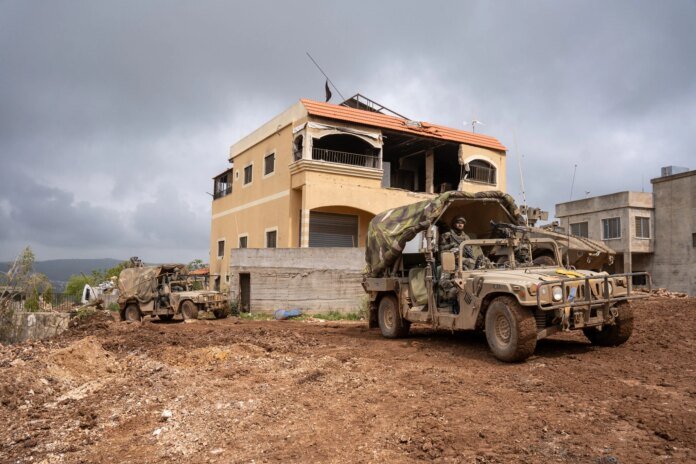
AYTA ASH-SHAB, Lebanon — The Israeli military is reestablishing a security zone that it left some 26 years ago, although commanders say that this time around, it will not carry with it the same dangers that troops faced during the 18-year occupation of southern Lebanon in 1982-2000.
On Sunday, for the first time since hostilities with Hezbollah escalated last month during the Iran war — when the terror group resumed rocket and drone attacks on Israel — Israeli reporters were allowed by the Israel Defense Forces to enter southern Lebanon, in an escorted visit to the newly established security zone.
The visit took place during a fragile 10-day ceasefire, announced by US President Donald Trump, that began at midnight between Thursday and Friday, following more than 40 days of fighting in southern Lebanon.
Driving through the fresh mud of southern Lebanon, reporters were taken in Eitan armored personnel carriers to a makeshift military post in the largely destroyed village of Ayta ash-Shab.
Five IDF divisions — composed of tens of thousands of troops — are currently stationed in the new security zone, whose boundaries are unsurprisingly similar to the security zone Israel held between 1985 and 2000, as Lebanon’s terrain has not exactly changed in the past 26 years.
Military and defense officials have said that the idea behind the security zone is to remove the threats of a potential Hezbollah invasion and the terror group’s “direct fire,” or anti-tank guided missiles, on Israeli border communities.
The IDF avoids calling it a “security zone.” Rather, the military dubs it a “forward defense area,” in an apparent attempt to distance any connection to the deadly and controversial conflict nearly three decades ago, during which an estimated 675 troops were killed.
“What do you call it? It doesn’t really matter,” said Col. Arik Moyal, the commander of the Nahal Infantry Brigade.
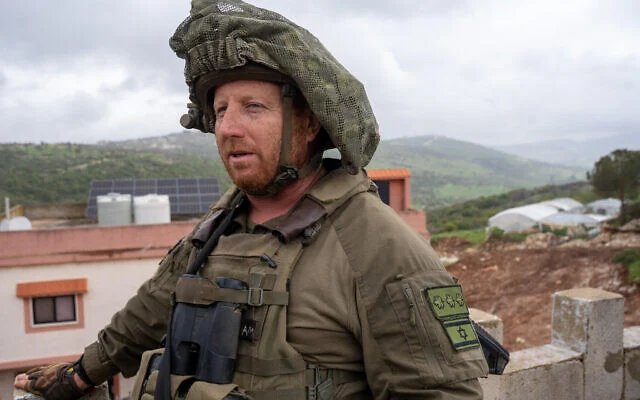
“Tactically, as a commander, this is a security area. We were told to create a security area where direct anti-tank fire cannot be carried out. There can’t be terrorists here who could infiltrate Shtula or Zarit… and there must not be any terror infrastructure here,” he told reporters during Sunday’s tour.
“What matters is what we do, and what we need to do so that a mother in Shtula can take her children to kindergarten safely and no one threatens her.”
As part of the security zone, Defense Minister Israel Katz has said that the IDF would raze all of the Lebanese border villages — with the exception of several Christian communities — though military commanders have insisted that the army is only destroying Hezbollah infrastructure, which they say is often embedded within civilian homes.
New security zone, without the old threats
There are several key differences between the 2026 security zone and the one the IDF withdrew from in 2000, military officials said.
The first is that there are almost no Lebanese civilians currently residing in the IDF-controlled territory except for the Christian communities, with which commanders said the military has coordination channels.
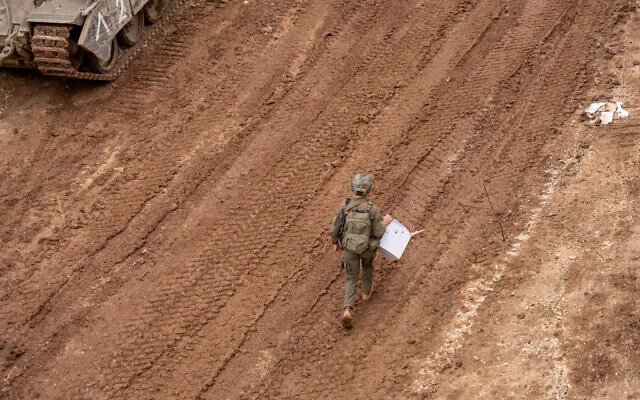
Israel ordered a wide-scale evacuation of all of southern Lebanon, which Lebanese civilians largely abided by, especially in villages close to the border, leaving behind an estimated 1,000 Hezbollah operatives — most of whom have been killed, according to the army.
IDF officers said that this makes it both harder for Hezbollah to hide, as it cannot use the civilian population as cover, and easier for the military to detect members of the terror group.
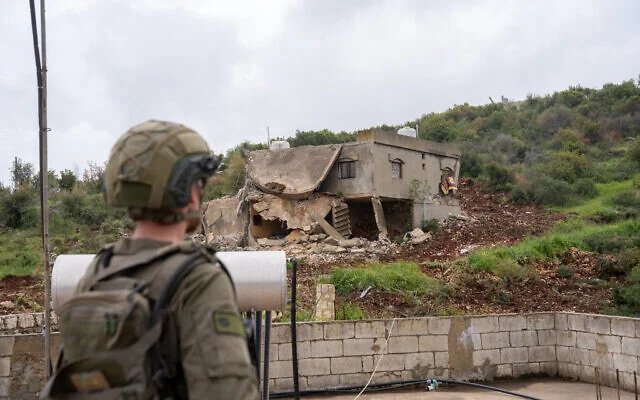
The second is the systematic destruction of Hezbollah’s infrastructure in the border villages, preventing the terror group from using those areas to stage attacks on forces.
Hezbollah has been pushed back deeper into southern Lebanon, though it could still fire rockets at Israeli forces in the security zone, as well as at Israel.
For that reason, the third key change compared to the security zone 26 years ago is the fact that the IDF will have a limited number of stationary outposts in southern Lebanon this time, commanders said. Decades ago, the IDF maintained more than a dozen main outposts in southern Lebanon, which became targets for Hezbollah attacks.

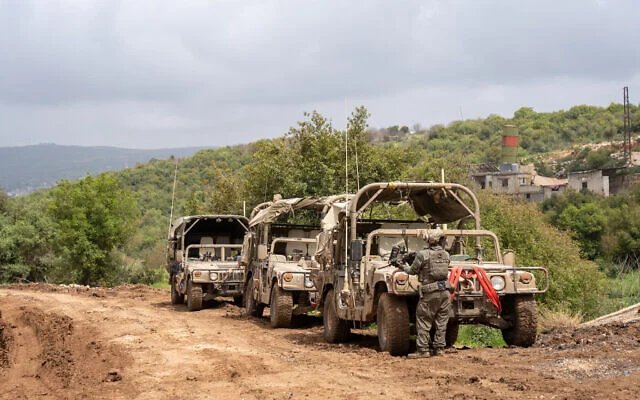
Military officials said that the IDF would establish several posts inside the security zone to be able to control it, but the army as a whole would be a lot more “mobile” within the area, to limit the possibility of Hezbollah attacks.
A map released by the IDF on Sunday showed that the security zone crossed the Litani River, a key geographic marker long associated with efforts to push Hezbollah forces northward, and included the historically strategic Beaufort Ridge.
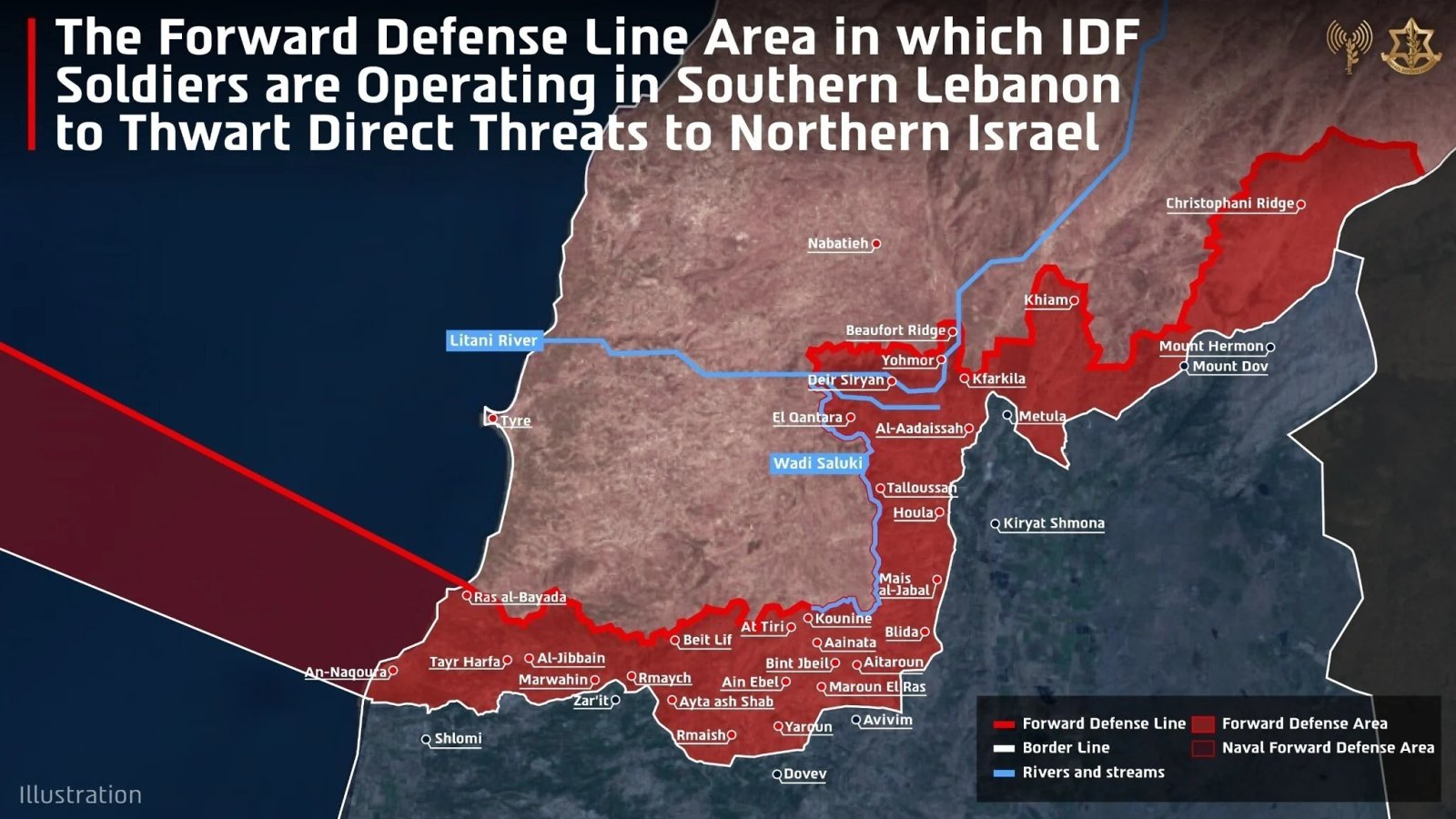
However, ground troops are not stationed in all of those areas, including the Beaufort Castle. Rather, the map marked areas the IDF controls with both surveillance and firepower, with ground troops only in areas deemed strategically necessary.
‘Still a lot of work to do’
The IDF has said it would clear the area currently under its control in southern Lebanon of Hezbollah infrastructure, operatives, and any other threats, during the ceasefire.
The military believes that several Hezbollah cells remain trapped in the IDF-held territory since the ceasefire took effect, and officers said they would be found sooner or later.
“This is an enemy that mostly retreats, runs away, and tries to evade you until you have left him no room to escape,” Moyal said.
Asked if the sudden ceasefire announced by Trump put an unexpected halt to the military’s operations, Moyal said that the timing could not have been better.

“The ceasefire came into effect exactly when we were right at the lines we wanted to reach,” he told reporters. “We operated fully. We reached the places we wanted to be. We captured the villages we wanted to capture. But there is still a lot of work ahead. It will take more time,” Moyal said.
The Nahal commander said the IDF has now “created a security area that both prevents direct anti-tank fire toward the northern communities, and also prevents the threat of an infiltration, and allows us to destroy all the remaining infrastructure here.”
“Therefore, we still have a lot of work to do,” he added.

Source:
www.timesofisrael.com


