
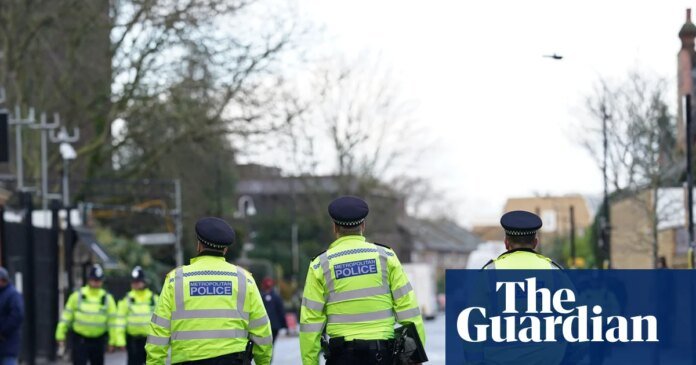
Promises by police chiefs to tackle racial bias failed owing to “a lack of clear national leadership”, an independent police report has found.
The promises were made five years ago in the wake of the Black Lives Matter movement and led police bosses in England and Wales to launch a race action plan promising to tackle the “stigmatising and humiliating” experiences of Black people at the hands of officers.
The Independent Scrutiny and Oversight Board (ISOB) monitors progress on the action plan. Its report, published on Wednesday, found there had been no “meaningful impact”.
The National Black Police Association said it had been a £10m failure, while the chair of the National Police Chiefs Council, Gavin Stephens, told the Guardian progress had been less than he expected, with sources saying resistance from heads in the force had been substantial.
The board is being wound up, with its findings coming after decades of promises from policing to change on race and after a series of damning reports, dating back to the end of the last century.
Abimbola Johnson, the chair of the ISOB, said: “Five years ago, policing committed to improving outcomes for Black communities. That commitment has not been met. Progress has been slow, uneven and too dependent on individual effort rather than institutional change.”
The board says the government must step in and order change, a call Stephens said he agreed with, along with the report’s other findings.
Johnson said: “Without properly enforced legal obligations, a robust inspection framework and clear consequences for failure, progress on race equity within policing will remain partial and reversible … Government and policing must decide whether to deliver it or allow reform to stall again.”
The report says one of the biggest blocks has been the culture inside policing. It reads: “Internal police culture is the most significant barrier to progress. An external framework is incapable of overcoming a culture that does not want to change.”
Stephens, as NPCC chair, has no power to order chief constables to do anything, although he is influential in government.
He said the progress fell short of his expectations: “There is still far more work to be done. Progress in this area has been inconsistent, too often dependent on committed individuals and not driven by the kind of systemic and deep-rooted cultural change I and many others envisaged at the outset of this plan.”
Stephens said his view was that policing was institutionally racist, but most of his fellow chiefs, almost all of whom are white, disagreed.
Show more
The report says progress was blighted because only six out of 44 forces accepted the finding, despite it first being made in 1999 in the Stephen Lawrence report. Among those refusing were the biggest forces, including the Metropolitan police – covering London where more than 40% of people are from an ethnic minority – Greater Manchester, West Midlands and West Yorkshire police.
Stephens said progress had been made: “There is no doubt that policing has made huge strides in certain areas … thanks to the commitment of thousands of people both inside and outside policing.”
He said that Black people were 3.8 times more likely to be stopped and searched than white people, down from almost 10 times in 2019.
When heads of police launched the plan in 2022, they vowed policing should become an anti-racist service, and said they were “ashamed” of racism, discrimination and bias in their ranks.
Stephens said all that still applied, but race was on the agenda rather than being ignored. He said: “This wonderful vocation I’m part of, it’s got a 200-year history. In the majority of that history, it’s not given thought to these issues. It’s only in recent history that we’ve started to … but they’re really deep rooted.”
The report says: “The ISOB could identify failures, name them publicly, and revisit them year after year. What it could not do was compel a meaningful and change-based response. Recommendations were accepted in principle, but left largely unimplemented; the same problems resurfaced in successive reports.”
Andy George, the president of the National Black Police Association, said: “After more than £10m of investment, it has failed to deliver on its core aim: improving the experience of policing for Black people.
“The reality is the environment is becoming more toxic and the progress made since the Macpherson report is now being reversed.”
Neil Basu, a former head of counter-terrorism, said he left policing after chiefs decided not to admit to institutional racism. He said racial justice in policing and wider society was waning. He added: “My peers and friends tell me they fear we are sliding backwards into the 70s. I fear they are right.”
The Home Office said it would consider the calls to step in. A spokesperson said: “We know there is still progress to be made and we will carefully consider the findings and recommendations made in the report.”
Source:
www.theguardian.com


