

Conservationist Anne Poelina has a deep connection to the fresh water that runs through the dry red-rock landscape of the Kimberley region in Western Australia. Poelina identifies as a Nyikina Warrwa woman, and her people are the Traditional Custodians of the Martuwarra Fitzroy River. The river meanders through the region’s arid land, cutting a path of about 735 kilometres long through steep gorges, savannahs and flood plains before terminating at King Sound, a delta fringed by tidal mangroves by the Indian Ocean.
The Martuwarra Fitzroy River is one of Australia’s last-remaining relatively intact, undammed tropical river systems. For now.
The river faces many threats, for instance, from water use in agricultural irrigation. It’s also at risk from proposed plans to extract natural gas through fracking, or hydraulic fracturing, and to look for rare-earth elements and metals such as vanadium and titanium. Moreover, climate change is predicted to cause extreme floods and droughts.
Should we treat rivers as living things?
Poelina’s interdisciplinary work at the Nulungu Research Institute of the University of Notre Dame in Broome, Australia, focuses on health, land and water conservation, climate change, and law and environmental policy and combines Indigenous traditional knowledge with Western science. Her interest in the Martuwarra is both personal and professional.
Poelina is connected to the river through her matrilineal heritage — her mother’s people are the Nyikina First Nation. The Nyikina’s traditional territory, or Country, lies in the river’s watershed, as do those of nine other Indigenous communities. (Country is the term that Aboriginal Australian people use to refer to their ancestral lands, its meaning is similar to the Western concept of nature.)
Poelina explains that “in terms of property rights, the river owns me. So, I have a duty of care and the fiduciary duty to protect this river’s right to life.” Because Poelina works with the river to produce fresh knowledge and assimilate ancient wisdom, she decided to recognize its contributions formally. In 2020, she started including the Martuwarra River of Life as the first author on her publications.
Poelina says, “Country is a first author for Indigenous people in the Northern Territory of Australia. So, I just did it.” Whether the journal to which she submitted her first paper assumed “that the name was human or not, I don’t know”, she adds.
A river with an ORCID
One of Poelina’s human colleagues is less circumspect about the importance of their riverine co-author. “It’s hard to overstate the significance of having Martuwarra as the first author on academic papers,” says Erin O’Donnell, a specialist in water law and policy at Melbourne Law School in Australia. Authorship for the river poses a profound challenge to Western and colonial views of what knowledge is and who holds it, adds O’Donnell.

The Māori values that make sense in science
“I have co-authored with Anne and Martuwarra and seen first hand the challenge this presents to journals, where copy editors attempted to remove Martuwarra as first author,” says O’Donnell. In one of their papers, authorship for the river was restored after an appeal to the journal’s editors.
As a reviewer, O’Donnell notes that she has also seen well-meaning examples of researchers who don’t have an Indigenous heritage attempting to include Country as a co-author on their papers, to acknowledge how it has shaped the work. “But I think we do need to be more explicit about the circumstances in which genuine co-authorship is legitimate,” she says.
By contributing to Poelina’s work in meaningful ways, O’Donnell explains, Martuwarra connects her to Country and brings together many river First Nations to be caretakers for Country. For instance, in Poelina’s PLoS Water paper, which includes the river as a co-author, the author information states, “without Country, without the River, and its complex, multi-layered, and ever-evolving inter-relationships with its custodians, there would not be a paper” (Martuwarra, RiverOfLife et al. PLoS Water 2, e0000104; 2023).

The Martuwarra river experiences natural drought and flood cycles that are predicted to become more extreme with climate change.Credit: Lesley Evans Ogden
Globally, there is a precedent for rivers gaining legal personhood. For instance, the Whanganui River in New Zealand was given a legal identity by the country’s government in 2017. And Colombia’s supreme court recognized the Amazon River ecosystem in 2018 as “an entity, subject of rights, and beneficiary of the protection, conservation, maintenance and restoration” that the country provides.
After several years of publishing papers with the river as the first author, Poelina registered it for an identifier on the research-identification platform ORCID. This means that the publications that list Martuwarra as an author — seven so far — and their citations can be tracked.
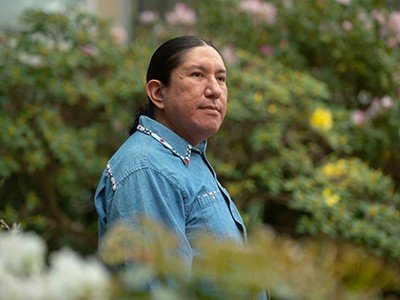
Walking in two worlds: how an Indigenous computer scientist is using AI to preserve threatened languages
Much of Poelina’s research on the river’s cultural and biological diversity involves collaborations. For example, working with more than 40 Indigenous knowledge holders in the West Kimberley region and with Sven Ouzman, an archaeologist at the University of Western Australia in Perth, Poelina’s team produced a digital Living Water Heritage Story Map. The website comprises a digitally archived data set of cultural and archaeological sites, language groups, biodiversity, ecology, geological history and stories, and includes previously undocumented testimonies about colonial violence near the river. Ouzman explains that the project was “Traditional-Owner-driven”, with the team visiting dozens of people living along the river.
Owing to its cultural sites, the West Kimberley region — which includes the Martuwarra — was added to Australia’s National Heritage List in 2011. And the river was designated a Living Water Museum by the United Nations cultural organization UNESCO in 2024, highlighting the region’s holistic approach to water management, which includes science, culture and Indigenous knowledge. Yet, despite these designations, the watercourse remains functionally unprotected. This has motivated Poelina to document the river’s cultural, geological and ecological attributes.
Her work, not just on the river, but also on water, land and climate issues more generally, connects traditional and modern ways of knowing. It spans cultures, jurisdictions, legal structures, academic disciplines and local and international frameworks. To do so, Poelina draws on her two PhDs — one in health science, and the other in Indigenous (First) law, which focused on multi-species justice for the Martuwarra.
Source:
www.nature.com


