

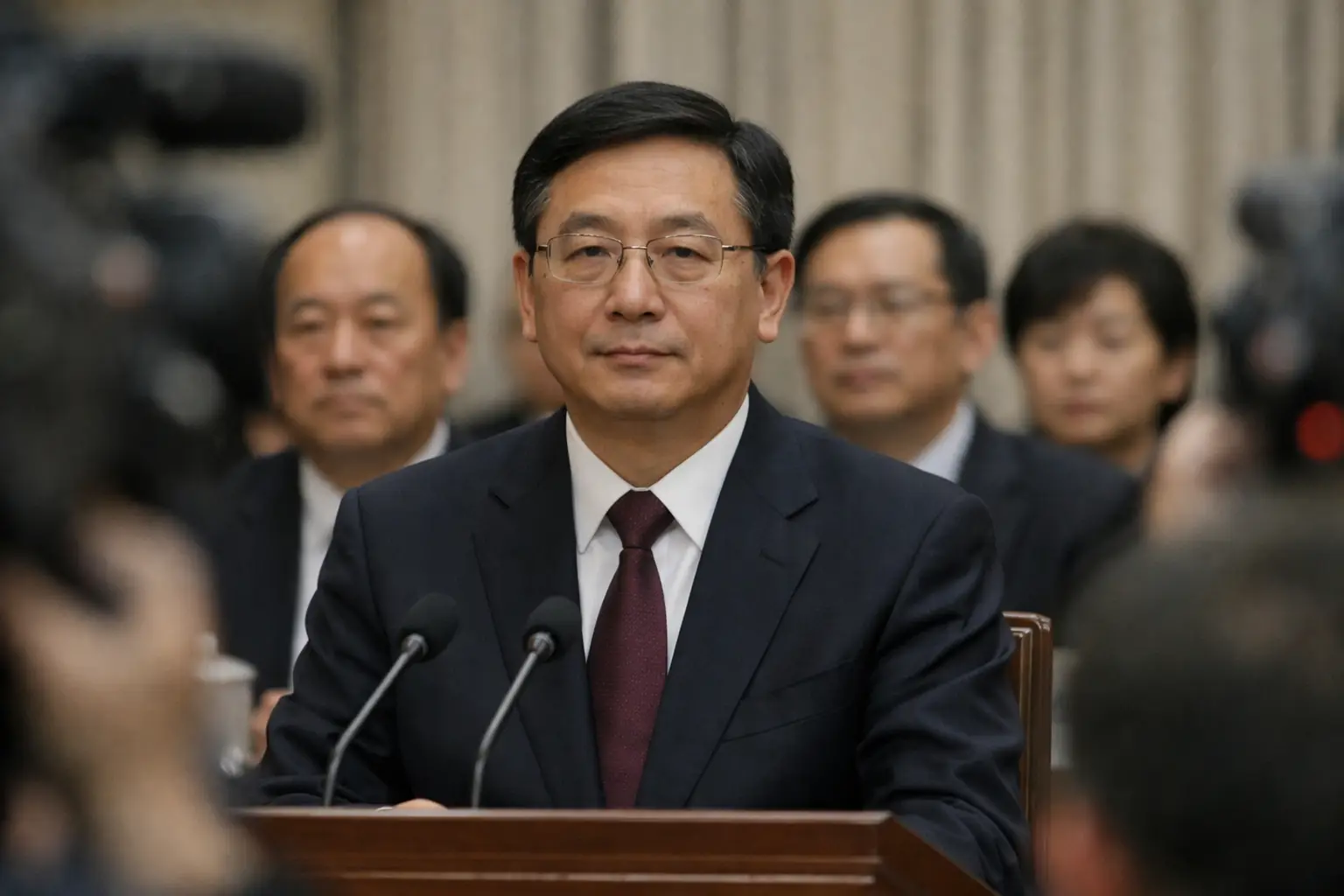
Chen Jining’s political standing has become a test of how quickly fortunes can change at the top of China’s political hierarchy. The Shanghai party secretary had been widely viewed as one of the figures with the profile to enter speculation around a possible post-Xi Jinping succession. That perception shifted after the announcement of an investigation, a development that immediately placed uncertainty over a career previously associated with high-level advancement.
The case matters because Chen Jining occupies one of the most important political posts in the country. Leadership of Shanghai has long carried national weight, both because of the city’s economic importance and because senior officials who govern it are often considered within the broader elite conversation. In the structure of the Chinese Communist Party, such positions can serve as platforms for wider influence, but they also bring intense political exposure.
Succession in Chinese politics is rarely discussed through open institutional competition. Careers are assessed through appointments, removals, disciplinary signals and shifts in official visibility. For that reason, an investigation announcement involving a senior figure can carry consequences beyond the legal or administrative process itself. It can change how officials, observers and institutions read the balance of confidence around a political actor.
The available facts do not establish an outcome for Chen Jining, nor do they define what the investigation will ultimately produce. They do, however, underline a central feature of elite politics in China: perceived proximity to future power does not guarantee security. A leader can be treated as a potential successor in public analysis while still remaining vulnerable to institutional action inside the party-state system.
For China’s top leadership, the episode reinforces the opacity surrounding long-term succession planning under Xi Jinping. It also highlights the risks of interpreting career momentum as evidence of a settled path upward. In a system where public signals are limited and decisions are highly centralized, the announcement of an investigation is enough to reshape the political meaning of a once-prominent trajectory.


